
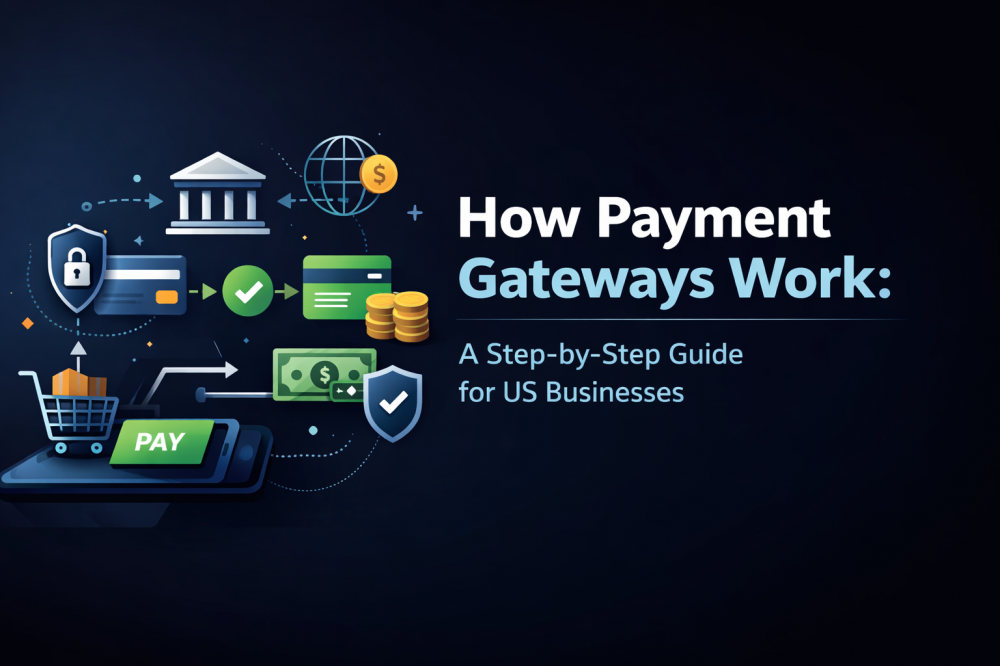
In today’s digital economy, Payment Gateways are no longer just a technical necessity—they are a strategic business decision. Whether you’re running an eCommerce store, launching a SaaS product, managing a marketplace, or scaling a subscription business, your payment gateway directly impacts conversion rates, cash flow, security, compliance, and customer trust.
Yet many US businesses treat payment gateways as a “set it and forget it” tool. This often leads to hidden fees, failed integrations, higher fraud risk, and lost revenue over time.
This guide takes an expert, analytical look at how Payment Gateways work, what happens behind the scenes of every transaction, and how businesses can use this knowledge to choose, optimize, and scale payments intelligently.
Why Understanding Payment Gateways Matters for US Businesses
Payment failures, slow settlements, and security issues don’t just frustrate customers—they directly affect revenue and brand credibility.
Understanding how Payment Gateways work helps businesses:
-
Reduce cart abandonment
-
Improve authorization and approval rates
-
Avoid unnecessary fees and penalties
-
Stay compliant with US and global regulations
-
Scale smoothly without re-engineering payments later
In short, the right Payment Gateway doesn’t just process payments—it becomes a growth enabler.
What Are Payment Gateways? (A Business-Focused Explanation)
A Payment Gateway is the technology that securely captures, encrypts, transmits, and authorizes payment data between multiple parties involved in a transaction.
From a business perspective, Payment Gateways act as the bridge between:
-
The customer making a payment
-
Your website, app, or platform
-
The issuing bank (customer’s bank)
-
The acquiring bank (merchant’s bank)
-
Card networks or alternative payment systems
Without Payment Gateways, online transactions would be slow, insecure, and impossible to scale.
Payment Gateways vs Other Payment Components (Quick Clarity)
-
Payment Gateway → Handles transaction flow and security
-
Payment Processor → Executes transaction instructions
-
Merchant Account → Holds funds before settlement
Understanding this ecosystem prevents confusion when evaluating providers or troubleshooting issues.
How Payment Gateways Work: Step-by-Step Transaction Flow
This is where most businesses benefit from deeper clarity. Every online payment follows a structured flow—even if it happens in seconds.
The process begins when a customer enters payment details at checkout—card details, digital wallet, bank transfer, or BNPL option.
Why this step matters:
-
Checkout UX directly affects conversion rates
-
Slow or cluttered checkouts increase abandonment
-
Limited payment options reduce customer trust
Modern Payment Gateways support:
-
Cards (credit/debit)
-
Digital wallets
-
Bank-based payments
-
BNPL and alternative methods
Step 2: Payment Data Encryption and Secure Transmission
Once details are submitted, the Payment Gateway encrypts the data using secure protocols and tokenization.
Business value:
-
Sensitive data never travels in plain text
-
Reduces liability and compliance burden
-
Protects against data breaches
Encryption ensures your systems never directly store raw card data, minimizing risk.
Step 3: Authorization Request Sent to Issuing Bank
The Payment Gateway sends an authorization request through card networks to the customer’s issuing bank.
The bank checks:
-
Available funds or credit
-
Card validity
-
Risk signals and fraud patterns
Possible outcomes:
-
Approved
-
Declined
-
Flagged for further verification
Step 4: Authentication and Fraud Checks
Modern Payment Gateways apply layered fraud controls, including:
-
CVV and AVS checks
-
Behavioral analysis
-
Device fingerprinting
-
3D Secure authentication
Key balance businesses must manage:
-
Too strict → higher false declines
-
Too loose → higher fraud and chargebacks
The best Payment Gateways optimize this balance dynamically.
Step 5: Authorization Response Returned to Merchant
The gateway sends an approval or decline response back to your checkout page in real time.
Important business insight:
-
Authorization ≠ payment received
-
Funds are only “reserved” at this stage
Many merchants mistakenly assume this step means payment is complete—which leads to accounting and fulfillment errors.
Step 6: Settlement and Fund Transfer
Settlement happens later, usually in batches. The Payment Gateway coordinates with processors and banks to transfer funds to your merchant account.
This is where cash flow is affected most.
Payment Gateways Pricing Models: What US Businesses Really Pay
Pricing is one of the most misunderstood aspects of Payment Gateways.
Common Pricing Models
-
Flat-rate pricing – Simple but often more expensive at scale
-
Interchange-plus pricing – Transparent and cost-effective for growing businesses
-
Subscription-based pricing – Monthly fee plus lower per-transaction costs
Typical Fees to Watch
-
Transaction fees
-
Gateway or platform fees
-
Chargeback and dispute fees
-
Cross-border and currency conversion fees
Hidden costs often appear in:
-
FX markups
-
Minimum monthly fees
-
Failed transaction penalties
Understanding pricing upfront prevents margin erosion over time.
Integrating Payment Gateways: From Simple to Advanced
Payment Gateways offer multiple integration paths depending on business needs.
Integration Options
-
Hosted checkout pages – Fast, compliant, minimal development
-
Embedded checkout – More control over UX
-
API-based integration – Full customization for developers
Common Integration Challenges
-
Poor documentation
-
Limited sandbox testing
-
Inflexible APIs
Best practice: Choose Payment Gateways that match your current needs and future scale, not just ease of setup.
Security, Compliance, and Risk Management in Payment Gateways
Security is not optional—it’s foundational.
Key Security Standards
-
PCI DSS compliance
-
Tokenization and vaulting
-
Secure key management
Shared Responsibility Model
-
Payment Gateways handle transaction security
-
Merchants remain responsible for compliance practices
Strong security reduces:
-
Fraud losses
-
Chargebacks
-
Regulatory penalties
-
Brand damage
Settlement Timelines and Cash Flow Considerations
Settlement speed affects working capital.
Typical US Settlement Timelines
-
T+1 (next business day)
-
T+2 or T+3 (common for newer or higher-risk merchants)
Factors Affecting Payout Speed
-
Business category
-
Transaction volume
-
Risk profile
-
Payment method used
Optimizing Payment Gateways can unlock faster access to revenue.
Multi-Currency and Cross-Border Capabilities
US businesses expanding globally need Payment Gateways that support:
-
Multi-currency pricing
-
Local payment methods
-
Transparent FX conversion
Key risk: Poor FX handling silently increases costs and customer friction.
Emerging Trends Shaping Modern Payment Gateways
Payment Gateways are evolving rapidly.
Key Trends to Watch
-
Buy Now, Pay Later (BNPL) adoption
-
Digital wallets and one-click payments
-
Payment automation and smart routing
-
AI-driven fraud detection
Future-ready Payment Gateways help businesses stay competitive without constant re-platforming.
Common Payment Gateway Challenges (and Practical Solutions)
Frequent Business Pain Points
-
High decline rates
-
Integration complexity
-
Unexpected fees
-
Scaling limitations
Actionable Solutions
-
Analyze decline reasons regularly
-
Revisit pricing as volume grows
-
Optimize fraud rules
-
Choose gateways built for scalability
How to Choose the Right Payment Gateway for Your Business
When evaluating Payment Gateways, focus on:
-
Pricing transparency
-
Integration flexibility
-
Security and compliance
-
Settlement speed
-
Long-term scalability
Different models require different strengths:
-
eCommerce
-
SaaS and subscriptions
-
Marketplaces
-
High-volume or high-risk businesses
The “best” Payment Gateway is the one aligned with your business strategy, not just popularity.
Final Thoughts: Turning Payment Gateways into a Growth Advantage
Payment Gateways are not just infrastructure—they are revenue, trust, and experience enablers.
Businesses that understand how Payment Gateways work make better decisions, avoid costly mistakes, and build systems that scale smoothly.
If you treat your Payment Gateway as a strategic partner rather than a checkbox, it can:
-
Improve conversions
-
Strengthen compliance
-
Reduce risk
-
Support sustainable growth