
Introduction: Solving the "Data Bottleneck" in Modern AI
As the world moves deeper into the era of Generative AI and Autonomous Agents, the demand for raw computational power has reached an all-time high. However, a fast processor alone is no longer enough. In the high-stakes world of semiconductor engineering, a critical challenge has emerged: the "Memory Wall." No matter how advanced a GPU is, its performance is often throttled by the speed at which it can retrieve data from memory.
To overcome this, the industry is transitioning to a new era of High Bandwidth Memory. The integration of HBM4 memory Nvidia requirements is now at the forefront of this shift. This next-generation memory standard is designed to provide the massive data throughput necessary for the upcoming Vera Rubin architecture, ensuring that AI models can scale to trillions of parameters without being slowed down by data latency.
The Evolution: From HBM3e to the HBM4 Revolution
For the past few years, HBM3 and HBM3e have been the workhorses of the AI industry, powering the Hopper and Blackwell generations. However, the complexity of modern LLMs (Large Language Models) demands a more robust solution.
Doubling the Bandwidth
One of the most significant upgrades in HBM4 is the interface width. While previous generations used a 1024-bit interface, HBM4 moves to a 2048-bit interface. This "wider highway" allows for double the data transfer rate at the same clock speed. According to technical deep-dives on Compute Report, this leap is essential for real-time AI inference in complex environments.
Advanced Vertical Stacking
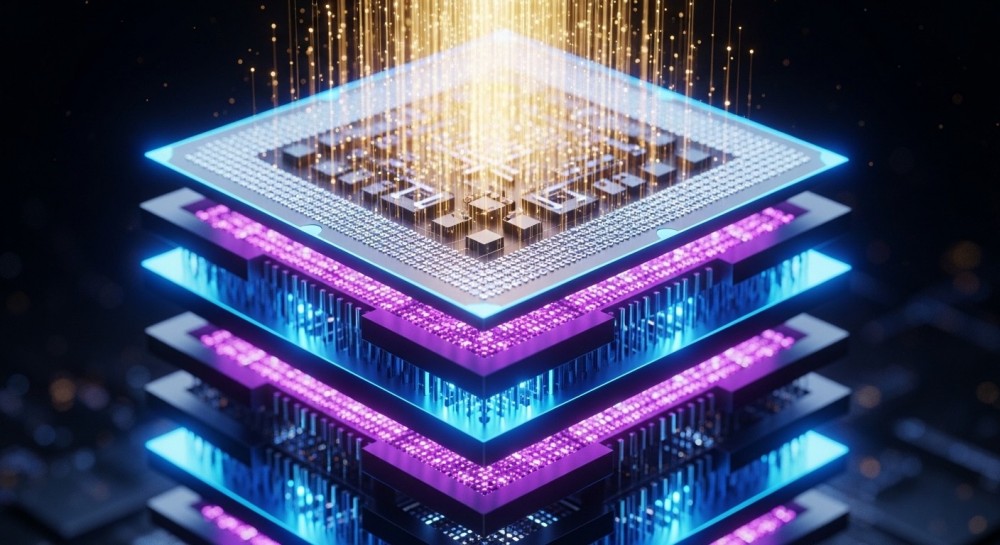
HBM4 allows for 12-layer and 16-layer vertical stacks. By stacking memory cells higher and more densely, manufacturers can provide significantly more memory capacity within the same physical area on the chip. This is a crucial factor for the Nvidia Vera Rubin platform, which aims to handle datasets larger than anything we have seen before.
Part 1: Vera Rubin Architecture—The Pinnacle of AI Engineering
Named after the legendary astronomer Vera Rubin, Nvidia’s next-generation architecture is more than just a faster GPU. It is a completely reimagined compute platform designed for "Agentic AI"—systems that can think, plan, and execute tasks independently.
Why Micron and Nvidia’s Partnership Matters
The news that Micron mass-produces HBM4 memory for Nvidia Vera Rubin systems marks a significant milestone in the global supply chain. Micron has utilized its advanced 12nm-class and 1β (1-beta) DRAM technology to create memory modules that are not only faster but also significantly more power-efficient.
Key Technical Advantages of the Rubin Platform:
- Unified Memory Fabric: Allowing the GPU to access HBM4 memory as if it were internal cache.
- Liquid-Cooling Optimization: Designed to handle the thermal output of high-density memory stacks.
- Low Latency Inference: Specifically tuned for the next generation of voice and video AI agents.
Part 2: Economic and Global Impact of HBM4 Integration
The transition to HBM4 memory Nvidia standards is driving a multi-billion dollar shift in the semiconductor market.
Reducing the Energy Footprint
One of the biggest criticisms of AI is its massive energy consumption. HBM4 helps mitigate this by offering better "Performance-per-Watt." By reducing the voltage required for data transfer, these memory modules allow data center operators to scale their operations without exponentially increasing their electricity bills.
Accelerating "Sovereign AI"
Many nations are now building their own domestic AI infrastructures to protect national data. These "Sovereign AI" projects require the highest level of efficiency to be economically viable. The reliability of Micron’s mass-produced HBM4 ensures that these national projects have a steady supply of world-class components.
For a detailed look at the production timelines and market availability, the reports on Compute Report provide a clear roadmap of what to expect in late 2025 and 2026.
Part 3: Future Outlook—What Comes After HBM4?
As we look toward 2027 and 2028, the industry is already talking about HBM4e and the potential for "Processing-in-Memory" (PIM). This would involve placing small logic units directly inside the memory stacks to perform basic calculations, further reducing the need for data to travel back and forth to the GPU.
Conclusion: A New Benchmark for Performance
The synergy between Nvidia’s architectural genius and Micron’s manufacturing prowess is setting a new benchmark for the tech industry. The Vera Rubin architecture, powered by HBM4 memory Nvidia solutions, will unlock capabilities that were previously thought to be decades away. From real-time autonomous robotics to curing complex diseases through AI simulations, the foundation is being built today.
For professionals and tech enthusiasts, staying updated via platforms like Compute Report is vital to understanding these rapid technological shifts. We are no longer just looking at faster computers; we are looking at the birth of a new era of intelligence.
Frequently Asked Questions (FAQs)
What is the primary advantage of HBM4 over HBM3e?
The main advantage is the 2048-bit interface, which effectively doubles the bandwidth, and the ability to stack memory up to 16 layers high for massive capacity.
Is HBM4 memory only for Nvidia GPUs?
While HBM4 memory Nvidia standards are a major focus due to the Vera Rubin platform, HBM4 will eventually be adopted by other high-performance computing (HPC) and GPU manufacturers.
When will the Vera Rubin chips be available for data centers?
Based on Nvidia's annual release cycle, the Vera Rubin platform is expected to begin mass deployment in late 2025 or early 2026.
How does HBM4 help with AI energy efficiency?
HBM4 uses a lower operating voltage and advanced manufacturing processes to reduce the energy cost of moving data, which is one of the most power-hungry tasks in an AI cluster.
Where can I find deep-dive technical specs on Micron’s HBM4?
For detailed technical specifications and industry news, you can visit the dedicated reports at Compute Report.