
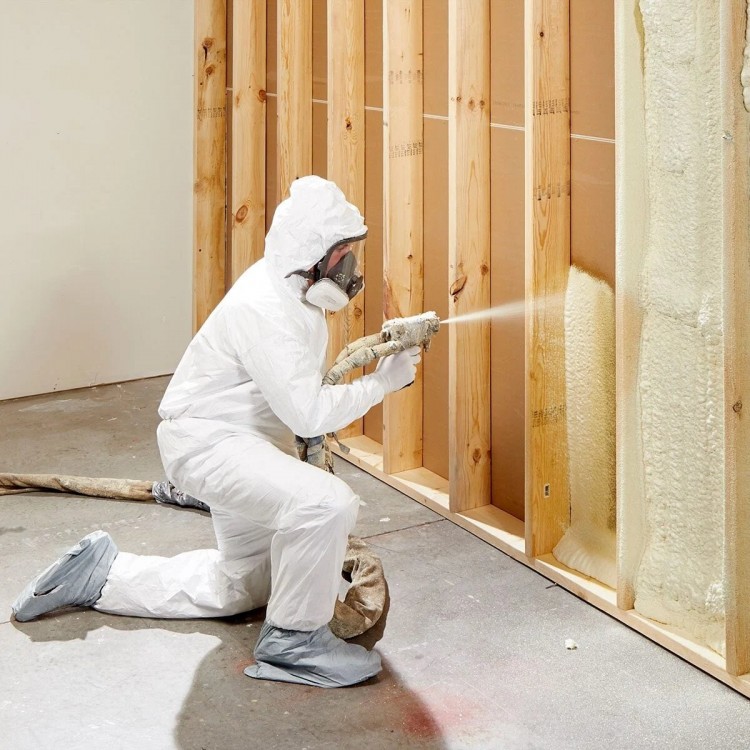
Closed-cell spray foam has become a popular choice for insulation in both residential homes and commercial businesses for one main reason: it offers an unmatched combination of high thermal resistance, structural strength, and moisture control in a single product. This multi-functionality makes it an incredibly versatile and efficient solution. For homeowners, it means a warmer, drier basement and lower energy bills. For a business owner, it translates to a more durable building, protected assets, and reduced operational costs.
Its popularity stems from its ability to solve complex building science challenges in a straightforward and permanent way. This article, which is based on extensive professional experience across both residential and commercial construction, will explore the specific properties that make closed-cell foam so adaptable and effective in such a wide range of applications.
Core Properties of Closed-Cell Foam
At its core, closed-cell spray foam insulation is a dense, rigid polyurethane plastic. It's applied as a liquid that expands and hardens, adhering to nearly any surface. This process creates a continuous, seamless barrier that delivers several key benefits, regardless of whether it's in a house or a warehouse.
Maximum R-Value in Minimal Space
Closed-cell foam boasts one of the highest R-values per inch of any commercially available insulation, typically between R-6.5 and R-7. This is a huge advantage in any construction where space is a concern. In a home, it means you can achieve the high R-value required by modern energy codes in a standard 2x6 wall without needing to build thicker, more expensive walls. In a commercial building, it allows for maximum insulation on a flat roof without adding excessive height or weight.
An Unbeatable Air and Vapor Barrier
The dense, closed structure of the foam cells makes it impermeable to both air and water vapor. This is a critical feature for any building, residential or commercial.
- For Homes: In a basement or crawl space, it prevents damp, musty air from entering the living space and stops moisture from wicking through the foundation, which helps to prevent mold.
- For Businesses: In a steel-framed warehouse or an office building, it prevents condensation from forming on the cold metal surfaces, a common problem that can lead to rust, water damage, and poor indoor air quality.
Adding Serious Structural Strength
Once cured, closed-cell spray foam acts like a high-strength adhesive, bonding building materials together. This can dramatically increase the structural integrity of a wall or roof assembly.
- For Homes: In residential construction, especially in areas with high winds, it adds a significant amount of racking strength to the walls, making the entire structure more resilient.
- For Businesses: In large metal buildings, which can be susceptible to wind loads, applying spray foam to the interior of the panels adds a tremendous amount of rigidity and resistance to flexing.
Bonus Tip: For any flat-roofed building, residential or commercial, applying closed-cell foam to the underside of the roof deck is one of the most effective ways to insulate and air seal, preventing common issues like leaks and heat loss.
Tailored Applications for Homes
In a residential setting, closed-cell spray foam is a powerful problem-solver for areas of the home that are most vulnerable to energy loss and moisture.
- Basements and Foundations: Its ability to adhere directly to concrete and block moisture makes it the ideal choice for insulating basement walls, turning a damp, cold space into a comfortable and usable part of the home.
- Cathedral Ceilings: The high R-value per inch allows for the creation of beautiful, vaulted ceilings that meet energy code requirements without needing deep, bulky rafters.
- Rooms Over Garages: It's the perfect solution for insulating the floor of a bonus room, creating a complete thermal and air barrier that separates it from the cold, unconditioned garage below.
Versatile Uses in Commercial Buildings
For businesses, the durability and performance of closed-cell foam translate directly into lower operating costs and a better-protected investment.
- Warehouses and Industrial Buildings: In large, open spaces, controlling the climate can be extremely expensive. Spray foam provides a continuous layer of insulation and air sealing that dramatically reduces heating and cooling costs. Its durability also stands up to the rigors of a commercial environment.
- Agricultural Buildings: In barns or storage facilities for produce, the ability to maintain a consistent temperature and humidity level is critical. Closed-cell foam provides a stable environment and its moisture resistance helps to prevent spoilage.
- Office Buildings and Retail Spaces: By creating an airtight building envelope, spray foam helps HVAC systems operate more efficiently, reducing energy consumption, which is often a business's largest overhead expense after payroll.
Comparing Applications for Homes and Businesses
This table highlights how the core properties of closed-cell foam apply to both residential and commercial contexts.
|
Property |
Benefit in a Home |
Benefit in a Business |
|---|---|---|
|
High R-Value per Inch |
Meets energy codes in standard walls; creates warm living spaces. |
Maximizes insulation on roofs and in walls without sacrificing space. |
|
Air & Vapor Barrier |
Prevents damp basements; stops drafts; improves indoor air quality. |
Stops condensation on metal; protects inventory; lowers HVAC load. |
|
Structural Strength |
Reinforces walls and roofs against wind and snow loads. |
Adds rigidity to large steel buildings; increases durability. |
|
Durability & Longevity |
A permanent solution that lasts the life of the home. |
Withstands wear and tear of a commercial setting; a long-term asset. |
Key Considerations for Any Project
While the benefits are clear for any property, a successful closed-cell spray foam project depends on a few important factors.
The Need for Professional Installation
This cannot be overstated. Closed-cell spray foam is a technically complex product to install. It requires a certified contractor with specialized equipment to ensure it is mixed and applied correctly. A poor installation will fail to deliver the promised benefits.
Upfront Cost vs. Return on Investment
Closed-cell foam is a premium product with a higher initial cost. However, for both homeowners and business owners, the decision should be based on the long-term return on investment (ROI). The significant and immediate reduction in energy costs, combined with the material's durability and protective qualities, often makes it the most financially sound choice over the life of the building.
Bonus Tip: For businesses, the cost of an insulation upgrade can often be classified as a capital improvement, offering potential tax advantages. It's worth consulting with an accountant to understand the financial benefits.
Frequently Asked Questions (FAQ)
How long does it take to install?
The installation time depends on the size and complexity of the project. For a typical residential basement, the job can often be completed in a single day. For a large commercial warehouse, it could take a week or more.
Can it be sprayed on the exterior of a building?
Yes. There are specific formulations of closed-cell foam that are designed to be used as an exterior continuous insulation layer. They are then covered with a final cladding material.
Is it a fire hazard?
Spray foam insulation contains fire retardants and is designed to char and self-extinguish when a flame source is removed. In most applications, it is required by building code to be covered by a 15-minute thermal barrier, such as drywall, making it part of a safe, fire-rated assembly.
Can it be used to insulate a walk-in cooler or freezer?
Absolutely. Its high R-value and excellent vapor barrier properties make it one of the most effective and widely used materials for insulating commercial refrigeration units.
Is the material environmentally friendly?
The industry has made huge strides in this area. The blowing agents used in modern closed-cell foams have zero ozone-depleting potential. Furthermore, by making buildings dramatically more energy-efficient, it significantly reduces their carbon footprint over many decades.
A Versatile and Reliable Building Material
The popularity of closed-cell spray foam in both homes and businesses comes down to its versatility and reliability. It is a single product that can solve a wide range of common building performance issues, from energy loss and moisture intrusion to a lack of structural integrity. For anyone looking for a long-term, high-performance solution that adds lasting value to their property, it is a proven and effective choice that starts with a professional assessment.
Get an Expert Consultation for Your Property
Whether you are a homeowner looking to finish your basement or a business owner planning a new warehouse, the first step is to get a professional assessment. An experienced insulation contractor can evaluate your specific needs and design a solution that is right for your building and your budget. For a detailed consultation for any residential or commercial project, you can contact a specialist like Lamothe Spray Foam Insulation at (508) 847-0119 or by email at LamotheInsulation@gmail.com.
- Author: With over two decades of hands-on experience, Robert Lamothe, owner and lead installer of Lamothe Insulation, brings expertise in spray foam insulation, carpentry, and building science.
- Reviewer: Ethan Taylor has 8 years of experience in spray foam insulation. He reviewed this content and suggested ways to simplify business outreach while keeping trust and professionalism intact.