
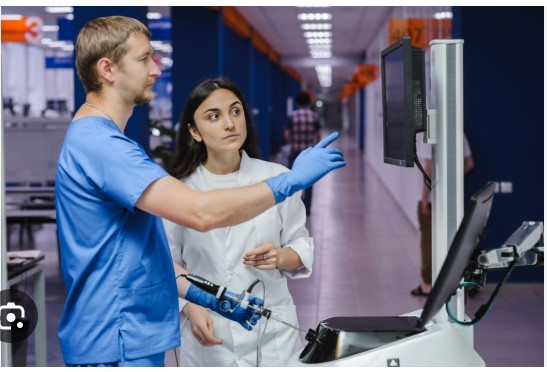
How Medical Simulation Rebuilds The Way Clinicians Learn
In every hospital, there is a silent expectation: when something goes wrong, the team must already know what to do. There is no pause button, no “try again” option, no chance to rewind a mistake. For generations, medicine accepted that the first attempts at complex procedures or emergency decisions would sometimes happen at a real bedside. Today, that approach is rapidly changing.
Medical simulation has become the bridge between theory and practice. With sophisticated manikins, virtual anatomy, ultrasound trainers and immersive scenarios, it creates realistic environments here learners can think, act and make mistakes without putting real patients at risk. It is not a gadget on the edge of education; it is gradually becoming the backbone of how modern clinicians are trained.
Why Medicine Needs A Different Kind Of Classroom
Traditional medical education is built on three pillars: books, lectures and clinical rotations. Each pillar is essential, but each has limits.
- Books and lectures explain how the body works and how diseases behave, yet they cannot reproduce the chaos of a real emergency.
- Clinical rotations give students contact with real patients, but what they see depends on chance: some cohorts witness dozens of heart attacks; others never see one.
- On-the-job learning is valuable, but it is also risky if the stakes are life-or-death and the trainee has never rehearsed the situation before.
As healthcare becomes more complex, this model leaves too much to luck. Rare events, high-risk procedures and fast-moving crises are exactly the situations where people should not be learning for the first time in front of a real patient.
Simulation fills the gap by deliberately engineering experiences that every clinician must master, regardless of how often they appear on the ward.
The Simulation Lab As A Miniature Hospital
A well-equipped simulation space does not look like a classroom. It looks like a small hospital:
- Beds, monitors, oxygen, suction and defibrillators arranged as in a real ward.
- Medication carts stocked with realistic (but inactive) drugs.
- Ventilators, infusion pumps and other devices clinicians actually use on shift.
At the center of the room lies the simulated patient: an adult, pediatric or neonatal manikin with realistic anatomy and physiology. These high-fidelity models can:
- Breathe, blink and show changing skin color.
- Produce heart, lung and bowel sounds.
- Display vital signs that respond to treatment.
- React to drugs and procedures with lifelike changes in blood pressure, oxygen levels and heart rhythm.
Instructors adjust all of this in real time from a control room. If the team makes the right decisions, the patient improves. If they hesitate, miss a diagnosis or choose the wrong order of interventions, the patient deteriorates. The room feels alive, but it is designed for learning, not survival.
For many learners, the first experience of real, time-critical pressure happens here, in a place where they are allowed to fail and then try again.
What Simulation Teaches Beyond Procedures
When people think about simulation, they often imagine practice for CPR or intubation. Those are important, but they are only part of the story. Properly used, simulation develops three intertwined skill sets: technical ability, clinical reasoning and human factors.
1. Technical Skills With Objective Feedback
Simulation offers a safe environment to practice the hands-on skills that can be intimidating on real patients:
- Securing an airway with different devices.
- Performing chest compressions with correct depth and rate.
- Placing intravenous or intraosseous lines.
- Using ultrasound to guide procedures and interpret images.
Sensors in manikins and task trainers can measure performance and give precise feedback: how deep compressions were, whether ventilation volumes were adequate, how often needle placement was correct. Learners move from guessing to measurable improvement, which shortens the learning curve dramatically.
2. Clinical Reasoning In A Moving Scenario
In written exams, nothing changes while you think. In real life, conditions evolve whether you are ready or not. Simulation reproduces this moving target.
A patient may arrive with mild shortness of breath, then gradually develop:
- Faster breathing.
- Falling blood pressure.
- Confusion or agitation.
Learners must interpret these changes, prioritize problems and adjust their plan. Do they give fluids or vasopressors first? Call for senior help now or in ten minutes? Start antibiotics before or after imaging?
These choices shape how the scenario unfolds. Over time, trainees learn pattern recognition, prioritization and flexibility, not just memorized algorithms.
3. Human Factors: Communication, Leadership, Teamwork
Many serious incidents in healthcare can be traced back to miscommunication, unclear roles or breakdowns in teamwork. Simulation exposes these vulnerabilities in a controlled setting.
Teams practice:
- Declaring who is in charge at the start of an emergency.
- Assigning tasks clearly and checking they are understood.
- Using closed-loop communication to avoid misunderstandings.
- Handling disagreements under pressure without losing focus on the patient.
Afterward, everyone can watch video recordings and dissect key moments. This process helps teams replace vague impressions (“it felt chaotic”) with concrete insights (“we never stated who was leading; two people tried to give orders at once”). Over time, they build habits of clarity and mutual trust that transfer directly to real clinical work.
Building A Simulation-Driven Curriculum
Simulation is most powerful when it is integrated into the entire educational journey rather than added as an occasional event.
Early Stages: Building Comfort With The Basics
New students begin with low-stakes, focused exercises:
- Taking vital signs on simple manikins.
- Practicing hand hygiene and basic infection control.
- Learning to handle equipment such as oxygen masks, IV pumps and monitors.
At this stage, the goal is to remove the fear of the environment itself. Learners become comfortable touching equipment, moving beds, adjusting monitors and speaking up in a clinical-style room.
Middle Stages: Single-Focus Scenarios
Once the basics are in place, scenarios become more clinical:
- An asthma attack that requires assessment and escalating treatment.
- A chest pain case that may be a heart attack, anxiety or something else.
- A febrile child who could be easily discharged or dangerously septic.
Each scenario has a clear objective: for example, “recognize and treat sepsis within ten minutes” or “initiate the correct chest pain pathway.” The simulated patient’s condition changes based on what the team does, reinforcing the link between decisions and outcomes.
Advanced Stages: Complex, Multi-System Challenges
As learners approach independent practice, scenarios expand in complexity:
- Trauma cases with airway issues, bleeding and potential head injury.
- Obstetric emergencies with fetal distress and maternal instability.
- Postoperative patients with subtle early signs of complications.
These sessions test not only knowledge but also resilience, prioritization and leadership. The team must manage conflicting demands, incomplete information and emotional stress — just as they will on real shifts.
Across all these stages, the training pathway may be laid out in detailed guides, checklists and scenario banks so that educators and students see the full progression clearly. In many programs, it is possible to trace a line from the first basic skill session to the final high-stakes simulation and say: the journey from hesitant beginner to confident clinician truly began here.
Debriefing: Where Experience Becomes Learning
The simulation itself feels like the main event, but the deep learning often happens afterward, during debriefing.
A good debrief is:
- Structured – following a clear pattern from description to analysis to future plans.
- Psychologically safe – focused on learning, not humiliation.
- Balanced – highlighting what went well as well as what needs improvement.
Facilitators ask questions like:
- “What was going through your mind when you made that decision?”
- “Which cues told you the patient was getting worse?”
- “How did communication feel inside the team?”
By revisiting decisions and emotions in a calm setting, participants turn a vivid experience into durable insight. Over time, this reflective habit becomes part of the way clinicians think after real cases, too.
Data, Analytics And Proving That Training Works
One of the quieter strengths of simulation is the data it produces. Simulators and video systems can track:
- Time to key interventions (first shock, first antibiotic, first call for help).
- Adherence to protocols and checklists.
- Quality metrics such as compression depth or ventilator settings.
Educators can use this information to:
- Show learners how they are improving over time.
- Identify skills that consistently cause problems across a cohort.
- Adjust curricula to focus on the most critical gaps.
Hospitals can even compare performance before and after introducing simulation-based programs, making a stronger case that training is not just engaging, but actually improves readiness and safety.
Beyond Graduation: Simulation As A Lifelong Companion
Simulation is not only for students. It follows clinicians throughout their careers.
- New staff use it to learn local protocols, equipment and team structures before they take on full responsibility.
- Experienced professionals rely on it to practice rare but critical skills (like difficult airway rescue) that they might not see often but must perform perfectly when needed.
- Whole organizations use it to test new pathways, run disaster exercises and identify weak points in communication or infrastructure.
In this sense, simulation is not a one-time training method; it becomes a continuous quality tool for both individuals and systems.
The Future Of Simulation In Healthcare
As technology evolves, simulation is becoming even more flexible and accessible:
- Virtual reality can place learners in complex environments that are hard to reproduce physically, such as multi-casualty incidents or field hospitals.
- Augmented reality can layer digital anatomy or vital signs onto manikins or standardized patients.
- Adaptive scenarios can change automatically based on performance, providing personalized difficulty levels.
What will not change is the fundamental idea: high-risk learning should happen in low-risk spaces. Simulation will keep expanding, but its core mission will remain the same — to protect patients while giving clinicians the richest possible preparation.
Why Simulation Is No Longer Optional
In the end, medical simulation is about respect:
respect for patients, who deserve care from well-prepared teams;
respect for learners, who need a safe place to grow;
and respect for a profession that must constantly adapt to new challenges.
By allowing people to rehearse emergencies, refine procedures, strengthen teamwork and reflect deeply on their actions, simulation transforms fear into competence and confusion into clarity. When a real crisis arrives at 3 a.m. in a crowded ward, the team’s response is shaped by all the times they have been there before — in a lab built for learning, where every mistake was a lesson and every lesson brought them one step closer to truly safe, confident practice.