

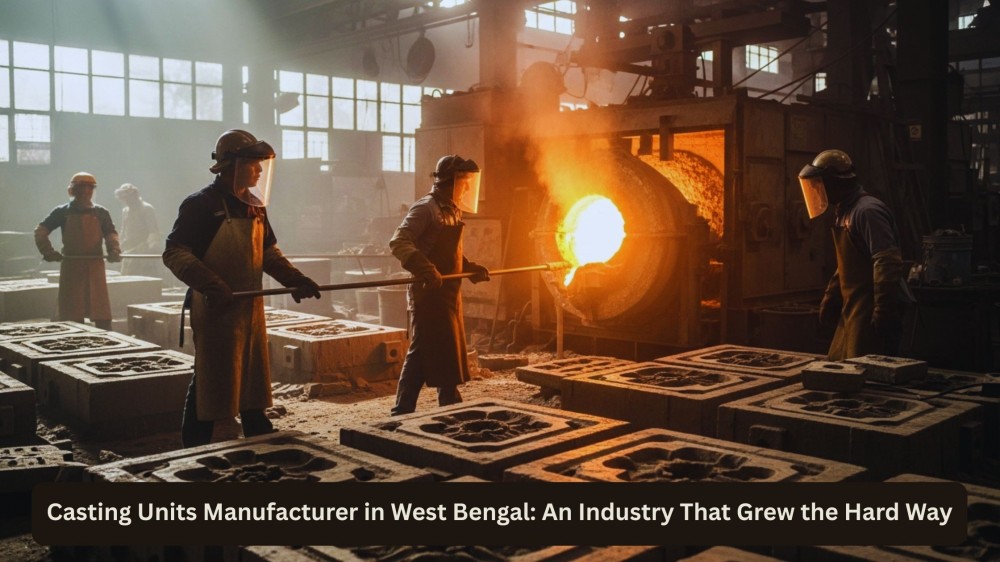
There’s a certain smell around casting units in West Bengal—hot sand, metal, oil, time. It’s not romantic, but it’s honest. You feel it the moment you step into an older foundry area, where the workday starts early and ends only after the last pour settles the right way.
Casting manufacturing here wasn’t built on startup optimism or glossy expansion plans. It grew out of necessity. Railways needed parts. Power plants needed reliability. Infrastructure needed volume that wouldn’t crack under pressure. So the units adapted. Slowly. Sometimes painfully.
Experience You Can’t Automate Away
Many casting units in West Bengal are run by people who didn’t learn casting from manuals alone. They learned by watching batches fail, furnaces misbehave, and molds collapse at the worst possible moment. That kind of learning stays with you.
Even now, when automation and monitoring systems are in place, decision-making often comes down to judgment. Knowing when metal is almost right. When to wait. When not to push output just to meet a number. That instinct doesn’t show up on inspection reports, but it shows in consistency.
Not Just Old-School, Not Fully New-School Either
It’s easy to assume these units are stuck in the past. That’s not accurate. Most serious manufacturers have upgraded—CNC machining, controlled molding lines, in-house testing, traceability systems. The difference is that upgrades happened when they made sense, not because a trend demanded it.
You’ll see modern equipment sitting next to setups that look unchanged for years—and somehow, the combination works. Output is stable. Rejection rates stay manageable. Customers don’t complain much, which in manufacturing usually means things are going right.
Why Buyers Stick Around
Clients don’t return to casting units in West Bengal just for pricing, though it helps. They return because communication is straightforward. If something can’t be done, it’s said early. If a tolerance needs adjustment, it’s discussed instead of ignored.
There’s also flexibility here. Smaller changes don’t derail entire production schedules. Custom jobs aren’t treated like inconveniences. That attitude matters more than most people realize, especially for industries where castings are critical but rarely visible.

The People Make the Process Work
Foundry work is still labor-intensive, no matter how advanced the plant looks. Skilled workers here know the rhythm of the floor. They don’t need constant supervision. Problems are often spotted before alarms go off.
Training happens quietly—new workers learning by standing next to experienced hands, not sitting in classrooms. It’s not efficient on paper, but it works in practice.
Where Things Are Headed
Casting units in West Bengal aren’t chasing dramatic reinvention. The focus now is steadier: cleaner operations, better documentation, energy efficiency that doesn’t disrupt output. It’s practical evolution, not reinvention.
The manufacturers who last will be the ones who change carefully—without forgetting why their processes worked in the first place.
HMB Group operates among the established casting units manufacturers in West Bengal, supplying engineered castings with a focus on reliability and long-term performance. For business discussions, contact +91 33 6673 5500.





