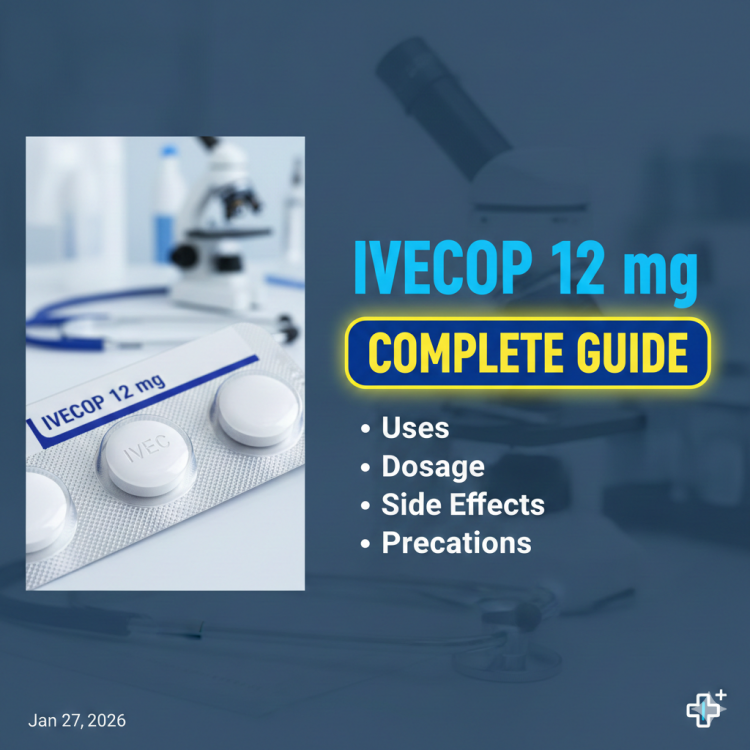
Parasitic infections may sound like something from a biology textbook, but they are very real and still affect millions of people worldwide. From intestinal worms to skin-related parasitic conditions, these infections can quietly disrupt health if left untreated. One commonly prescribed medication for such conditions is Ivecop 12 mg.
This guide explains Ivecop 12 mg uses, dosage, side effects, and precautions in a clear, practical way. No medical drama. No exaggerated claims. Just facts, logic, and guidance you can trust.
What Is Ivecop 12 mg?
Ivecop 12 mg contains ivermectin an antiparasitic medicine listed by the World Health Organization (WHO) as an essential drug for treating several parasitic infections.

Ivermectin works by:
-
Paralyzing parasites
-
Disrupting their nerve and muscle function
-
Preventing them from surviving or reproducing
It does not kill viruses or bacteria. Despite internet myths, it is not a miracle cure. It is simply a well-studied antiparasitic medicine when used correctly.

Source:
World Health Organization – Model List of Essential Medicines
https://www.who.int/publications/i/item/WHO-MHP-HPS-EML-2023.02
How Ivecop 12 mg Works in the Body
Parasites rely on specific nerve signals to survive. Ivermectin targets those signals.
Once you take Ivecop 12 mg:
-
The drug binds to parasite nerve channels
-
It increases chloride ion flow
-
The parasite becomes paralyzed
-
The immune system clears it naturally
Human nerve cells stay safe because ivermectin does not easily cross the blood-brain barrier at standard doses. That’s one reason it has remained widely used for decades.
Ivecop 12 mg Uses
Doctors prescribe Ivecop 12 mg for several parasitic infections. The exact use depends on diagnosis, severity, and body weight.
1. Intestinal Worm Infections
Ivecop treats infections caused by:
-
Strongyloides stercoralis
-
Roundworms
-
Threadworms
These parasites often spread through contaminated soil or food. Symptoms may include abdominal pain, diarrhea, and unexplained weight loss.
Source:
CDC – Parasites: Strongyloidiasis
https://www.cdc.gov/parasites/strongyloides/
2. Scabies
Scabies is a skin condition caused by tiny mites that burrow into the skin. It causes:
-
Severe itching (especially at night)
-
Rashes
-
Skin irritation
Doctors often prescribe Ivecop 12 mg when topical treatments fail or when scabies spreads widely.
Source:
Centers for Disease Control and Prevention (CDC)
https://www.cdc.gov/parasites/scabies/
3. Onchocerciasis (River Blindness)
This parasitic infection spreads through blackfly bites and may cause:
-
Skin nodules
-
Intense itching
-
Vision problems
Ivermectin plays a key role in global programs aimed at eliminating river blindness.
Source:
World Health Organization – Onchocerciasis
https://www.who.int/news-room/fact-sheets/detail/onchocerciasis
4. Lymphatic Filariasis (As Part of Combination Therapy)
Ivecop helps reduce microfilariae levels in the blood. Doctors often combine it with other medications as part of mass treatment programs.
Source:
WHO – Lymphatic Filariasis
https://www.who.int/teams/control-of-neglected-tropical-diseases/lymphatic-filariasis
Ivecop 12 mg Dosage
Dosage depends on:
-
Body weight
-
Type of infection
-
Medical history
General Dosage Guidelines (For Reference Only)
| Condition | Typical Dose |
|---|---|
| Intestinal worms | Single dose based on weight |
| Scabies | One dose, repeated after 7–14 days |
| Onchocerciasis | Single annual or biannual dose |
Doctors calculate dosage in micrograms per kilogram, not guesswork.
Never self-dose. Always follow a healthcare professional’s instructions.
How to Take Ivecop 12 mg
-
Take the tablet on an empty stomach
-
Swallow with a full glass of water
-
Avoid food for at least 1 hour before and after
-
Do not crush or chew unless advised
Consistency matters. Skipping doses reduces effectiveness and may allow parasites to survive.
Possible Side Effects of Ivecop 12 mg
Most people tolerate ivermectin well. Side effects are usually mild and temporary.
Common Side Effects
-
Headache
-
Dizziness
-
Nausea
-
Mild diarrhea
-
Fatigue
Less Common but Important Effects
-
Skin rash
-
Muscle pain
-
Joint discomfort
-
Swelling of lymph nodes
These effects often occur because the body reacts to dying parasites, not the medicine itself.
Rare but Serious Side Effects
-
Severe allergic reactions
-
Vision changes
-
Confusion or seizures (very rare)
Seek medical attention immediately if severe symptoms appear.
Source:
U.S. National Library of Medicine – Ivermectin
https://medlineplus.gov/druginfo/meds/a607069.html
Precautions Before Using Ivecop 12 mg
Ivecop may not suit everyone. Tell your doctor if you have:
-
Liver disease
-
Weak immune system
-
History of neurological disorders
-
Ongoing infections
-
Pregnancy or breastfeeding
Doctors may adjust dosage or choose alternatives.
Use During Pregnancy and Breastfeeding
Current evidence suggests caution.
-
Doctors avoid ivermectin during pregnancy unless benefits outweigh risks
-
Breastfeeding mothers should consult a doctor before use
Source:
FDA Drug Safety Information
https://www.fda.gov/
Drug Interactions to Know About
Ivecop may interact with:
-
Blood thinners
-
Sedatives
-
Certain antifungal medicines
Always share your full medication list with your doctor. That includes supplements and herbal products.
Can Ivecop 12 mg Be Used Long-Term?
Doctors usually prescribe ivermectin as:
-
A single dose
-
Or short-term treatment
Long-term or frequent use without medical supervision increases side effect risk and is not recommended.
This is medicine, not a daily vitamin.
Myths vs Facts (Quick Reality Check)
Myth: Ivecop cures viral infections
Fact: It treats parasitic infections only
Myth: Higher doses work faster
Fact: Incorrect dosing increases risk, not benefits
Myth: Side effects mean treatment failure
Fact: Mild reactions often signal parasite clearance
When to See a Doctor
Contact a healthcare professional if:
-
Symptoms persist after treatment
-
Side effects worsen
-
You experience unusual neurological symptoms
-
The infection returns
Early follow-up prevents complications and reinfection.
Final Thoughts
Ivecop 12 mg remains a trusted antiparasitic medicine backed by decades of research and global health use. When taken correctly and under medical supervision, it offers effective relief from several parasitic infections.
The key takeaway is simple:
-
Use it for the right condition
-
Follow professional guidance
-
Avoid misinformation and self-medication
Parasites may be persistent, but informed treatment works better than guesswork.
Trusted Medical Sources Used
-
World Health Organization (WHO)
-
Centers for Disease Control and Prevention (CDC)
-
U.S. National Library of Medicine
-
FDA Drug Information