
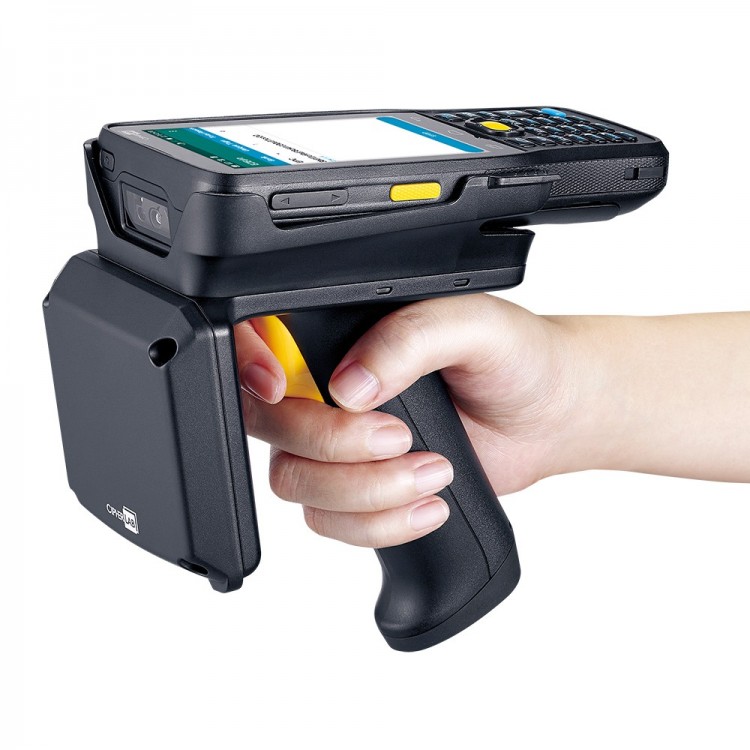
RFID readers play a crucial role in modern tracking and identification systems, helping businesses automate data collection, improve accuracy, and enhance operational efficiency. From supply chain management to access control, RFID readers are widely used across industries to read, capture, and transmit data stored on RFID tags without direct contact.
This article explores what RFID readers are, how they work, their types, benefits, and key applications.
What Are RFID Readers?
An RFID reader is an electronic device designed to communicate with RFID tags using radio frequency signals. The reader sends out electromagnetic waves that activate nearby RFID tags, allowing them to transmit stored data back to the reader. This data is then processed and integrated into software systems for tracking, monitoring, or identification purposes.
Unlike barcodes, RFID readers do not require line-of-sight scanning, making them faster and more reliable for high-volume operations.How RFID Readers Work
RFID readers consist of three main components: a transmitter, a receiver, and an antenna. The process works as follows:
-
The RFID reader emits radio waves through its antenna.
-
An RFID tag within range receives the signal.
-
The tag transmits its stored information back to the reader.

-
The reader decodes the data and sends it to a connected system or database.
Depending on the type of tag—passive, active, or semi-passive—the communication range and power requirements may vary.
Types of RFID Readers
1. Handheld RFID Readers
Handheld RFID readers are portable devices commonly used for inventory management, asset audits, and field operations. They allow staff to scan items quickly while moving around warehouses or retail stores.
2. Fixed RFID Readers
Fixed readers are installed at specific locations such as entry points, conveyor belts, or loading docks. These readers continuously monitor RFID-tagged items passing through their range.
3. Mobile RFID Readers
Mobile readers are integrated into smartphones or tablets, offering flexibility and real-time data capture for on-the-go applications.
4. Integrated RFID Readers
These readers combine antennas, processors, and communication modules into a single unit. They are ideal for compact installations and automated systems.
RFID Reader Frequency Bands
RFID readers operate across different frequency ranges, each suited to specific use cases:
-
Low Frequency (LF): Short-range applications like animal tracking and access control.
-
High Frequency (HF): Used for contactless cards, library systems, and ticketing.
-
Ultra-High Frequency (UHF): Offers longer read ranges, making it ideal for supply chain and asset tracking.
Choosing the right frequency ensures optimal performance and accuracy.
Benefits of Using RFID Readers
Improved Accuracy
RFID readers significantly reduce human error by automating data capture and eliminating manual scanning.
Faster Operations
Multiple tags can be read simultaneously, saving time compared to barcode systems.
Enhanced Asset Visibility
Real-time tracking provides better control over inventory, equipment, and high-value assets.
Cost Efficiency
Although initial investment may be higher, RFID readers help reduce losses, labour costs, and operational inefficiencies over time.
Scalability
RFID systems can be easily expanded as business needs grow.
Applications of RFID Readers
RFID readers are used across various industries, including:
-
Supply Chain & Logistics: Tracking goods from manufacturing to delivery.
-
Retail: Inventory management, theft prevention, and automated checkout.
-
Healthcare: Monitoring medical equipment, patient identification, and medication tracking.
-
Manufacturing: Work-in-progress tracking and quality control.
-
Access Control & Security: Secure entry systems and employee identification.
-
Asset Tracking: Monitoring tools, machinery, and IT assets across locations.
Choosing the Right RFID Reader
When selecting an RFID reader, consider factors such as read range, environment, tag compatibility, frequency type, and integration capabilities. Understanding your specific use case helps in choosing a reader that delivers reliable and consistent performance.
Future of RFID Readers
With advancements in IoT, AI, and cloud technology, RFID readers are becoming smarter and more connected. Modern readers now support real-time analytics, remote monitoring, and seamless integration with enterprise systems, making them an essential part of digital transformation strategies.
Conclusion
RFID readers are a powerful tool for organisations seeking accurate, fast, and automated data collection. By enabling real-time tracking, improving efficiency, and reducing operational costs, RFID readers continue to transform industries worldwide. Investing in the right RFID reader solution can provide long-term value and a strong competitive advantage in today’s data-driven business environment.





