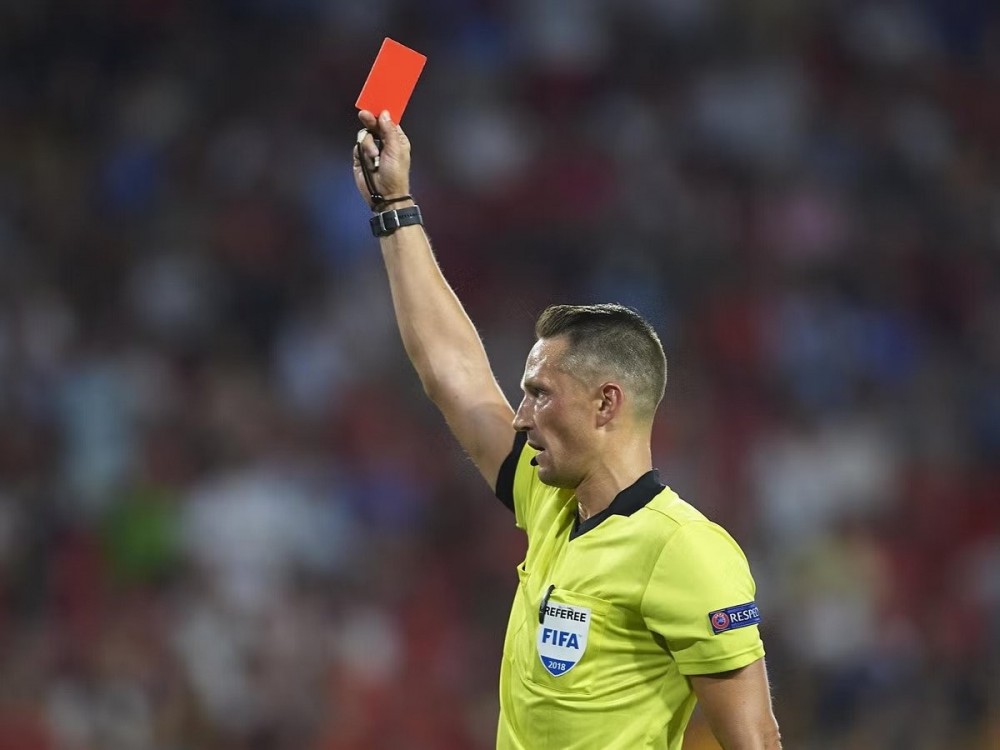
layers react with disbelief, anger, or resignation, while fans erupt in shock. This single gesture can redefine the outcome of a game and etch itself into football history.
A red card in football represents the ultimate punishment on the pitch. It signals a serious violation of the rules and results in the immediate dismissal of a player. Unlike a yellow card, which serves as a warning, a red card is final and unforgiving. Once shown, there is no return—the player must leave the field, and the team must continue with one fewer player.
The Meaning Behind a Red Card
At its core, a red card in football exists to protect the integrity of the game. It is issued for offenses such as violent conduct, serious foul play, deliberate handballs denying a goal, or abusive language toward officials. These actions threaten player safety and undermine fair competition. The red card ensures discipline and sends a clear message that certain behaviors will not be tolerated.

The psychological impact of a red card is immense. For the dismissed player, it is a moment of humiliation and regret. For teammates, it is a test of resilience. Suddenly, tactics must change, defensive lines tighten, and physical effort doubles. For opponents, it often sparks renewed confidence and momentum.
The Atmosphere of a Red Card Moment
A red card in football creates one of the most visually striking scenes in sports. The referee’s authoritative posture, the vivid red against the green pitch, and the raw emotion on players’ faces combine to form a cinematic tableau. The crowd’s reaction is equally powerful—some fans explode in celebration, others in outrage, depending on their allegiance.
This dramatic pause, often lasting only seconds, can define an entire match. Television cameras zoom in on furious protests, teammates trying to calm tempers, and coaches shouting instructions from the sidelines. In that instant, football transforms from a flowing game into a high-stakes battle of nerves.
Tactical Impact on the Match
From a strategic standpoint, a red card in football forces immediate adjustments. Teams reduced to ten players often adopt a defensive shape, sacrificing attacking ambitions to maintain structure. Midfielders drop deeper, strikers track back, and substitutions are reshuffled to restore balance.
Interestingly, history has shown that a red card does not always guarantee victory for the opposing side. Sometimes, the reduced team rallies together, fueled by adversity, while the team with a numerical advantage becomes complacent. This unpredictability is part of what makes a red card such a fascinating element of the game.

Famous Red Card Incidents
Football history is filled with iconic red card moments. From controversial World Cup dismissals to heated club rivalries, the red card in football has often stolen headlines. These moments are debated for years, with fans and analysts dissecting whether the referee’s decision was justified.
Such incidents highlight the human element of refereeing. Despite technological aids like VAR, red cards remain subjective in many cases. A split-second decision can change careers, matches, and even tournament outcomes.
Discipline, Fair Play, and Responsibility
While the drama of a red card in football captivates audiences, it also serves as a reminder of responsibility. Players at the highest level are role models, and their behavior influences millions of young fans worldwide. The red card reinforces the importance of discipline, respect, and control, even in the most intense moments.
Modern football authorities emphasize fair play, using red cards as a tool to maintain standards. Suspensions and fines often follow, extending the consequences beyond the final whistle.
Why Red Cards Matter in Football
Ultimately, a red card in football is more than just a rule enforcement—it is a turning point. It injects tension, emotion, and unpredictability into the game. Fans may remember the goals, but they never forget the red card that changed everything.
In the glow of stadium lights, amid the roar of the crowd and the stillness of a frozen moment, the red card stands as football’s most powerful symbol of authority. It reminds us that in a game driven by passion, discipline remains essential.