
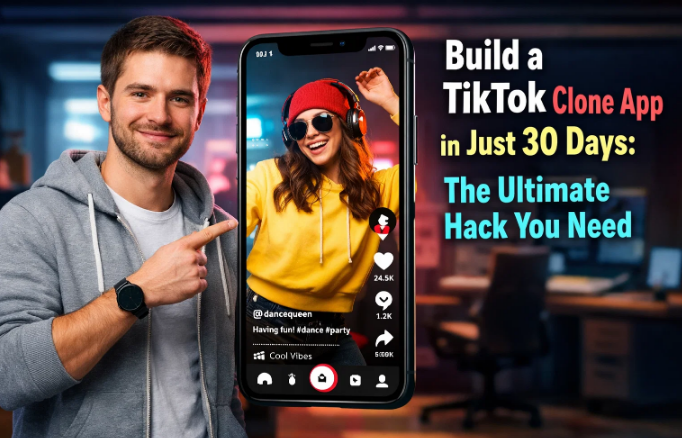
The social media world is dominated by platforms that not only entertain but also create massive business opportunities. One of the most successful and influential apps of the past few years has been TikTok. Its rapid rise has made it a goldmine for influencers, marketers, and content creators. But here's the twist—what if you could harness the power of TikTok without reinventing the wheel? What if you could create your own TikTok clone app in just 30 days, capitalizing on its popularity and features?
This article breaks down how businesses can build a TikTok-like app in just a month, and more importantly, how you can do it in a way that sets you up for success. With a well-defined strategy and the right tools, launching a custom TikTok clone app can be faster, easier, and more profitable than you think.
Why Build a TikTok Clone App?
You might be wondering, “Why build a TikTok clone app in the first place?” TikTok’s viral success is based on its user-friendly interface, interactive features, and content-sharing capabilities. As a business, creating a TikTok-like app allows you to tap into an existing trend with minimal risk while adding your unique spin to stand out in the market.

Moreover, if you’re in the business of developing mobile apps or launching a platform with social engagement features, a custom TikTok clone app is an excellent way to fill a growing demand for interactive video content. With the right monetization strategies, you can generate revenue from ads, subscription models, and in-app purchases, turning your app into a profitable venture.
Key Features to Include in Your TikTok Clone
Creating a TikTok clone doesn’t mean simply copying the original. While you want to borrow some successful features, adding unique elements and ensuring high performance will help you stand out. Below are some of the essential features that every app like TikTok should include:
1. Video Creation and Editing Tools
A core feature of a TikTok-like app is the ability for users to create, edit, and share videos. Your app should offer a seamless experience for shooting videos, applying filters, adding music, and incorporating special effects. Look into integrating a powerful video editing tool that simplifies the process but still allows room for creativity.
2. Multi-Account Management
One of the standout features of TikTok is its ability to manage multiple accounts easily. If your users are influencers or businesses, they'll want to be able to switch between different profiles with ease. Multi-account management will allow users to personalize their experience while maintaining control over their various personas.
3. Engagement Features: Comments, Likes, Shares, and Follows
At its core, TikTok thrives on engagement. Your TikTok clone app should have an easy-to-navigate interface that allows users to like, comment, share, and follow others seamlessly. Gamified features like badges, leaderboards, and challenges can increase user engagement and make the platform more addictive.

4. Real-Time Notifications and Feeds
User engagement doesn’t stop with likes and comments. Real-time notifications are essential for alerting users when they receive new followers, messages, or when someone comments on their posts. Additionally, a constantly updating feed ensures that users are always engaged with fresh content.
5. Whitelabel TikTok App Features
If you're not looking to build the app from the ground up, you can consider using a whitelabel TikTok app solution. These apps are ready-to-deploy versions that can be customized with your branding and unique features. They are especially useful if you have a limited development timeline but still want a polished product.
The Tech Behind Your TikTok Clone
While building a TikTok clone app may sound straightforward, the tech stack you choose plays a crucial role in how your app performs. To keep your app fast, scalable, and reliable, you’ll need to carefully select the right technologies for both the front-end and back-end of your platform.
Front-End Development
For the front-end of your TikTok-like app, HTML5, CSS3, and JavaScript frameworks such as React Native or Flutter are excellent choices. These technologies enable the app to run smoothly on both Android and iOS, offering a native-like experience without the complexity of developing separate codebases.
- React Native: Popular for cross-platform development, offering speed and flexibility.
- Flutter: Known for its fast rendering engine and beautiful UIs.
These frameworks help in building a fast and responsive user interface (UI) that can handle real-time interactions like video streaming and social sharing.
Back-End Development
On the back-end, your app will need to support massive volumes of user data and media content, which makes it important to choose the right stack. Node.js, Python (Django or Flask), and Ruby on Rails are popular choices for the back-end due to their scalability and fast processing power.
For real-time features such as live video streaming and chat, technologies like WebSockets and WebRTC (for video calling) should be integrated. A well-designed back-end infrastructure ensures your app can handle hundreds or thousands of users simultaneously.
- Node.js: Great for handling high levels of concurrency and real-time data.
- Django: Offers a robust framework for building scalable apps with quick deployment.
Cloud Storage and Media Management
Since your app will host a lot of media (videos, images, etc.), reliable cloud storage is a must. Cloud solutions like Amazon S3, Google Cloud Storage, or Microsoft Azure offer scalable storage solutions with high availability and security. This is especially important when dealing with large video files.
Database Solutions
For handling user data, posts, and social interactions, a database like MongoDB or MySQL will be required. MongoDB works well for apps that need flexibility in managing large amounts of unstructured data, whereas MySQL offers reliability for traditional relational data.
How to Build Your TikTok Clone in 30 Days
Building a TikTok clone app in 30 days is ambitious but achievable if you follow a structured plan. Here's a simple breakdown of the process:
Week 1: Planning and Design
The first week should be dedicated to planning the features, design, and tech stack. Create wireframes and user flow diagrams to define how the app will function. If you’re using a whitelabel TikTok app, this phase will involve customizing the app’s appearance and features to align with your brand.
Week 2: Front-End Development
Once you have the wireframes, start developing the front-end of your app. Focus on building the video uploading and editing features, user registration, and the core user interface. Use React Native or Flutter to ensure that your app is cross-platform.
Week 3: Back-End Development
With the front-end in place, move on to building the back-end infrastructure. Set up the user authentication system, develop the API for handling posts, likes, comments, and notifications, and integrate the cloud storage system for managing media.
Week 4: Testing, Launch, and Marketing
In the final week, focus on testing the app across various devices, ensuring that all features are working seamlessly. Conduct usability testing to identify any UI/UX issues, and once everything is polished, launch your app on the App Store and Google Play. Don’t forget to plan a marketing strategy for your app launch!
Partnering with the Right App Development Company
While the 30-day timeline is ambitious, working with the right app development company can speed up the process. These companies offer expertise in building scalable, feature-rich apps and can assist with everything from the technical stack to the UI/UX design. Look for a company that specializes in building TikTok clones or similar social media apps to ensure they understand the nuances of such platforms.
Monetizing Your TikTok Clone App
Building a TikTok clone is just the first step. To ensure long-term profitability, you need a solid monetization strategy. Here are a few revenue-generating ideas:
- Ad Revenue: Integrate in-app advertisements and display ads to generate passive income.
- Premium Features: Offer premium features such as advanced video filters or extra customization options for a subscription fee.
- In-App Purchases: Allow users to buy virtual goods, like stickers, effects, or coins to support their content.
Conclusion
Building a TikTok clone app in just 30 days is a challenging but achievable goal with the right planning, tools, and resources. From choosing the right tech stack to adding engaging features and monetization strategies, every step of the process plays a key role in ensuring the success of your app. Whether you’re looking to build a custom TikTok clone app or use a whitelabel TikTok app solution, taking the time to create a user-centric, feature-packed platform will set your business on the path to social media success.
By focusing on the right features, tech stack, and user engagement strategies, you can launch a TikTok-like app that not only attracts users but also keeps them coming back for more. Ready to create your own viral sensation? Start planning now!





