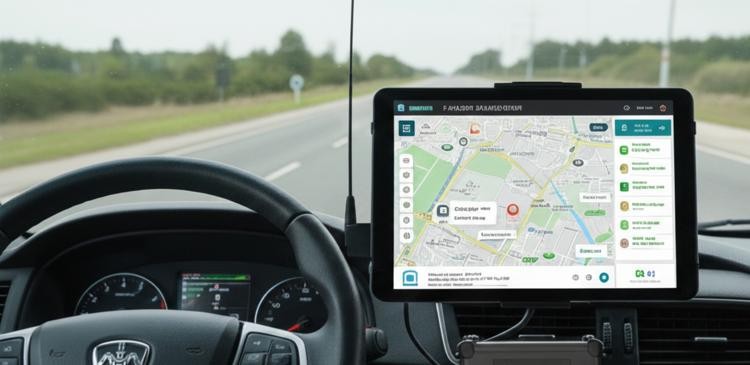
As fleets become more connected, data-driven, and digitally operated, the technology that supports these functions must evolve accordingly. Emerging standards in fleet technology are set to redefine how fleets operate, integrate systems, and extract value from data. Standards will bring greater interoperability, improved safety, stronger regulatory compliance, and enhanced analytics capabilities. Over the next decade, these advancements won’t just optimize daily operations — they will fundamentally redefine the competitive landscape for fleet operators worldwide.
Why Standards Matter in Fleet Technology
Standards provide a common language and framework that allow different systems, devices, and software to communicate seamlessly. Without standards, technology becomes siloed: each vendor’s tools may work well on their own but offer limited value when combined with others. For fleets operating diverse vehicles and platforms, the lack of compatibility can create data gaps, integration delays, and increased costs. Emerging standards establish consistent protocols for capturing, transmitting, and interpreting vehicle and operational data, enabling richer insights and more coordinated actions across systems.
Enhancing Interoperability Across Platforms
One of the biggest benefits of new standards is improved interoperability. Fleet operations rely on multiple technologies — telematics, routing systems, maintenance platforms, fuel monitoring tools, and safety applications. Historically, integrating these systems has been complex and costly because each vendor uses proprietary data formats and communication protocols. Standardization enables these tools to share information easily, reducing integration overhead and improving the accuracy and usefulness of fleet data. This allows fleet managers to access a unified operational view instead of manually stitching together data from disparate sources.
Improving Data Consistency and Quality
The value of analytics — from predictive maintenance to advanced performance benchmarking — depends on consistent, high-quality data. Emerging standards help ensure that data fields, definitions, and measurement units are uniform across systems and vendors. This consistency eliminates ambiguity and errors that can arise when different systems record or interpret the same variable differently. When data quality improves, analytical models become more accurate, insights become more reliable, and strategic decisions become more confident. Standardized data becomes a foundational asset for modern fleet intelligence.
Supporting Regulatory Compliance and Safety Requirements
Regulatory compliance is another area where standards will have a major impact. Governments and industry bodies continue to introduce safety, emissions, and data reporting requirements. As these regulations become more stringent and widespread, fleets must ensure that their technology ecosystems can capture and report data in compliant formats. Emerging standards help align data capture and reporting mechanisms with regulatory requirements, reducing the administrative burden of compliance. Standard protocols for recording safety events, fuel usage, and maintenance histories make it easier to demonstrate adherence to regulations during audits.
Driving Innovation Through Open Ecosystems
Standardization encourages innovation by creating open, accessible technology ecosystems. When third-party developers know that their solutions can integrate with standardized platforms, they are more likely to build tools that extend functionality and address specific operational needs. This competition and collaboration accelerate the pace of innovation in fleet tech. Fleets benefit from a broader marketplace of interoperable tools that can be adopted without expensive custom integrations or vendor lock-in. Emerging standards foster an environment where specialized solutions can thrive alongside core operational platforms.
Enhancing Predictive and AI-Driven Capabilities
Advanced analytics, artificial intelligence, and machine learning rely on large, consistent datasets to train accurate models. As standards improve the scope and quality of fleet data, these technologies will gain better inputs and produce stronger outputs. Predictive capabilities — such as forecasting maintenance needs, estimating fuel demand, and anticipating safety risks — will become more precise and actionable. Over time, AI-driven insights will not only identify trends but also recommend optimal decisions or automate routine responses. Standardized data will serve as the foundation for these next-generation capabilities.
The Role of Can Bus Telematics in a Standards-Driven Future
One important component of emerging fleet standards is deeper integration with vehicle electronics. Technologies such as Can Bus Telematics enable access to detailed engine and system performance data that was previously inaccessible or fragmented. By standardizing how electronic control unit (ECU) data is interpreted and transmitted, fleets can tap into richer streams of information, enhancing diagnostics, maintenance planning, and performance insights. Can Bus data becomes more valuable when it is standardized and integrated across the broader fleet ecosystem, allowing deeper visibility into operational health and behavior.

Improving Safety and Risk Management
Standards will also advance safety analytics by defining consistent event definitions and thresholds across systems. When safety events like harsh braking, rollover risk, or collision warnings are recorded based on common criteria, comparisons become meaningful, and safety programs can be benchmarked across fleets. Standardized safety data enhances risk modeling and enables organizations to implement evidence-based interventions. This helps reduce accidents, lower insurance premiums, and foster safer driving cultures.
Enabling Scalable Fleet Growth
As fleets grow in size and complexity, scalability becomes a major concern. Standardized technologies make it easier to onboard new vehicles, integrate additional sensors, and deploy new applications without extensive customization. This reduces the time, cost, and risk associated with fleet expansion. Whether a fleet is adding new regions, vehicle types, or business lines, standardized systems help ensure that data continuity and operational control scale without disruption.
Conclusion: Standards as a Strategic Enabler
Emerging standards in fleet technology are not mere technical formalities — they are strategic enablers that will shape the future of transportation operations. By improving interoperability, data quality, regulatory readiness, and innovation potential, standards reinforce the value of connected, intelligent fleets. Over the next decade, fleets that adopt and align with these standards will benefit from deeper insights, stronger performance, and greater resilience in a rapidly changing landscape. The transition toward standardized, data-rich operations will redefine what’s possible in fleet efficiency, safety, and competitive advantage.