
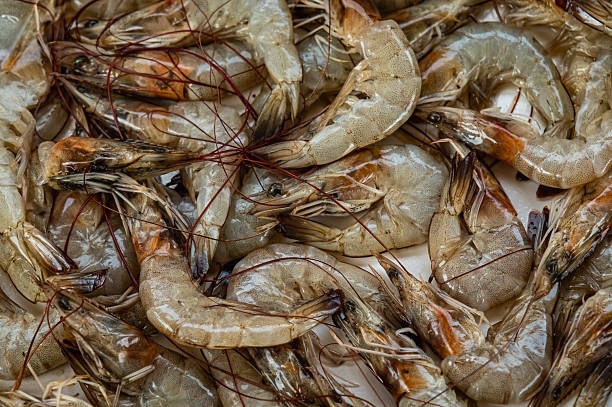
The global prawn market is on a steady growth trajectory, valued at 8.6 million tons in 2024, with projections to reach 11.1 million tons by 2033, growing at a CAGR of 2.76%. This expansion is fueled by rising global seafood demand, increasing health-conscious eating habits, and the integration of prawns into diverse cuisines worldwide. Technological innovations in sustainable aquaculture, supportive international trade policies, and the rising use of prawns in processed foods are key accelerators driving market momentum forward.
Study Assumption Years
- Base Year: 2024
- Historical Year: 2019–2024
- Forecast Year: 2025–2033
Prawn Market Key Takeaways

- The global prawn market was valued at 8.6 million tons in 2024 and is projected to reach 11.1 million tons by 2033, growing at a CAGR of 2.76%.
- Rising consumer preference for healthy, protein-rich seafood is a major market driver.
- Globalization of cuisines has expanded prawn consumption across diverse regions and cultures.
- Technological advancements, such as recirculating aquaculture systems (RAS), are enhancing yield and sustainability.
- Processed food applications are creating new demand avenues for prawn-based products.
- Favorable trade agreements and retail expansion are improving global accessibility.
Market Growth Factors
The primary driver of the prawn industry is the increasing consumer shift toward healthy, high-protein, and low-fat diets. Prawns provide omega-3 fatty acids together with essential vitamins and minerals that include selenium and zinc which help to improve heart health and weight control. Global population growth together with rising disposable incomes especially in emerging markets such as China and India has resulted in increased demand for premium seafood products. Prawns have become an essential ingredient in home cooking and the growing worldwide foodservice sector because of their ability to adapt to different culinary traditions that include Mediterranean and Asian cuisines. The worldwide demand for prawns maintains their status as one of the most traded seafood commodities in the world.
Aquaculture now accounts for over 60% of global prawn production. The industry has advanced through better farming techniques which improve production and decrease disease threats. Modern farming uses both Recirculating Aquaculture Systems (RAS) and Biofloc Technology because these systems improve water quality and enable farmers to raise more fish while protecting the environment. Researchers developed fast-growing disease-resistant L. vannamei strains through genomics and selective breeding, which now dominates almost 80% of the aquaculture market. The combination of AI-based precision farming with real-time monitoring systems gives farmers the ability to track water conditions and manage automatic feeding times. The technologies create supply chain stability by decreasing dependence on unpredictable wild fish catches while increasing the profitability of agricultural operations.
The growth of value-added products demand particularly ready-to-cook breaded frozen prawns which serve as essential growth drivers. Urban consumers who lead active lives now choose seafood products that need almost no cooking time. The company makes substantial capital investments in state-of-the-art processing plants which will enable them to manufacture pre-marinated and peeled and deveined shrimp products. E-commerce platforms and cold chain logistics systems allow the processed prawns to reach more distant markets while maintaining their quality and extended shelf life. Processors find higher profit margins with these products which leads them to shift their business focus from exporting raw materials to selling high-end branded products.
Request for a sample copy of this report:

https://www.imarcgroup.com/prefeasibility-report-prawn-processing-plant/requestsample
Market Segmentation
By Species:
- Penaeus Vannamei: A widely farmed whiteleg shrimp species known for its fast growth and adaptability to various farming conditions.
- Penaeus Monodon: Also known as black tiger shrimp, valued for its large size and premium market appeal.
- Macrobrachium Rosenbergii: A freshwater prawn species popular in tropical regions and specialty cuisines.
- Others: Includes minor or region-specific prawn species contributing to niche market segments.
By Prawn Size:
- <21: Extra-large prawns, often used in premium dishes and high-end restaurants.
- 21-25: Large-sized prawns suitable for grilling and gourmet preparations.
- 26-30: Medium-large prawns commonly used in commercial foodservice.
- 31-40: Standard size for retail and everyday cooking applications.
- 41-50: Smaller prawns are ideal for salads, stir-fries, and processed foods.
- 51-60: Compact size frequently used in ready-to-eat meals and snacks.
- 61-70: Small prawns are often included in canned or frozen seafood mixes.
- >70: Tiny prawns used in sauces, soups, and flavoring applications.
By Region:
- Major Producing Regions: China, India, Indonesia, Vietnam, Thailand, Ecuador, Others
- Major Consuming Regions: United States, China, Europe, Japan, Indonesia, Others
Regional Insights
While the provided data does not specify a dominant region, global prawn production and consumption are heavily concentrated in Asia - particularly in countries like India, Vietnam, Thailand, and Indonesia - due to favorable climatic conditions, established aquaculture infrastructure, and strong domestic and export demand. Additionally, North America and Europe remain key consuming regions, driven by health trends and culinary diversity.
Recent Developments & News
Leading prawn companies are doubling down on sustainability and transparency. Many are adopting eco-friendly farming methods, minimizing bycatch, and obtaining certifications to build consumer trust. Traceability technologies now allow customers to track prawns from farm to plate, ensuring ethical sourcing. Innovations like pre-cooked and pre-seasoned prawn products are meeting the demand for convenience without compromising nutrition. Companies are also actively promoting prawns as a healthy protein alternative, emphasizing their low-fat, high-protein profile to align with modern wellness trends.
Key Players
- Penaeus Vannamei
- Penaeus Monodon
- Macrobrachium Rosenbergii
- Others
Ask Analyst for Customization:
https://www.imarcgroup.com/request?type=report&id=84&flag=E
If you require any specific information that is not covered currently within the scope of the report, we will provide the same as part of the customization.
About Us:
IMARC Group is a global management consulting firm that helps the world’s most ambitious changemakers to create a lasting impact. The company provides a comprehensive suite of market entry and expansion services. IMARC offerings include a thorough market assessment, feasibility studies, company incorporation assistance, factory setup support, regulatory approvals and licensing navigation, branding, marketing and sales strategies, competitive landscape, and benchmarking analyses, pricing and cost research, and procurement research.
Contact Us:
IMARC Group
134 N 4th St. Brooklyn, NY 11249, USA
Email: sales@imarcgroup.com
Tel No:(D) +91 120 433 0800
United States: (+1-201971-6302)





