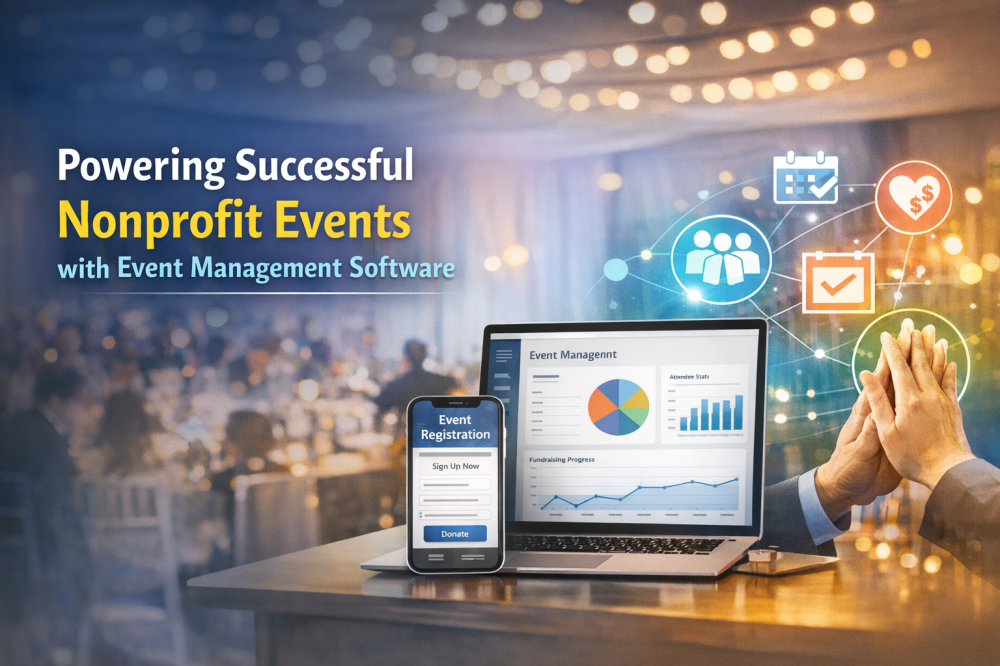
Event management software streamlines planning, execution, and follow-up, enabling nonprofits to host impactful events without unnecessary stress. By automating key processes and centralizing data, organizations can focus more on their mission and less on administrative tasks.

Centralized Event Planning and Organization
One of the biggest advantages of event management software is centralized planning. Instead of juggling spreadsheets, emails, and paper lists, nonprofits can manage everything from a single platform. Event details such as schedules, venues, registrations, ticketing, and attendee information are stored in one place, making coordination easier and reducing the risk of errors.
With a centralized system, team members can collaborate more effectively. Tasks can be assigned, deadlines tracked, and updates shared in real time. This improves transparency and ensures that everyone involved in the event is aligned, even when working remotely or with volunteers.
Simplified Registration and Ticketing
Manual registration processes can be time-consuming and frustrating for both organizers and attendees. Event management software simplifies registration by offering online sign-ups, automated confirmations, and digital ticketing. Attendees can easily register from their devices, while nonprofits can track registrations instantly.
For fundraising events, ticket pricing tiers, discounts, and promo codes can be set up effortlessly. Secure online payment integration allows nonprofits to collect funds quickly and safely, improving cash flow and reducing reliance on manual payment tracking.
Enhanced Donor and Attendee Engagement
Successful nonprofit events are built on meaningful engagement. Event management software helps nonprofits personalize communication with attendees, donors, and volunteers. Automated emails, reminders, and follow-ups ensure that participants stay informed before, during, and after the event.

By tracking attendee behavior and preferences, nonprofits can tailor messages and offers, making supporters feel valued. Post-event surveys and feedback tools further enhance engagement by showing attendees that their opinions matter, helping organizations improve future events.
Efficient Volunteer Management
Volunteers are the backbone of many nonprofit events, but managing them manually can be overwhelming. Event management software makes volunteer coordination easier by allowing nonprofits to assign roles, schedule shifts, and track participation.
Improved Fundraising and Sponsorship Tracking
Fundraising is often a primary goal of nonprofit events. Event management software provides tools to track donations, sponsorships, and pledges in real time. Organizations can monitor fundraising progress, generate reports, and identify top contributors quickly.
Sponsorship management features allow nonprofits to manage sponsor packages, benefits, and communications efficiently. This professional approach strengthens relationships with sponsors and increases the likelihood of long-term partnerships.
Data-Driven Insights and Reporting
Understanding what works and what doesn’t is essential for continuous improvement. Event management software offers detailed analytics and reporting tools that provide insights into attendance, fundraising performance, volunteer engagement, and marketing effectiveness.
By analyzing this data, nonprofits can make informed decisions, optimize future events, and demonstrate impact to donors and stakeholders. Clear reports also support transparency and accountability, which are critical for building trust.
Cost and Time Efficiency
Nonprofits often operate with limited resources, making efficiency a top priority. Event management software reduces administrative workload by automating repetitive tasks such as email communication, registration tracking, and payment processing. This saves valuable time and reduces the need for additional staff.
In the long run, the cost savings and improved productivity outweigh the initial investment in software. By running more efficient and successful events, nonprofits can maximize their return on investment and channel more resources toward their mission.
Scalability for Growing Nonprofits
As nonprofits grow, their events become more complex. Event management software is designed to scale with organizational needs, supporting everything from small community gatherings to large multi-day conferences. Features can be customized and expanded, ensuring that the software continues to add value as the organization evolves.
Conclusion
Event management software has become an essential tool for nonprofits looking to deliver successful, impactful events. By simplifying planning, improving engagement, enhancing fundraising, and providing valuable insights, the right software empowers nonprofits to do more with les