

Bail is a legal tool that allows someone accused of a crime to remain free while awaiting trial. However, not all bail works the same way. In the United States, the bail process can differ significantly depending on whether the case is handled at the federal or state level. Understanding these differences can save time, money, and stress. For those facing urgent situations, services like 24/7 bail bonds in North Carolina can help navigate the state system efficiently.
Federal Bail vs State Bail
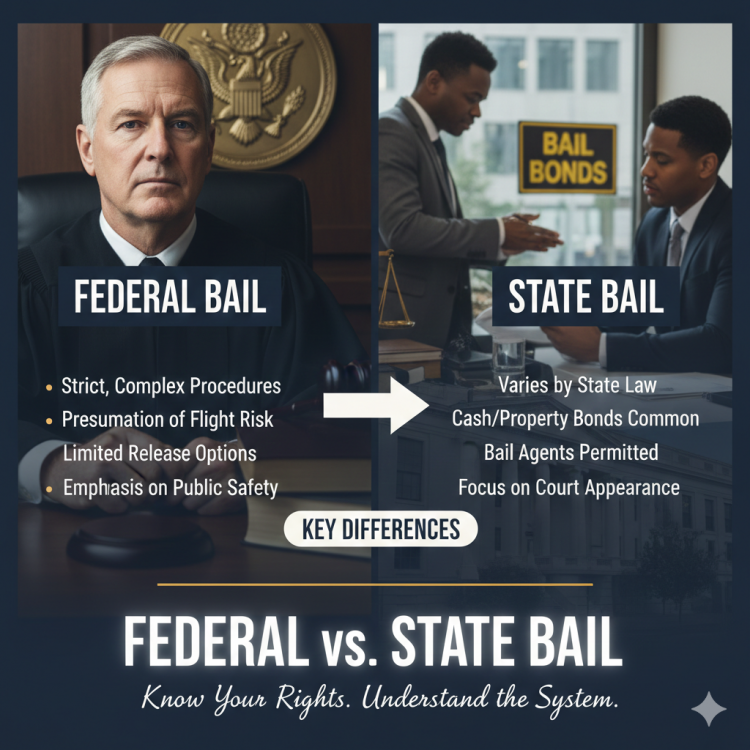
Federal and state bail systems share a similar goal: ensuring that a defendant returns for their court appearances. But they differ in how bail is set, who handles it, and the procedures involved.
Jurisdiction and Legal Authority
Federal bail cases are managed under federal law. This means they deal with crimes that violate national statutes, such as large-scale drug trafficking, white-collar crimes, or immigration offenses. Federal cases are usually overseen by U.S. District Courts.

State bail cases, on the other hand, are handled under state law. Each state has its own rules for setting bail, and they can vary widely. State courts manage most criminal cases, including theft, assault, or traffic-related offenses.
The key takeaway is that federal courts generally handle cases with potentially harsher penalties, while state courts focus on violations defined by local laws.
Bail Amounts and Guidelines
Federal courts have standardized guidelines for bail amounts. Judges often follow recommendations from the U.S. Federal Bail Schedule, which considers the severity of the crime, flight risk, and criminal history. Bail in federal cases is often higher because the stakes tend to be greater.
State bail amounts are more flexible and vary depending on local statutes. Some states allow judges significant discretion, while others use preset schedules. In minor offenses, state bail can sometimes be as low as a few hundred dollars, making it more accessible.
Types of Bail
Both federal and state courts offer several types of bail:

- Cash Bail: Paying the full amount upfront.
- Surety Bail: Using a bail bondsman to pay the fee for a percentage of the total bail.
- Release on Recognizance (ROR): The court allows release without payment if the defendant promises to appear.
Federal courts are more likely to require higher forms of security, especially for serious crimes. State courts may rely more on personal recognizance or lower cash bail amounts for minor offenses.
Process and Timeline
Federal bail procedures can take longer. After arrest, defendants typically appear before a magistrate judge within 48 hours. The judge evaluates the risk and sets bail. Because federal cases often involve complex crimes, hearings can be more detailed, and additional background checks are common.
State bail is generally faster. Many counties operate bail schedules that allow defendants to post bail immediately after arrest. This system helps reduce jail overcrowding and allows people accused of minor crimes to return home sooner.
Conditions of Bail
Federal courts may impose stricter conditions on bail. For example, travel restrictions, GPS monitoring, or surrendering of passports are common. State courts may also impose conditions, but they often reflect the severity of the crime rather than national security concerns.
Why Understanding the Difference Matters
Knowing whether your case falls under federal or state jurisdiction can affect your strategy for bail. It determines the type of bonds you can use, the amount required, and the steps needed to secure release. For individuals dealing with traffic-related offenses, relying on a reliable traffic bond service can simplify the process while ensuring compliance with court requirements.
In summary, federal and state bail systems aim for the same result: ensuring court appearance while balancing public safety. Yet, the rules, procedures, and financial requirements differ. Understanding these distinctions helps defendants and families navigate the legal system with clarity and confidence, avoiding unnecessary delays or confusion.





