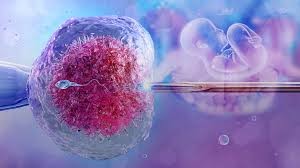
After the anticipation of egg retrieval and the anxious wait to hear how many eggs fertilized, you receive a call from your fertility clinic with an update that includes terms like "8-cell grade 2" or "4AA blastocyst." These alphanumeric codes represent embryo grading—the system embryologists use to assess embryo quality and predict which embryos have the best chance of resulting in pregnancy. Understanding embryo grading helps you make informed decisions about which embryos to transfer, which to freeze, and what to expect from your IVF cycle. While these grades provide valuable information, it's important to understand both what they tell us and their limitations.
Why Embryo Grading Matters
Embryo grading serves several critical purposes in IVF treatment:
Embryo Selection: When multiple embryos are available, grading helps identify which ones to transfer first, maximizing success chances while minimizing multiple pregnancy risks.

Transfer Timing Decisions: Embryo development speed and quality help determine whether to transfer on day 3 or day 5.
Freezing Decisions: Grading identifies which embryos are suitable for cryopreservation for future use.
Prognostic Information: While not perfectly predictive, grades provide statistical information about pregnancy likelihood.
Treatment Planning: Embryo development patterns inform protocol adjustments for future cycles if needed.
Important Reality Check: Embryo grading is subjective, based on appearance under a microscope. Even "perfect" embryos sometimes fail to implant, while "poor quality" embryos occasionally result in healthy babies. Grades predict probabilities, not certainties.

Day 3 Embryo Grading: The Cleavage Stage
If your clinic performs day 3 transfers or provides day 3 updates, you'll receive information about cleavage-stage embryos.
Cell Number:
By day 3 after fertilization, embryos should contain approximately 6-10 cells (often called "blastomeres"). Ideal embryos have:
8 cells: The target number for day 3, indicating proper development timing
6-10 cells: Still considered good quality, within normal range
4-5 cells or fewer: Slower development, lower success rates but still possible
>10 cells: Faster development—can be positive or indicate fragmentation
Cell Size Uniformity:
Embryologists assess whether cells are evenly sized or uneven:
Even cells: All blastomeres similar size—indicates coordinated development
Uneven cells: Varying cell sizes—associated with lower success rates but embryos can still succeed
Fragmentation:
Fragments are small pieces of cellular material broken off from cells. The fragmentation percentage affects grading:
<10% fragmentation: Excellent quality
10-25% fragmentation: Good quality, slight impact on success
25-50% fragmentation: Fair quality, reduced success rates
>50% fragmentation: Poor quality, significantly lower chances
Grading Systems:
Different clinics use different scales, but common systems include:
Numerical Grading (1-4 or 1-5):
- Grade 1: Excellent (even cells, no fragmentation)
- Grade 2: Good (even cells, <10% fragmentation)
- Grade 3: Fair (slightly uneven cells or 10-25% fragmentation)
- Grade 4: Poor (very uneven cells or >25% fragmentation)
- Grade 5: (if used): Very poor quality
Letter Grading (A-D):
- Grade A: Excellent quality
- Grade B: Good quality
- Grade C: Fair quality
- Grade D: Poor quality
Example: "8-cell Grade 2" means an 8-celled embryo with good quality (even cells, minimal fragmentation).
Day 5/6 Embryo Grading: The Blastocyst Stage
Most modern IVF programs culture embryos to day 5 or 6 (blastocyst stage) before transfer or freezing. Blastocyst grading is more complex and provides more information.
Blastocyst Structure:
A blastocyst contains several hundred cells organized into:
Trophectoderm (TE): Outer layer of cells that will become the placenta
Inner Cell Mass (ICM): Cluster of cells that will become the baby
Blastocoel: Fluid-filled cavity inside the embryo
Expansion Stage (First Number):
Blastocysts are graded on expansion from 1-6:
Stage 1: Early blastocyst, blastocoel less than half the embryo volume
Stage 2: Blastocyst, blastocoel half or more of embryo volume
Stage 3: Full blastocyst, blastocoel completely fills the embryo
Stage 4: Expanded blastocyst, blastocoel larger than early embryo, zona thinning
Stage 5: Hatching blastocyst, trophectoderm starting to herniate through zona
Stage 6: Hatched blastocyst, completely escaped from zona pellucida
Stages 3-6 receive additional grades for ICM and TE. Stages 1-2 are too early for detailed grading.
Inner Cell Mass Grade (First Letter):
Quality of cells forming the baby:
Grade A: Many tightly packed cells—excellent quality
Grade B: Several loosely grouped cells—good quality
Grade C: Very few cells—poor quality
Trophectoderm Grade (Second Letter):
Quality of cells forming the placenta:
Grade A: Many cells forming cohesive epithelium—excellent quality
Grade B: Few cells forming loose epithelium—good quality
Grade C: Very few large cells—poor quality
Complete Blastocyst Grade:
Example 1: "4AA" means:
- 4 = Expanded blastocyst
- A = Excellent inner cell mass
- A = Excellent trophectoderm
This represents the highest quality blastocyst.
Example 2: "3BB" means:
- 3 = Full blastocyst
- B = Good inner cell mass
- B = Good trophectoderm
Still good quality with reasonable success rates.
Example 3: "5AB" means:
- 5 = Hatching blastocyst
- A = Excellent inner cell mass
- B = Good trophectoderm
High quality, advanced development stage.
Success Rates by Embryo Grade
Understanding how grades correlate with pregnancy success helps set realistic expectations:
Day 5 Blastocyst Success Rates (approximate):
Grade AA (4AA, 5AA, 6AA):
- Pregnancy rate: 50-65% (varies by age)
- Live birth rate: 40-55%
- Highest quality embryos
Grade AB or BA (4AB, 4BA, 5AB, etc.):
- Pregnancy rate: 45-55%
- Live birth rate: 35-45%
- Excellent quality embryos
Grade BB (3BB, 4BB, 5BB):
- Pregnancy rate: 40-50%
- Live birth rate: 30-40%
- Good quality embryos
Grade AC, BC, CA, CB:
- Pregnancy rate: 30-40%
- Live birth rate: 20-30%
- Fair quality embryos
Grade CC:
- Pregnancy rate: 15-25%
- Live birth rate: 10-20%
- Poor quality but still viable
Day 3 Embryo Success Rates:
Grade 1-2 (8-cell, minimal fragmentation):
- Pregnancy rate: 30-40%
- Live birth rate: 25-35%
Grade 3 (fair quality):
- Pregnancy rate: 20-30%
- Live birth rate: 15-25%
Grade 4-5 (poor quality):
- Pregnancy rate: 10-20%
- Live birth rate: 5-15%
Important Note: Age significantly impacts these rates. A 4AA embryo in a 42-year-old woman has lower success rates than the same grade in a 32-year-old woman due to higher chromosomal abnormality rates in older eggs.
When working with a reputable IVF center in Jaipur, your fertility specialist should explain your specific embryo grades and their expected success rates based on your individual circumstances.
What Embryo Grades Don't Tell You
Chromosomal Status: Beautiful embryos can be chromosomally abnormal, while "poor quality" embryos can be chromosomally normal. Appearance doesn't predict genetic health.
Implantation Potential: Grading can't assess whether the embryo will successfully implant—that depends on embryo-endometrium interactions we can't see.
Pregnancy Outcome: Grade doesn't predict miscarriage risk, pregnancy complications, or baby health beyond chromosomal issues.
Individual Variation: Every embryo is unique. Statistics predict populations, not individuals.
Preimplantation Genetic Testing (PGT-A)
PGT-A overcomes the main limitation of morphological grading by directly testing chromosomes:
How It Works:
- Embryos cultured to blastocyst stage
- Several trophectoderm cells biopsied
- Cells tested for chromosomal abnormalities
- Only chromosomally normal (euploid) embryos transferred
Advantages:
- Identifies chromosomally normal embryos regardless of appearance
- Sometimes "poor quality" embryos test normal
- Sometimes "excellent quality" embryos test abnormal
- Significantly improves success rates per transfer
- Reduces miscarriage risk
- Enables confident single embryo transfer
When PGT-A is Recommended:
- Maternal age 35-37+ (higher abnormality rates)
- Recurrent pregnancy loss
- Multiple failed IVF cycles
- Severe male factor infertility
- Known genetic carrier status
- Multiple embryos available
Limitations:
- Additional cost ($3,000-6,000)
- Requires embryo biopsy (minimal risk)
- Not all embryos survive to testing stage
- Approximately 5-10% of results are inconclusive
- Some clinics report higher success without PGT-A for younger patients
Day 3 vs. Day 5 Transfer: Which is Better?
Most programs default to day 5 blastocyst transfer when possible:
Advantages of Day 5 Transfer:
- Self-selection: Only the strongest embryos reach blastocyst
- Better quality assessment possible
- Timing matches natural physiology (blastocysts reach uterus day 5)
- Higher pregnancy rates per transfer
- Better identification of embryos unsuitable for freezing
When Day 3 Transfer Might Be Considered:
- Very few embryos (1-2)—transfer early rather than risk none reaching blastocyst
- Previous cycle where no embryos reached blastocyst
- Individual clinic protocols
Modern Approach: Most clinics culture to day 5/6 even with few embryos, as those not reaching blastocyst would rarely have succeeded anyway.
Slow Developers: Day 6 and Day 7 Blastocysts
Some embryos develop more slowly, reaching blastocyst stage on day 6 or even day 7:
Day 6 Blastocysts:
- Still good quality, slightly lower success rates than day 5
- Often frozen for future FET
- Success rates depend on grade (6AA better than 5CC on day 5)
- Worth transferring or freezing if good quality
Day 7 Blastocysts:
- Significantly lower success rates
- Most programs don't culture beyond day 6
- Rarely transferred but occasionally result in pregnancy
- Decisions vary by clinic protocols
Why Slower Development:
- May indicate reduced embryo competence
- Could reflect suboptimal culture conditions
- Individual embryo development variation
- May have higher chromosomal abnormality rates
What to Do with Different Quality Embryos
Excellent Quality (AA, AB, BA grades):
- Top candidates for fresh transfer
- Excellent freezing candidates
- High success probability
Good Quality (BB, AC, BC grades):
- Good transfer candidates
- Suitable for freezing
- Reasonable success rates
Fair Quality (CA, CB grades):
- Consider transferring if no better options
- May be worth freezing if no other embryos available
- Discuss with doctor whether freezing is worthwhile
Poor Quality (CC or worse grades):
- Low success probability
- Freezing may not be recommended (won't survive thaw well)
- Some couples choose to transfer rather than discard
- Set realistic expectations
Factors Affecting Embryo Development
Egg Quality: Primary determinant of embryo quality—influenced by age, ovarian reserve, lifestyle
Sperm Quality: DNA fragmentation, morphology, and other factors affect embryo development
Laboratory Conditions: Temperature, gas concentration, culture media quality impact development
Stimulation Protocol: Ovarian response affects egg quality
Fertilization Method: ICSI may affect certain aspects of development compared to conventional IVF
Improving Embryo Quality for Future Cycles
If embryo quality was poor in your cycle:
Pre-Treatment Optimization:
- CoQ10 supplementation (3 months before)
- DHEA if diminished ovarian reserve (3 months before)
- Melatonin for antioxidant support
- Weight optimization
- Improved nutrition
- Stress reduction
Protocol Adjustments:
- Different stimulation medications
- Adjusted dosing
- Changed trigger timing
- Growth hormone supplementation (for some patients)
Laboratory Factors:
- Different culture media
- Extended culture systems
- ICSI if fertilization was poor
- Improved sperm preparation techniques
Male Factor Improvements:
- Sperm DNA fragmentation treatment
- Lifestyle optimization
- Antioxidant supplementation
- Varicocele treatment if present
An experienced IVF hospital in Jaipur should provide comprehensive review of your cycle results and recommendations for improving embryo quality in future attempts.
Managing Expectations with Embryo Grades
If You Have High-Grade Embryos:
- Excellent news, but not a guarantee
- Success rates are good but not 100%
- Focus on factors you can control (medications, health)
- Maintain cautious optimism
If You Have Lower-Grade Embryos:
- Don't lose hope—"poor quality" embryos succeed regularly
- Consider PGT-A to identify normal embryos regardless of appearance
- Statistics predict groups, not individuals
- Discuss with doctor whether modifications might help future cycles
If No Embryos Reached Transfer Quality:
- Devastating but provides information
- Indicates egg and/or sperm quality issues
- Protocol modifications for next cycle
- Consider PGT-A for future cycles
- Donor eggs/sperm may be appropriate in some cases
Questions to Ask Your Embryologist
- How many embryos fertilized normally?
- What grades are our embryos?
- How do these grades affect our success probability?
- Which embryo do you recommend transferring?
- Should we freeze remaining embryos?
- What grading system do you use?
- How did our embryos compare to typical development?
- Would you recommend any changes for future cycles?
Conclusion
Embryo grading provides valuable but imperfect information about IVF success probability. Understanding what those numbers and letters mean helps you make informed decisions and set realistic expectations. High-grade embryos offer excellent success chances, while lower-grade embryos still succeed regularly—grades predict probabilities, not destinies.
Remember that appearance under a microscope doesn't tell the whole story. The "best" embryo is ultimately the one that successfully implants and develops into a healthy baby, regardless of its grade on paper. Work with experienced embryologists and fertility specialists who can interpret your specific results, explain success probabilities, and help you navigate decisions about transfer and embryo banking.
Whether you have multiple high-grade embryos or are working with less-than-perfect embryos, approach your transfer with informed hope. Countless healthy babies have come from embryos spanning the entire grading spectrum. Your unique embryo's potential is ultimately revealed not by its grade, but by whether it finds a receptive home and develops into the child you've been dreaming of.