
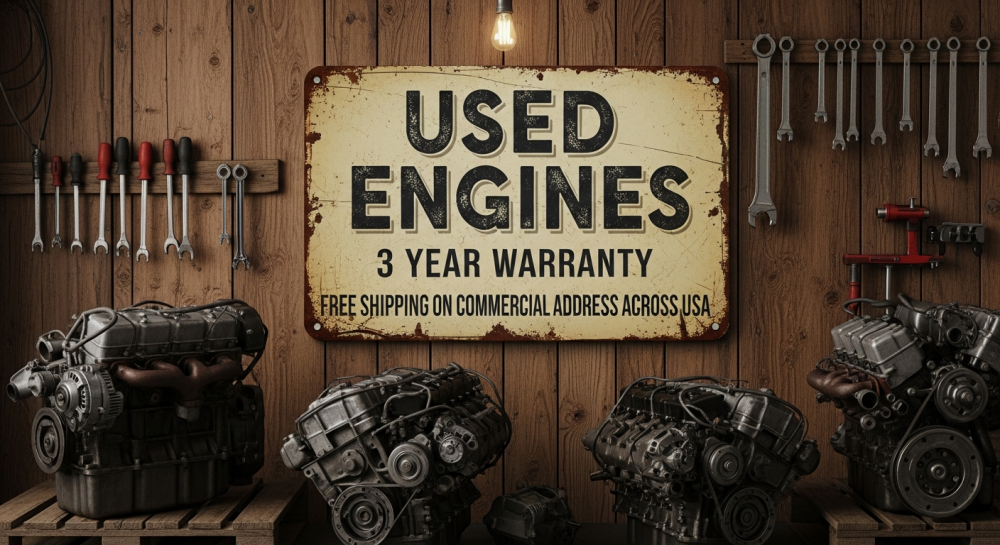
When people hear the phrase “replacement engine,” the first thing that usually pops into their head is performance anxiety. Will it feel sluggish? Will fuel economy drop? Is it going to sound rough or wear out quickly? These are fair questions, especially when your daily commute, family trips, or business depend on your vehicle running smoothly.
The truth is, vehicle performance after an engine replacement depends far less on myths and far more on smart choices. When done right, used engines can deliver performance that feels natural, reliable, and in many cases surprisingly strong. Let’s talk honestly about what you should expect—not sales hype, not worst-case horror stories, just real-world outcomes.
Performance Isn’t Just About “New”
There’s a common belief that only brand-new parts can restore factory performance. In reality, engines don’t magically lose their ability to perform just because they aren’t new. What matters is how they were maintained, how many miles they’ve seen, and how well they’re matched to your vehicle.

Many replacement motors come from vehicles that were retired early due to accidents or cosmetic damage. That means the engine itself often has plenty of life left. When properly tested and installed, it can perform nearly identical to the original motor when it was healthy.
That’s why used engines aren’t about settling for less—they’re about making a smarter, more informed decision.
What “Good Performance” Really Means
Performance isn’t just horsepower numbers or 0–60 times. For most drivers, good performance shows up in everyday situations:
-
Smooth acceleration
-
Consistent idle

-
Reliable cold starts
-
Predictable fuel efficiency
-
No hesitation or knocking under load
A quality replacement motor can meet all of these expectations. In fact, if your original engine was struggling before failure, you may actually notice an improvement simply because you’re no longer compensating for worn internal components.
The Role of Testing and Inspection
Performance starts before the engine ever reaches your mechanic. Reputable suppliers inspect and test engines thoroughly to ensure they meet basic performance standards.
This typically includes:
-
Compression testing
-
Visual inspection of internal components
-
Oil and coolant condition checks
-
Verification of mileage and engine codes
Suppliers like Turbo Auto Parts focus heavily on these steps because they know performance complaints usually trace back to skipped inspections or mismatched components.
Installation Has a Bigger Impact Than Most People Think
Even the best motor can feel underwhelming if installation is rushed. Proper installation ensures:
-
Correct sensor calibration
-
Clean fuel and air delivery
-
Proper timing alignment
-
Leak-free seals and gaskets
Replacing wear items during installation—like belts, hoses, and mounts—helps the engine perform as expected from day one. This step is often overlooked, yet it plays a massive role in how the vehicle feels afterward.
Power and Acceleration: Setting Realistic Expectations
Let’s clear something up: a replacement motor isn’t a performance upgrade unless you specifically choose one. Its job is to restore factory-level output, not exceed it.
That said, many drivers report that acceleration feels smoother and more responsive than before the failure. That’s because worn engines lose compression over time, even if they’re still “running.” Swapping in a healthy motor brings back that lost efficiency.
For everyday driving—highway merges, city traffic, towing light loads—the performance difference is usually positive and noticeable.
Fuel Economy After an Engine Swap
Fuel efficiency is another common concern. Will mileage drop? Will it improve?
In most cases, fuel economy returns to normal or slightly improves. A healthy motor burns fuel more efficiently, especially if the old one had issues like oil consumption, misfires, or sensor problems.
This is another reason used engines make sense for budget-conscious drivers. You’re not just fixing a problem—you’re restoring balance to the entire system.
Noise, Vibration, and Smoothness
Performance isn’t only about speed. How a vehicle feels matters just as much.
A properly sourced replacement motor should:
-
Idle smoothly
-
Produce minimal vibration
-
Sound consistent under load
Excessive noise or shaking usually points to installation issues, worn mounts, or ignored supporting components—not the engine itself. That’s why professional installation and inspection of related systems is so important.
How the Drivetrain Affects Performance
An engine doesn’t operate in isolation. Its performance is closely tied to the rest of the drivetrain. During an engine swap, mechanics often evaluate components like the transmission, driveshaft, and differential.
In some situations, pairing the engine replacement with Used transmissions inspection or replacement makes sense, especially if both components have similar mileage. Addressing these systems together can restore smooth shifting and overall drivability.
This approach doesn’t mean replacing everything—it means being strategic.
Longevity and Consistent Performance Over Time
One of the biggest misconceptions is that replacement motors fade quickly. In reality, lifespan depends on maintenance, not the label attached to the engine.
Regular oil changes, proper cooling system care, and addressing small issues early can keep performance consistent for years. Many drivers put tens of thousands of miles on replacement motors without noticeable decline.
That’s why used engines are often chosen by people planning to keep their vehicles long-term.
Common Performance Myths—Busted
Let’s knock out a few myths that refuse to die:
Myth 1: Replacement engines are underpowered
Reality: Power output matches factory specs when properly sourced.
Myth 2: Fuel economy always drops
Reality: Efficiency often improves compared to a failing engine.
Myth 3: They’re unreliable long-term
Reality: Reliability depends on maintenance and installation quality.
Understanding these truths helps buyers make confident decisions instead of emotional ones.
Choosing the Right Supplier Matters
Performance expectations are directly tied to where you buy from. Trusted suppliers focus on quality sourcing, accurate listings, and post-sale support.
Turbo Auto Parts has earned trust by emphasizing compatibility checks and testing, which reduces the risk of performance-related surprises. When suppliers stand behind their inventory, buyers feel more comfortable investing in replacements.
When Performance Might Not Meet Expectations
It’s important to be honest—there are situations where performance may feel different:
-
If the engine is mismatched to the vehicle
-
If sensors or ECUs aren’t calibrated correctly
-
If supporting components are worn or neglected
These issues are avoidable, but they highlight why preparation matters more than impulse buying.
Engine Replacement vs Buying Another Vehicle
If performance is your main concern, compare the alternatives. Buying another used vehicle introduces unknowns—hidden wear, inconsistent maintenance, and potential future failures.
Replacing the engine lets you control variables. You know the car, its history, and its quirks. That familiarity often leads to better long-term satisfaction.
In some cases, addressing both the motor and Used transmissions together results in a vehicle that feels refreshed across the board.
The Confidence Factor
One underrated benefit of engine replacement is peace of mind. When performance issues disappear, drivers feel more confident pushing their vehicles into normal use—long drives, highway speeds, and daily commutes without worry.
That confidence matters just as much as raw performance numbers.
Final Thoughts
So what should you really expect from a replacement motor? Realistic performance, restored reliability, and a driving experience that feels familiar—in a good way.
When sourced carefully, installed professionally, and maintained properly, used engines can deliver exactly what most drivers want: dependable performance without financial strain.
Working with a reputable supplier like Turbo Auto Parts completes the equation, turning a stressful repair into a smart long-term solution.
Read Also: Engine for Sale Insights: Avoid Costly Mistakes and Buy with Confidence





