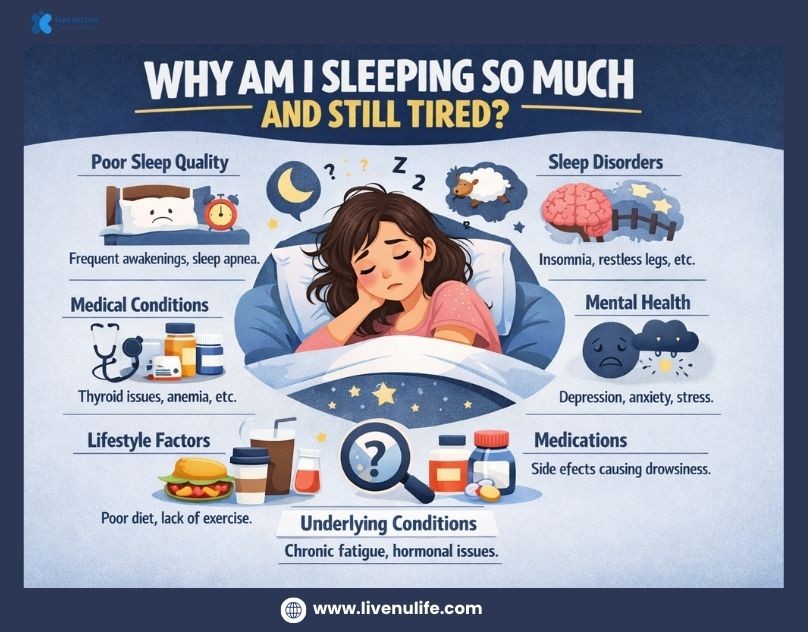
Why am I sleeping so much and still tired ?
Sleeping longer than usual but still waking up exhausted can feel confusing and frustrating. You might wonder, “why am i sleeping so much and still tired?” The truth is, sleep duration doesn’t always equal sleep quality. Many physical, mental, and lifestyle factors can leave you feeling drained even after long hours in bed.
Feeling constantly tired despite sleeping a lot is your body’s way of signaling that something deeper may be affecting your energy, recovery, or overall health.
Common Reasons You’re Sleeping a Lot but Still Tired
1. Poor Sleep Quality (Not Deep Enough Sleep)
You may be in bed for 8–10 hours, but if your sleep is fragmented or shallow, your body doesn’t get enough deep and REM sleep—the stages responsible for physical recovery and mental restoration.

Causes of poor sleep quality include:
- Frequent night awakenings
- Light or restless sleep
- Noise or light exposure
- Stress or anxiety
Without deep sleep, your brain and body don’t fully recharge.
2. Sleep Debt and Chronic Fatigue
If you’ve been sleep-deprived for weeks or months, your body may try to “catch up” by sleeping longer—but still feel tired.
Signs of sleep debt:
- Needing excessive sleep
- Brain fog
- Low motivation
- Difficulty concentrating
Recovery from chronic sleep loss takes time and consistency.

3. Circadian Rhythm Disruption
Your circadian rhythm controls when you feel awake or sleepy. Irregular sleep schedules, late nights, shift work, or excessive screen time can throw this rhythm off.
When your internal clock is misaligned:
- Sleep feels unrefreshing
- Energy dips during the day
- You feel groggy even after long sleep
Timing matters as much as duration.
4. Stress, Anxiety, and Mental Overload
Mental stress keeps your nervous system in a heightened state, even during sleep. You may sleep longer but wake up feeling emotionally and physically drained.
Stress-related fatigue often includes:
- Racing thoughts at night
- Tension in the body
- Feeling “wired but tired”
- Morning exhaustion
Your body rests best when your mind feels safe and calm.
5. Poor Diet and Nutrient Deficiencies
What you eat directly affects energy levels. Nutrient deficiencies can cause persistent fatigue even with adequate sleep.
Common fatigue-related deficiencies include:
- Iron
- Vitamin B12
- Vitamin D
- Magnesium
Blood sugar crashes from processed foods or irregular meals can also worsen tiredness.
6. Dehydration
Mild dehydration can significantly reduce energy levels and make you feel sluggish and sleepy.
Signs of dehydration-related fatigue:
- Dry mouth
- Headaches
- Low concentration
- Heavy feeling in the body
Hydration plays a key role in cellular energy.
7. Lack of Physical Activity
Too little movement can paradoxically make you more tired. Regular physical activity improves circulation, oxygen delivery, and sleep quality.
Sedentary habits can lead to:
- Low stamina
- Daytime sleepiness
- Reduced motivation
Gentle daily movement often boosts energy more than extra sleep.
8. Sleep Disorders
Certain sleep disorders prevent restorative sleep, even if you sleep for many hours.
Common conditions include:
- Sleep apnea
- Insomnia
- Restless leg syndrome
- Circadian rhythm disorders
These conditions often require medical evaluation.
9. Depression or Emotional Exhaustion
Emotional health strongly affects energy levels. Depression can cause hypersomnia (sleeping too much) along with persistent fatigue.
Signs may include:
- Low mood
- Loss of interest
- Feeling drained emotionally
- Sleeping longer than usual
Mental health support can significantly improve energy and sleep quality.
10. Hormonal Imbalances
Hormones regulate energy, metabolism, and sleep. Imbalances can lead to constant tiredness.
Common hormonal causes:
- Thyroid dysfunction
- Cortisol imbalance
- Blood sugar issues
Hormonal fatigue often feels deep and persistent.
Why Oversleeping Can Still Leave You Tired
Oversleeping can disrupt your sleep-wake rhythm and increase sleep inertia—the groggy feeling after waking up.
Too much sleep may:
- Reduce sleep efficiency
- Increase fatigue
- Cause headaches or body aches
Balance is key.
Natural Ways to Feel Rested Again
Improve Sleep Quality
- Stick to a consistent sleep schedule
- Reduce screen use before bed
- Create a dark, quiet sleep environment
Support Your Circadian Rhythm
- Get morning sunlight
- Avoid late-night bright lights
- Eat meals at regular times
Manage Stress
- Practice breathing or meditation
- Take breaks during the day
- Reduce mental overload
Fuel Your Body Properly
- Eat balanced meals
- Stay hydrated
- Consider checking nutrient levels
Move Daily
- Walk, stretch, or do light exercise
- Avoid intense workouts late at night
When to See a Doctor
Seek medical advice if:
- Fatigue lasts more than a few weeks
- You feel exhausted despite healthy habits
- You snore loudly or stop breathing during sleep
- Fatigue interferes with daily life
Persistent tiredness should not be ignored.
FAQs: why am i sleeping so much and still tired ?
Is it normal to sleep a lot and still feel tired?
Occasionally, yes. But persistent fatigue may signal poor sleep quality, stress, or health issues.
Can too much sleep make you tired?
Yes. Oversleeping can disrupt your circadian rhythm and increase grogginess.
How many hours of sleep do I actually need?
Most adults need 7–9 hours of quality sleep, but individual needs vary.
Can stress cause excessive sleep and fatigue?
Yes. Chronic stress can lead to emotional exhaustion and unrefreshing sleep.
When should I worry about constant tiredness?
If fatigue persists despite lifestyle changes, medical evaluation is recommended.