

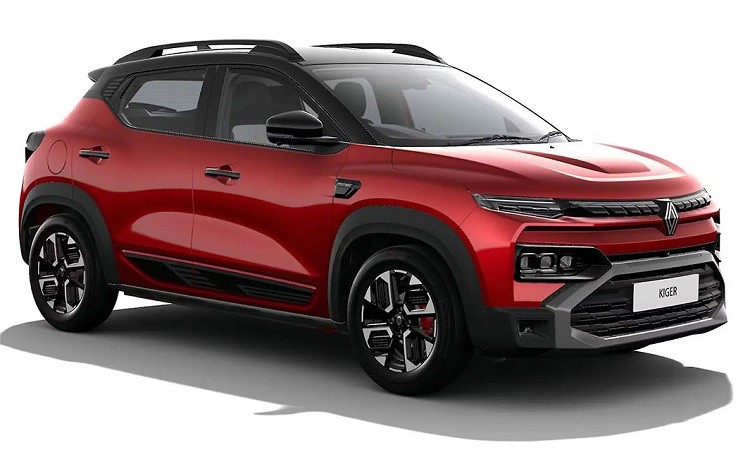
The Renault Kiger is one of the few popular choices in the compact SUV category, with its smart design, practical cabin and competitive pricing giving it a few more strings in its bow. The facelift for 2025 seems to be a timely update to help the Kiger keep pace with newer rivals. This update is most pronounced on the exterior with sharper front fascia, updated lighting elements and refreshingly new alloy wheels.
The cabin feels much more sophisticated with better materials, an updated infotainment system and enhanced comfort features. The Kiger also surely has a wider appeal now with the safety and connectivity equipment upgraded across the variants. We will take a closer look at all these changes in the Renault Kiger Facelift overview below and see how the facelifted Kiger stands against its rival cars.

Exterior Design Updates
Renault Kiger's facelift retains its compact SUV proportions, yet the overall appearance now looks sharper, with a couple of well-placed changes. The biggest changes are related to the new grille pattern, redesigned bumper, and sleeker LED DRLs that now fit better with the headlamp cluster on the front of the car. These tweaks make the Kiger look wider and more confident and have given it an upmarket appearance as compared to the previous version.
With all of these updates, Renault has also introduced changes in colorways available in dual-tone combinations that make it look sporty in a fresh design. Gloss-black accents and discrete chrome touches to the grille and bumper have injected a more premium feel without going gaudy. These styling changes work together to make the Kiger feel more youthful and contemporary, which is essential in the highly competitive compact SUV space.
The sportier profile on the side comes with a new set of alloy wheels, complementing the overall sporty, dynamic design of the SUV. At the back, the changes are subtle but effective: the tail-lamps come with updated internal graphics with a smoked finish, while the bumper has been slightly reworked, giving the car a wider stance. Adding in the faux skid plate completes the SUV-inspired look. The facelifted Kiger thus feels more robust and would woo buyers who want style but with practicality.
Interior Enhancements
Inside, the Renault Kiger facelift aims for a more premium vibe while keeping the general layout intact. The dashboard is almost the same, but better materials and understated detailing have m it look much nicer. The soft-touches and textured finishes in the key places uplift the cabin ambience, while dual-tone colour schemes enhance the feeling of space. Renault has also worked towards improving fit and finish to render interiors more polished than ever before.
The infotainment system has been modernized to keep up with contemporary expectations. The facelift unit continues with the large touchscreen but now offers a smoother interface and wireless connectivity for both Android Auto and Apple CarPlay. Hence, this is a user-friendly feature for the occupants, as they do not have to connect their smartphones using a cable. The digital instrument cluster, too, benefits from updated graphics that look crisper and relay clearer information to the driver. The top-spec version now also features a multi-view camera and a frameless auto-dimming IRVM. Together, these features truly elevate the cabin tech experience and increase user-friendliness and engagement.

Minor yet meaningful improvements have made their way into the redesigned Kiger, thanks to the facelift. Features like automatic climate control, wireless charging, and rear AC vents still spell convenience for everyday use. At the same time, higher trims provide additional features, such as ambient lighting and better seat upholstery, which command a more premium feel. Legroom, headroom space, and overall stylishness remain with Kiger, putting it on the feature list as a compact SUV suitable for day-long city commuting and long distances as well.
Features and Technology
Not only does the Renault Kiger facelift make its case stronger by improving variant-wise standard features, but it also draws praise on safety counts with the SUV now coming with standard dual airbags, ABS with EBD, rear parking sensors, and ISOFIX child-seat mounts, which thus make some of these safety features available even in the most entry-level trims. In addition, middle to higher variants now get side and curtain airbags, electronic stability programme, hill-start assist, and rear-view camera, thus enhancing the Kiger's credibility in a segment where safety matters now often tip the scales in one direction.
Connectivity, yet another key element, gets noticeable improvement with the facelift. The central touchscreen now subscribes to wireless Android Auto and Apple CarPlay, integrating smartphones seamlessly without the madness of cables. Connected car technology is made available in selected variants and provides geo-fencing, live location tracking, and vehicle health monitoring through the Renault app. The convenience is further sweetened with wireless charging and better voice recognition, thus allowing the tech package to feel current.
Renault has also worked on the feature distribution across variants for better value. Basics are covered with a decent set of safety and infotainment features on the very basic trims, while mid-spec variants now receive high-end touches like redesigned alloy wheels, a rear wiper with a washer, and electrically folding mirrors. Top-of-the-line now also ushers in tech and comfort features in full, including ambient lighting, multi-view camera, cruise control, premium audio, and the updated digital instrument cluster. Hence, it allows buyers across various price points to access a balanced offering instead of feeling that someone is getting the better of them.
Engine and Performance
The Renault Kiger facelift continues to offer the same powertrains as before - a customer pick featuring a naturally aspirated 1.0-litre petrol engine and a more thrilling 1.0-litre turbo-petrol option. The naturally aspirated engine is the sensible one, tuned for efficiency and mundane commutes. It offers decent power for running around the city while keeping the running costs down. If stronger performances are desired, the turbocharged motor will be the highlight, with much more evident acceleration and responsiveness that make it even better for the fun part when hitting the open stretches.
The various transmission options to address threshold preferences are well spread out. The naturally aspirated petrol can be had either in 5-speed manual or AMT guise, with its emphasis on affordability and ease of use. The turbo-petrol can take the 5-speed manual option for the enthusiast or a CVT automatic for those who want smooth, stress-free driving. These combinations allow Renault cars to cater to all sorts of customers; the budget-conscious ones on one hand and the performance-and-convenience seekers on the other.
On-road, the Kiger facelift still feels apt for the urban environment. The naturally aspirated one feels best in stop-and-go situations, where going about is all too easy, given the engine's relaxation and light controls. The turbo-petrol does shine when it comes to highway cruising and overtaking, courtesy of its brawny mid-range. The CVT gearbox does tonally capture the same finesse with its smooth shifting, though the manual will impress more with the more involved driving. Overall, while the facelift may not engage any mechanical alterations, the current arrangement for the engine and transmission, materialized in the outlook of efficiency and functionality, also provides some performance.
Ride and Handling
With respect to suspension, the Renault Kiger facelift follows suit with its predecessor, with the same setup of a MacPherson strut in the front and a torsion beam in the rear. This setup is favourably tuned for comfort, easily ironing out the bumps and rough patches of the city streets. The Kiger remains compliant over all sorts of rough surfaces, thus making it a viable option for an everyday commuter, while still retaining a fair amount of firmness so as not to feel too soft or bouncy at higher speeds.
The steering feedback continues to be light, lending city-friendly indignation to the handling of the SUV, and therefore making it easy to manoeuvre in traffic and tight parking situations. While twisty entries may offer some fun, the steering weights up enough on the highways to inspire confidence. The diminutive size of the Kiger only adds to its agility, particularly in busy urban environments.
Braking deployment is a reliable affair; disc rotors star up front, rear drums do their job. A good initial bite with a smooth release should make stopping power easy to predict for the average driver. Higher variants feature added safety aids like electronic stability control and hill-start assist, which come in handy for highway runs or on hilly terrains. With the compact SUV's stability, these features make the Kiger facelift well-versed in both city and highway shenanigans.
Pricing and Variants
With a refreshed variant line-up catering to a wide range of buyers, the 2025 Renault Kiger facelift has been launched. The trims are now structured into four categories – Authentic, Evolution, Techno, and Emotion – with each step up adding even more equipment and comfort features. Prices for the facelift start at ₹6.29 lakh (ex-showroom) for the base Authentic variant, thus making it one of the cheapest compact SUVs in the segment. From there, the range stretches up to ₹11.29 lakh (ex-showroom) for the fully loaded Emotion Turbo CVT variant, which brings in most of the premium features that buyers aspire to have in the higher segment.
The base-level Authentic trim provides reasonable value by offering essentials such as dual airbags, ESC, rear parking sensors, and a digital instrument cluster. Onwards, the Evolution and Techno add other conveniences such as an 8-inch touchscreen with smartphone connectivity, rear AC vents, wireless charging, and automatic climate control. The top-end Emotion variants, particularly the turbo ones, offer a complete package with ventilated seats, ambient lighting, a 360-degree camera, premium Arkamys audio, and side and curtain airbags.
From a value-for-money perspective, the mid-spec Techno trim shines by striking a sweet spot between reasonable pricing and desirable features that facilitate comfort and connectivity in everyday usability. That said, the Emotion Turbo CVT variant makes a case for its price by offering a blend of performance and tech that appeals to buyers wanting a premium experience in the sub-4-metre SUV space. All in all, the revised line-up ensures that the Renault Kiger facelift remains sharply priced while throwing features that challenge those of more expensive competitors.
Verdict
The Renault Kiger facelift builds on the strengths of the original car by offering a younger appearance, a more refined cabin and a greater number of features while remaining competitively priced. With an attractive, youthful styling, spacious interiors and an extensive range of engine and transmission choices, it remains a key player in the compact SUV market. The inclusion of a safety kit across the range, coupled with connected tech and premium creature comforts in higher trims, makes it even more desirable.
However, some shortcomings remain that Renault could address. The naturally aspirated petrol engine feels adequate only for city commutes and lacks the punch needed for enthusiastic highway driving. The fit-and-finish, though improved, still lags some segment rivals, and some of the desirable features, like ventilated seats or the 360-degree camera, are available only in higher trims, limiting their accessibility for those buyers looking for value for money.
If a stylish and feature-rich compact SUV is what one requires, the Kiger facelift is a good, well-rounded package with an offering for value for money. Buyers prioritising everyday practicality, strong safety credentials and affordability will find the sweet spot of the Techno mid-spec. For more performance and a premium experience, the turbo-petrol CVT Emotion trim is appropriate. Overall, the 2025 Renault Kiger facelift is a sensible option that does appeal to the segment with that right mix of style, tech and affordability.





