
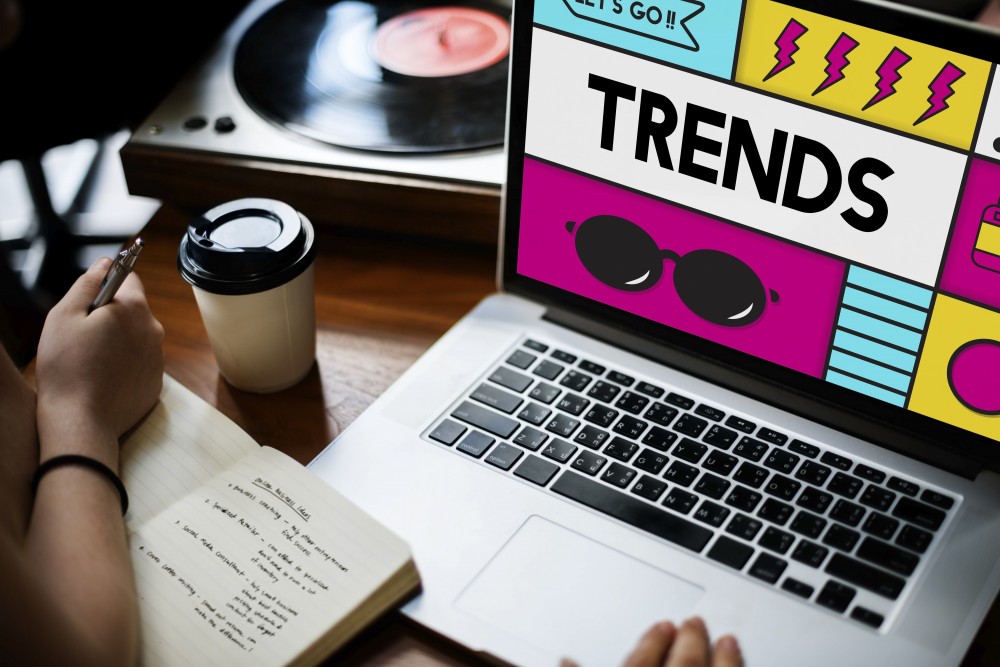
Do you remember the older enterprise websites? They were rigid with stock photos and boring content. But in 2026, users are used to highly dynamic and user-centric apps. They expect all websites to feel human, be interactive and dynamic, driving enterprise web design trends toward softer, more expressive visual languages.
Two very powerful ways to humanize enterprise web enterprises are:
- Organic shapes in web design
- Anti-grid layouts in enterprise websites
These signals that your brand understands people, not just procurement processes. When used well, they help turn static sites into user-centric enterprise web experiences that feel inviting instead of intimidating.
What Do We Mean by Organic Shapes in Web Design?
Think of organic shapes in web design as the opposite of rigid rectangles and pixel-perfect symmetry. They’re blobs, curves, waves, hand-drawn lines, and imperfect silhouettes that mimic what we see in nature and real life. These shapes break away from cold, over-templated aesthetics and immediately soften the page's feel.
In modern enterprise web design, organic elements can:
- Wrap around hero headlines to draw the eye gently instead of using harsh boxes.
- Frame key stats or quotes in rounded, asymmetrical containers.
- Flow behind imagery to create a sense of depth and movement without relying on heavy animation.
Used intentionally, organic shapes in web design give even complex B2B interfaces a more approachable, human tone.
Anti-Grid Layouts in Enterprise Websites: Breaking the Rigid Mold
Traditional enterprise sites are obsessed with grids: strict columns, perfectly aligned cards, and layouts that feel almost robotic. Anti-grid layouts in enterprise websites intentionally bend those rules. They still respect usability, but they embrace slightly offset elements, overlapping layers, and more playful composition to create a sense of energy and individuality.
Key characteristics of anti-grid layouts in enterprise websites:

- Sections that don’t always snap to a single column system, especially in hero and storytelling areas.
- Cards and content blocks that stagger or overlap slightly, guiding the eye diagonally instead of purely vertically.
- Imagery and typography that break out of strict containers, hinting at motion and flexibility.
For user-centric enterprise web experiences, this approach can make long, dense content feel more digestible. Instead of forcing everything into rigid rows, flexible layout design lets you highlight what really matters and tell a story visually, not just in text.
Flexible Layout Design: The Framework Behind “Anti-Grid”
Under the hood, “anti-grid” doesn’t mean “no structure.” It means flexible layout design: using a system that allows controlled deviations and expressive compositions, rather than a single rigid template applied everywhere.
Principles of good flexible layout design for enterprises:
- Use a foundational grid for consistency, but break it intentionally in key storytelling sections.
- Define safe overlap and offset rules in your design system so layouts can stay expressive without becoming chaotic.
- Plan for responsiveness so organic shapes and anti-grid layouts reflow smoothly on tablets and phones.
When done well, flexible layout design becomes a language your whole team can use: designers get creativity, developers get predictability, and users get a site that feels polished yet alive.
B2B User Interface Humanization: Beyond Just “Looking Friendly”
B2B user interface humanization is about more than rounded corners and a few squiggles. It’s the practice of designing enterprise UI so it respects the cognitive load, emotions, and real workflows of business users. Organic shapes and anti-grids are just one part of that toolbox.
How these trends support B2B user interface humanization:
- Narrative layouts: Anti-grid compositions let you pair stories, quotes, and metrics in more natural clusters, so users feel like they’re reading a narrative rather than scanning a spreadsheet.
- Soft separation instead of hard boxes: Organic shapes in web design can separate sections or highlight key messages without heavy borders, making the interface feel less like a dashboard and more like a conversation.
- Micro-moments of delight: Subtle animation on organic forms, like gentle pulsing, drifting, or color shifts, can create small moments of emotional engagement without hurting performance.
Humanized enterprise UIs make people feel less like they’re “working through a corporate funnel” and more like they’re being guided by a thoughtful, empathetic brand.
Applying Anti-Grid Layouts Without Losing Clarity
Anti-grid layouts in enterprise websites work best when they’re strategic, not random. You want asymmetry that still feels orderly, like a modern magazine spread, not a broken template.
Guidelines to keep your anti-grid layouts usable:
- Keep typography hierarchy clean: headings, subheadings, and body text should be consistent even when the layout loosens.
- Limit “breaks” to key areas: hero bands, feature stories, and campaign sections are good candidates; navigation and pricing tables usually are not.
- Use whitespace as your anchor: even when elements shift around, generous whitespace keeps everything breathable and scannable.
Approached this way, flexible layout design gives you the best of both worlds: a structure that supports fast comprehension, with enough playfulness to stick in a visitor’s memory.
Connecting Visual Trends to Business Outcomes
It’s easy for stakeholders to think of enterprise web design trends as “nice visuals,” but organic and anti-grid approaches can be tied directly to business metrics when done well.
How these choices can support outcomes:
- Engagement: Softer visuals and dynamic compositions often increase scroll depth and time on page because content feels less monotonous.
- Conversion: Humanized layouts can make CTAs and forms feel less aggressive, encouraging more users to interact.
- Brand perception: Distinctive yet usable design signals competence and care—especially important in high-consideration B2B categories.
When you present modern enterprise web design decisions in terms of user comfort, trust, and clarity rather than just “trend adoption,” they’re much easier to justify internally.
Bringing It All Together
Organic visuals and anti-grid layouts in enterprise websites aren’t about throwing away structure; they’re about adding humanity to it. When grounded in a solid content strategy and a clear understanding of user journeys, organic shapes in web design, flexible layout design, and B2B user interface humanization can transform your site from a static brochure into a living, breathing experience.





