

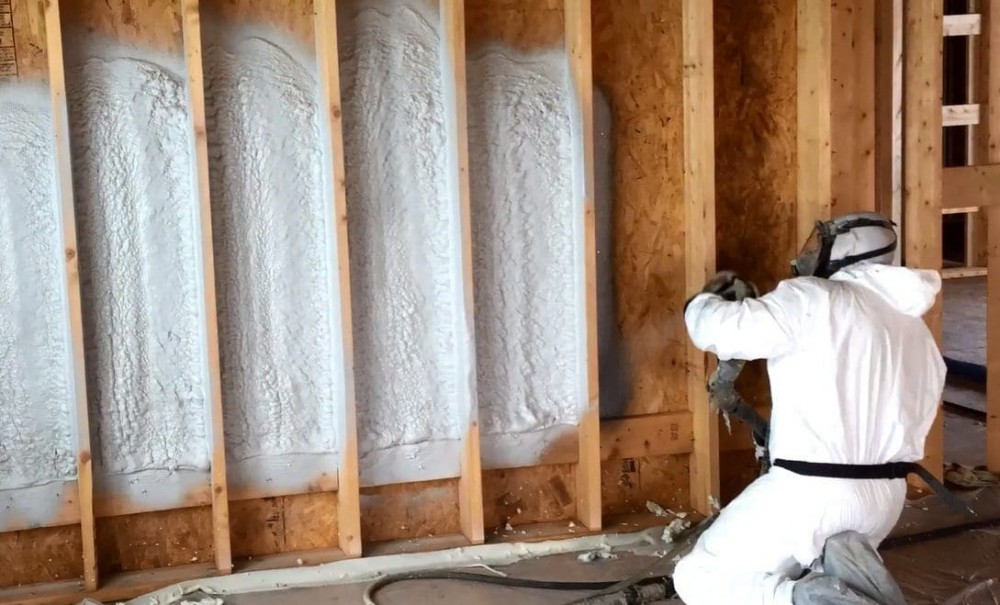
Spray foam creates a moisture-resistant wall barrier by sealing gaps, joints, and porous surfaces where air and moisture usually pass through. Once applied, it expands and hardens in place, forming a continuous layer that limits water vapor movement and blocks uncontrolled airflow. This sealed structure helps walls stay dry, stable, and protected over time.

This article explains how Spray Foam works as a moisture barrier, why it performs well in different climates, and what decision-makers should evaluate before choosing insulation solutions. The guidance reflects real-world field experience and long-term building performance outcomes.

Why Moisture Control Matters Inside Wall Systems
Moisture problems often start inside walls, not on the surface. When warm air meets cooler surfaces, condensation forms and slowly weakens building materials.

Buildings across the U.S. lose performance each year due to trapped moisture. Industry data shows that moisture-related issues contribute to over 30 percent of insulation failures in residential and light commercial buildings. Preventing that moisture movement is a priority, not an upgrade.
Hidden Risks of Poor Wall Sealing
Walls that allow air leakage also allow moisture travel. Over time, this creates damp zones that lead to material breakdown and indoor discomfort.
Common risks include uneven indoor temperatures, surface staining, and reduced insulation lifespan. These issues often stay hidden until repairs become costly.
How Air Movement Carries Moisture
Air acts as a delivery system for moisture. When air moves through wall cavities, it brings humidity with it.
Stopping air movement is one of the most effective ways to reduce moisture exposure. Spray Foam services focus on sealing those air paths at the source.
How Spray Foam Forms a Moisture-Resistant Barrier
Spray foam insulation expands on contact and fills gaps that other materials leave behind. This expansion creates a tight seal across studs, sheathing, and penetrations.
Once cured, the material resists moisture intrusion while maintaining strong adhesion to surfaces. This makes it effective in both new builds and retrofit projects.
Closed Cell and Open Cell Performance Differences
Different spray foam types handle moisture in different ways. Selection depends on wall location and exposure level.
|
Feature |
Open Cell Spray Foam |
Closed Cell Spray Foam |
|---|---|---|
|
Vapor Resistance |
Moderate |
High |
|
Density |
Lower |
Higher |
|
Water Absorption |
Limited |
Very Low |
|
Wall Strength Support |
Minimal |
Added rigidity |
|
Best Use |
Interior walls |
Exterior walls |
Both options reduce moisture movement when applied correctly by trained Spray Foam experts.
Why Expansion Matters in Moisture Control
Expansion allows spray foam to seal around wiring, pipes, and framing joints. These are common moisture entry points.
Traditional insulation rests between studs. Spray foam bonds to surfaces and closes off hidden paths that water vapor uses.
Regional Climate Factors That Increase Moisture Risk
Climate plays a major role in wall moisture behavior. Regions with temperature swings or seasonal humidity face higher risks.
In warmer areas, moisture often moves inward during cooling cycles. In cooler months, it can move outward. Spray foam adapts to these shifts by maintaining a sealed barrier.
Fresno and Central Valley Conditions
The Central Valley experiences hot summers and cooler nights. This temperature contrast increases condensation risk inside walls.
Buildings in this region benefit from insulation that limits air exchange and vapor movement. This is why many property owners choose a Spray Foam Company with regional experience.
Long-Term Wall Protection and Structural Stability
Moisture-resistant walls last longer and perform better. Dry wall systems protect framing, finishes, and interior surfaces.
Market data shows that sealed wall systems can extend insulation performance life by 20 to 30 percent compared to traditional methods.
Reduced Repair and Maintenance Needs
By limiting moisture exposure, spray foam lowers the risk of repeated wall repairs. This leads to fewer service calls and less material replacement.

Consistent Indoor Comfort
Dry walls support stable indoor temperatures. Occupants notice fewer drafts and more consistent comfort throughout the building.
Installation Quality and Application Precision
Even the best insulation material depends on proper application. Spray foam requires controlled installation conditions and trained handling.
Poor application can leave voids or uneven coverage. Experienced teams follow clear protocols to ensure full wall contact.
Surface Preparation Requirements
Clean and dry surfaces allow spray foam to adhere properly. Moist or dusty surfaces reduce bonding strength.
Thickness and Coverage Control
Correct thickness ensures vapor resistance and air sealing. Overspray and under-application both reduce effectiveness.
Bonus Tips
- Verify wall cavities are fully accessible before application
- Confirm foam depth matches wall design needs
- Inspect cured foam for uniform coverage
Things to Consider Before Making a Decision
Choosing spray foam involves more than product selection. Decision-makers should review building goals, wall exposure, and long-term plans.
Short-term fixes often fail when moisture control is ignored. Spray foam addresses both insulation and sealing in one step.
Building Use and Occupancy Patterns
Residential and commercial spaces have different moisture loads. Kitchens, bathrooms, and equipment rooms need stronger sealing.
Existing Wall Conditions
Retrofit projects require evaluation of existing insulation and wall integrity. Some cases allow layered solutions.
Practical Note
Wall moisture issues often originate from air leaks, not visible water intrusion.
Key Takeaways for Moisture-Resistant Walls
Spray foam creates a durable moisture-resistant wall barrier by sealing air paths and limiting vapor movement. Its expansion and adhesion protect walls from long-term exposure risks. Buildings benefit from improved comfort, reduced repairs, and longer material life. Evaluating climate, wall conditions, and installation quality helps ensure lasting results.
Where to Learn More or Get Guidance
Property owners seeking deeper insight into moisture-resistant insulation often consult experienced service providers. Supreme Spray Foam Fresno is one such resource known for applying performance-focused insulation solutions. Readers can reach them at info@supremesprayfoamfresno.com or by calling (559) 545-0800 to discuss wall insulation needs, application options, and building-specific considerations.
Questions People Ask About Spray Foam Moisture Control
Does spray foam stop water leaks?
Spray foam limits moisture movement caused by air flow. It does not replace exterior waterproofing for active water leaks.
Can spray foam trap moisture inside walls?
Properly applied spray foam controls vapor movement and reduces condensation risk. Poor installation causes most trapping issues.
Is spray foam suitable for humid environments?
Yes. Closed cell spray foam performs well in high-humidity areas due to its low vapor permeability.
Does spray foam reduce mold risk?
By keeping walls dry and sealed, spray foam lowers conditions that allow mold growth.
How long does moisture protection last?
Spray foam maintains its sealing and moisture resistance for decades when installed correctly.
Reviewer: Emma Robinson contributed her knowledge from 8 years of working in the spray foam industry. Her review helped shape this content, grounded in what contractors and homeowners actually value.





