

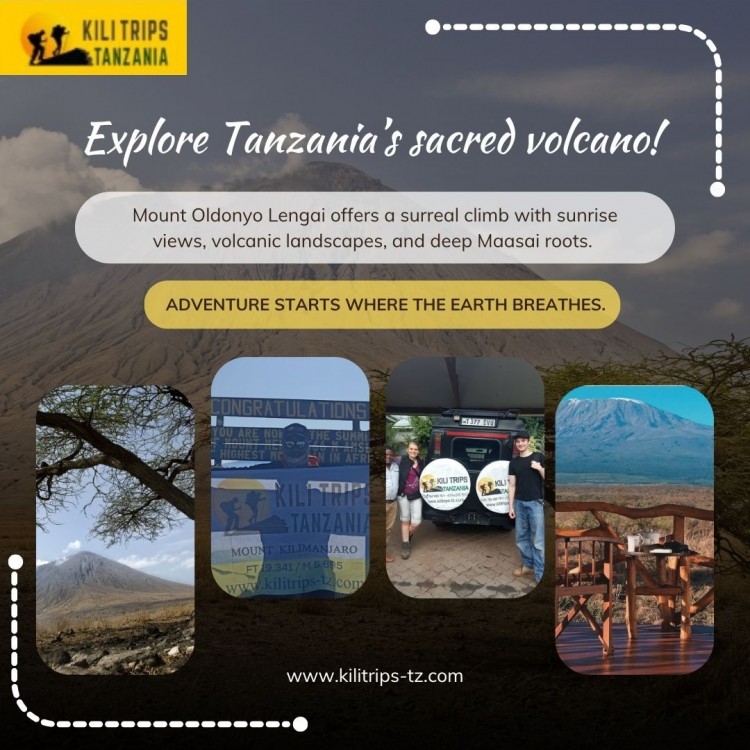
Mount Oldonyo Lengai is one of the most extraordinary and scientifically fascinating volcanoes on Earth. Rising dramatically from the floor of the East African Rift Valley in northern Tanzania, this active stratovolcano is not only a geological wonder but also a deeply spiritual landmark for the local Maasai people. Often referred to as the “Mountain of God,” Mount Oldonyo Lengai stands apart from every other volcano in the world because it erupts a rare and unusual type of lava that cannot be found anywhere else.
Location and Geographic Importance
Mount Oldonyo Lengai is located in the Gregory Rift, a branch of the East African Rift system, near Lake Natron in northern Tanzania. It rises to an elevation of approximately 2,962 meters (9,718 feet) above sea level and dominates the surrounding arid landscape.
The volcano sits in a region rich in tectonic activity, where the African Plate is slowly splitting apart. This geological setting plays a major role in the unique volcanic behavior that makes Mount Oldonyo Lengai globally significant for researchers and volcanologists.
Why Mount Oldonyo Lengai is Unique
What makes Mount Oldonyo Lengai truly special is its lava.
Unlike typical volcanoes that erupt red or orange molten rock, this volcano produces natrocarbonatite lava, which is:
Much cooler (around 500–600°C compared to 1,000°C+ in normal lava)

Dark brown or black when flowing
Capable of turning white as it cools
This unusual lava is rich in sodium and potassium carbonates rather than silica, which is the dominant component in most volcanic eruptions. Because of its low temperature and unique composition, the lava flows more like oil or mud than the thick, slow-moving streams seen in other volcanoes.
This rare phenomenon makes Mount Oldonyo Lengai the only active carbonatite volcano in the world.
Cultural and Spiritual Significance
For the Maasai people, Mount Oldonyo Lengai is not just a mountain — it is sacred.
The name itself translates to “Mountain of God” in the Maasai language. According to their beliefs, the volcano is the dwelling place of Engai, their deity. The mountain plays an important role in traditional ceremonies, prayers, and cultural identity.
Because of its spiritual importance, the volcano is respected and revered, and many Maasai view eruptions as a sign of divine communication.
Eruption History and Volcanic Activity
Mount Oldonyo Lengai is an active volcano and has experienced several eruptions throughout recorded history.
One of the most significant eruptions occurred in 2007–2008, when explosive activity sent ash plumes high into the sky and forced thousands of people to evacuate nearby areas. This eruption temporarily changed the shape of the summit crater and covered the surrounding region in volcanic ash.
The volcano alternates between:
Effusive eruptions – gentle lava flows
Explosive eruptions – powerful ash emissions
Its activity is closely monitored because of its scientific importance and potential impact on nearby communities and wildlife.
Trekking and Climbing Mount Oldonyo Lengai
Climbing Mount Oldonyo Lengai is considered one of the most challenging and rewarding trekking experiences in Africa.
Key trekking features:
The ascent usually begins at midnight
The climb takes 6 to 7 hours to reach the summit
Slopes are steep and covered with volcanic ash and loose rock
Temperatures vary from hot at the base to cold and windy at the top
However, reaching the summit offers an unforgettable experience:
Spectacular sunrise views over the Great Rift Valley
Aerial views of Lake Natron
A close look at the active crater and lava formations
This trek is recommended for physically fit and experienced hikers due to its steep gradient and demanding terrain.
Wildlife and Surrounding Landscape
The area around Mount Oldonyo Lengai is part of a unique ecosystem.
Nearby Lake Natron is famous for:
Being a major breeding ground for lesser flamingos
Its alkaline waters
Stunning red and pink hues caused by microorganisms
The surrounding region is also home to:
Zebras
Wildebeests
Gazelles
Various bird species
This makes the journey to the volcano not just a geological expedition but also a wildlife and photography adventure.
Scientific Importance
From a geological perspective, Mount Oldonyo Lengai is one of the most studied volcanoes in the world.
It provides valuable insights into:
Deep Earth carbon cycles
Rift valley tectonics
Rare magma composition
Volcanic gas emissions
Because carbonatite lava is extremely rare in modern volcanic activity, studying this mountain helps scientists understand ancient volcanic processes that shaped parts of the Earth’s crust.
Best Time to Visit Mount Oldonyo Lengai
The best time to climb Mount Oldonyo Lengai is during the dry season, which typically falls between:
June to October
December to February
During these months:
Trails are more stable
Skies are clearer
The summit views are spectacular
The rainy season makes the steep slopes slippery and significantly more dangerous.
Travel Tips for Visitors
If you are planning to explore Mount Oldonyo Lengai, keep these tips in mind:
Hire an experienced local guide
Carry sufficient water
Wear proper trekking shoes
Start the climb at night to avoid daytime heat
Acclimatize to the climate beforehand
Most visitors combine this trek with a safari in the nearby Serengeti or Ngorongoro Crater, making it part of a broader Tanzanian adventure.
Conclusion
Mount Oldonyo Lengai is not just a volcano — it is a rare natural laboratory, a sacred cultural symbol, and a thrilling destination for adventure seekers. Its unique carbonatite lava, active volcanic behavior, and deep connection with the Maasai people make it one of the most remarkable mountains on the planet.
Whether you are a geologist, a trekker, a wildlife enthusiast, or a cultural traveler, Mount Oldonyo Lengai offers an experience that cannot be found anywhere else in the world. It stands as a powerful reminder of Earth’s dynamic nature and the timeless relationship between landscapes and human belief systems.





