

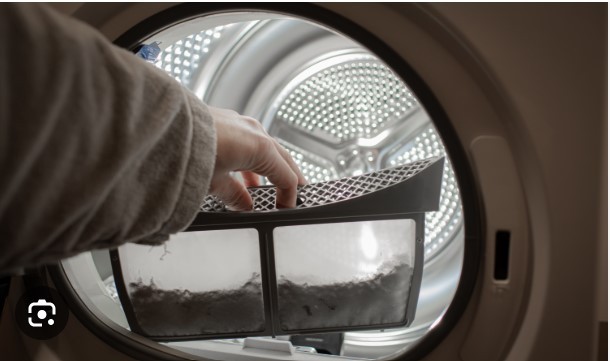
Many homeowners clean the lint trap and assume their dryer is safe. However, lint does not stay only in the filter. Over time, fine fibers move deeper into the vent system, heating components, and internal ducts. At Jay Appliances, we often see dryers that look fine outside but hide serious internal buildup.
Lint seems harmless because it is soft and lightweight. In other words, it does not look like something that could cause damage. But as a result of constant heat and airflow, it gradually collects in tight spaces where it should never be. That slow accumulation can quietly shorten the life of your appliance.

The Hidden Path Lint Takes Inside Your Dryer
When clothes tumble, fibers break off and travel with hot air through the drum and exhaust system. Most importantly, not all of it gets caught by the lint screen. Some particles slip past the filter and settle inside the blower housing, vent hose, and wall duct.
For example, if the vent pipe has small bends or long horizontal runs, lint can cling to those surfaces. Consequently, airflow becomes restricted without you noticing any obvious signs at first. The dryer must then work harder to push air through the blockage.
As airflow drops, internal temperatures rise. Meanwhile, heating elements stay active longer to dry the same load. This extra strain increases wear on thermostats, thermal fuses, and motors. Over time, components that should last years may begin to fail much earlier.
Why Overheating Is a Serious Long-Term Problem
Dryers rely on steady airflow to regulate internal heat. However, when lint narrows the exhaust path, heat cannot escape efficiently. Therefore, the appliance cycles at higher temperatures for extended periods.
This constant overheating affects more than just drying performance. In addition, it can warp plastic parts, damage wiring insulation, and weaken drum seals. These small changes may not cause immediate breakdowns, but they slowly reduce overall reliability.

Another issue is moisture retention. When hot air cannot move freely, damp air lingers inside the drum. As a result, drying times increase and clothes may feel slightly warm but still humid. That extra runtime increases electricity consumption and accelerates wear on moving parts.
If you notice your dryer running longer than usual, it may not be a simple aging issue. To clarify, restricted airflow is often the underlying cause. In such cases, scheduling professional inspection through appliance repair in St. Albert can help identify buildup before it leads to costly damage.
Increased Fire Risk From Ignored Lint Accumulation
Lint is highly flammable. Most importantly, it only takes a small spark or overheated surface to ignite compacted fibers. While modern dryers include safety cutoffs, these systems can fail when airflow problems persist for too long.
For instance, if a heating element overheats due to blocked vents, the surrounding lint can ignite. Consequently, what started as a minor maintenance issue can turn into a serious safety concern. Even without visible flames, smoldering lint can damage internal wiring and insulation.
In the same vein, exterior wall vents clogged with debris can trap heat inside the machine. This situation increases pressure on thermostats and safety sensors. Over time, these parts may burn out, leading to sudden shutdowns or repeated fuse failures.
Regular deep cleaning of the vent system is essential. However, when performance has already declined, professional service may be necessary. Jay Appliances provides detailed diagnostics through dryer repair St. Albert to restore safe airflow and prevent recurring problems.
Subtle Signs Your Dryer May Be Struggling
Not every lint-related issue is dramatic. In fact, most damage develops quietly. Firstly, you may notice clothes taking two cycles to dry. Secondly, the exterior of the dryer may feel hotter than usual during operation.
Another common sign is a burning smell that appears briefly and disappears. Meanwhile, the lint trap may look normal, giving a false sense of security. However, deeper blockages can exist beyond the visible filter.
You might also hear unusual humming or rattling sounds. That is to say, restricted airflow can cause the blower wheel to strain against trapped debris. Over time, the motor may overheat and fail prematurely.
If your laundry room feels unusually humid after a cycle, that can also indicate vent obstruction. In addition, outside vent flaps that do not open fully during operation often signal reduced airflow.
How Preventive Maintenance Protects Your Investment
Dryers are designed to last many years with proper care. However, neglecting internal lint buildup can cut that lifespan significantly. Therefore, regular inspection of vent hoses and wall ducts is just as important as cleaning the lint screen.
It is recommended to check the external vent outlet at least a few times per year. For example, ensure the flap opens freely and no compacted lint is visible. In addition, avoid crushing flexible vent hoses behind the machine, as this traps fibers and restricts airflow.
Professional maintenance goes deeper than surface cleaning. Technicians remove panels, inspect heating components, and clear hidden buildup from blower assemblies. Consequently, airflow is restored to factory levels, reducing strain on every major part.
At Jay Appliances, we often find that early intervention prevents expensive component replacement. Most importantly, addressing airflow issues protects both safety and performance. A well-maintained dryer uses less energy, dries faster, and operates more quietly.
The Long-Term Cost of Ignoring Lint Problems
Many homeowners delay service because the dryer still works. However, longer drying times increase monthly energy bills. As a result, small inefficiencies add up over time.
Replacing a heating element or motor is far more expensive than routine vent cleaning. In other words, preventive care saves money in the long run. Ignoring early warning signs often leads to sudden breakdowns at inconvenient times.
Dryers operate under high heat and mechanical stress. Therefore, keeping airflow unrestricted is critical. By taking lint buildup seriously, you extend the life of your appliance and reduce safety risks inside your home.
Jay Appliances encourages homeowners to treat lint management as essential maintenance rather than an optional task. Small fibers may seem harmless, but over months and years, they can quietly compromise the entire system.
FAQs
How often should dryer vents be professionally cleaned?
Most homes benefit from professional vent cleaning at least once a year. However, larger households that run frequent loads may require more frequent service to maintain proper airflow and reduce fire risk.
Can lint buildup really damage internal components?
Yes. Restricted airflow causes overheating, which stresses heating elements, thermostats, motors, and wiring. Over time, this extra strain can lead to premature failure and expensive repairs.
Why are my clothes still damp after a full cycle?
This often indicates reduced airflow inside the dryer vent system. When moist air cannot escape properly, drying times increase and clothes remain slightly damp even after extended cycles.
Is cleaning the lint trap after every load enough?
Cleaning the lint trap is essential but not sufficient. Fine fibers still pass through the filter and collect deeper in the vent hose and internal ducts, requiring periodic deep cleaning.
What are early warning signs of airflow problems?
Longer drying times, excessive heat on the dryer exterior, unusual smells, and weak airflow from the outside vent are common early indicators of restricted ventilation.
You can read more about our services here: Alberta Business Beat, Your Local Biz, Post Of The Day, Canada Biz Portal, The Canada Best, Calgary Best, The Daily Local.





