

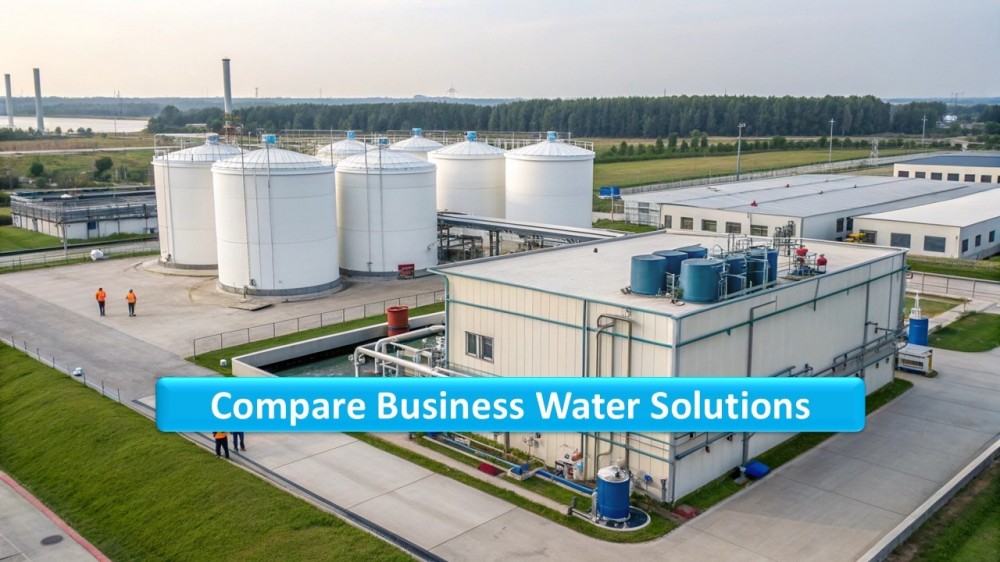
Water is one of those business overheads that rarely gets the attention it deserves. Most companies focus their energy procurement efforts on gas and electricity, while water bills quietly tick over in the background — often on a rate that hasn't been reviewed in years. But since the UK business water market was deregulated in 2017, eligible businesses in England have had the freedom to compare business water suppliers and switch to a better deal, just like they do with energy.
If you haven't reviewed your water contract recently, there's a good chance you're overpaying. This guide covers how to set up or switch your business water account, what to look for when comparing suppliers, and the answers to questions businesses most commonly ask about the commercial water market.
What Business Water Deregulation Means for You
Before 2017, most businesses in England had no choice about who supplied their water — you were simply assigned a regional provider based on your location. That changed when the retail water market opened up to competition, allowing licensed water retailers to offer services to non-household customers.
This means eligible businesses — including offices, restaurants, retail premises, warehouses, and more — can now shop around for a water retailer that offers better pricing, improved customer service, or added-value services like leak detection, water efficiency audits, and consolidated billing across multiple sites.
Scotland opened its non-household water market even earlier, in 2008, and has a well-established competitive landscape. Wales and Northern Ireland have not yet deregulated, so businesses there remain with their regional provider.
The key distinction to understand is that deregulation affects the retail element of your water supply — the billing, account management, and customer service — not the physical infrastructure. The water itself still flows through the same pipes, maintained by the same wholesaler. What changes is who you deal with commercially.
How to Set Up or Switch Your Business Water Account

The process is simpler than most businesses expect. Here's a clear step-by-step guide:
- Check your eligibility. If your business premises are in England and classified as a non-household customer, you are eligible to switch water retailers. Confirm your premises type and location before starting the comparison process.
- Gather your current account details. You'll need your current water retailer's name, your account number, your Unique Property Reference Number (UPRN), and your most recent bill showing annual consumption in cubic metres. This information makes the comparison process faster and more accurate.
- Compare available water retailers. Use a specialist business utilities comparison service like SmartBiz Utility to view quotes from multiple licensed water retailers’ side by side. Look beyond the headline price and consider contract terms, service inclusions, and customer reviews.
- Select your preferred retailer and tariff. Once you've reviewed your options, choose the deal that best fits your consumption profile, budget, and service expectations. Some retailers include added-value services such as leak alerts or usage reports at no extra cost.
- Submit your switch request. Your chosen retailer will typically handle the switching process, liaising with your current provider and the wholesaler on your behalf. You'll need to confirm a few account details and agree to the new contract terms.
- Record a meter reading on the switch date. As with energy switching, taking a meter reading on the day your new contract begins helps avoid billing disputes between your old and new retailer.
- Monitor usage through your new account portal. Most modern water retailers provide online dashboards where you can track consumption, download invoices, and flag any unusual usage patterns that might indicate a leak.
Key Considerations When Comparing Business Water Suppliers
Price is important, but it's far from the only thing worth evaluating when comparing commercial water deals. Here's what to examine carefully:
- Unit rate and standing charge. Your water bill is made up of a volumetric charge (per cubic metre consumed) and a fixed standing charge. Just as with gas and electricity, always calculate total annual cost rather than focusing on just one component — a low unit rate paired with a high standing charge may not deliver the savings it appears to.
- Surface water and sewerage charges. Many businesses pay separate charges for surface water drainage and sewerage services. Make sure any comparison you make accounts for all components of the bill, not just the clean water supply element.
- Contract length and flexibility. Commercial water contracts vary in length and terms. Shorter contracts offer more flexibility to switch again if better deals emerge; longer contracts may come with lower rates but reduced exit options.
- Leak detection and water efficiency services. Some retailers offer proactive leak detection as part of their service, which can save businesses significant amounts on wasted water. If your premises are older or have a history of pipe issues, this is worth factoring into your decision.
- Multi-site billing. If your business operates across multiple locations, look for a retailer that can consolidate all your water accounts into a single bill and provide centralised account management. This reduces administrative burden considerably.
- Customer service quality. Since the physical water supply doesn't change when you switch retailer, the main day-to-day difference is in how well your account is managed. Check independent reviews for responsiveness, billing accuracy, and how effectively the retailer handles disputes or queries.
- Smart meter availability. Some water retailers offer or support smart meter installations for commercial customers. Real-time data helps you identify usage spikes, detect leaks early, and make more informed decisions about water efficiency initiatives.
- Sustainability credentials. If your business has environmental commitments, consider retailers with strong sustainability programmes — including water recycling initiatives, carbon offsetting, or support for water conservation projects.
Tips for Reducing Your Business Water Bill Beyond Switching
Switching to a better retailer is the most impactful single action most businesses can take — but a few operational changes can compound those savings over time. Installing water-efficient fixtures such as low-flow taps and sensor-activated systems reduces consumption without disrupting daily operations. Regularly checking for leaks — particularly in older buildings — is equally important, since even a slow drip can add up to thousands of litres wasted annually. Some retailers provide free water efficiency audits, which can highlight specific areas for improvement tailored to your premises.
Frequently Asked Questions
Can all UK businesses switch water suppliers?
Not all. Deregulation currently applies to non-household customers in England and Scotland only. Businesses in Wales and Northern Ireland remain with their regional provider for now, as those markets have not yet been opened to retail competition.
Will switching water retailer affect my water pressure or supply?
No. The physical supply of water — the pipes, infrastructure, and pressure — is managed by the wholesale water company in your region, which does not change when you switch retailer. Only the billing and account management transfers to the new provider.
How long does a business water switch take?
Most switches complete within 30 days, though timelines can vary depending on the retailers involved and whether there are any account queries to resolve. Your supply remains uninterrupted throughout.
Is there a price cap on business water rates?
No. Unlike domestic water customers, businesses are not protected by a regulated price cap. This makes it especially worthwhile to compare options periodically rather than staying on a default rate indefinitely.
What if I have multiple premises?
Many water retailers specialise in multi-site accounts and can offer consolidated billing across all your locations under a single contract. This is often more cost-effective and significantly easier to manage administratively.
How often should I review my business water contract?
As a rule of thumb, review your water contract at least once every 12 to 24 months, or whenever your contract is approaching its end date. The market evolves regularly, and better deals may become available as new retailers enter and competition increases.
What details do I need to switch?
You'll typically need your current water bill (showing your retailer name, account number, UPRN, and consumption data), your business name and address, and a nominated account contact. Some retailers may also request a recent meter reading.
Start Comparing Business Water Deals Today
The commercial water market offers real scope for savings — but only for businesses that take the time to explore their options. Whether you're looking to reduce costs, improve customer service, or simplify billing across multiple sites, comparing water retailers is a straightforward process that can deliver lasting benefits.
Review your current water bill, gather your account details, and use a trusted comparison service to see what's available. A small amount of time invested now could mean noticeably lower water costs for the full length of your next contract.
About Us:
I help companies compare business energy prices and discover cost-saving solutions, offering clear guidance, reliable insights, and smarter choices for efficient, sustainable energy management today.
Contact us
Call — 0800–058–4297
Email ID — info@smartbizutility.com
Suite 212, 76 Talbot Road, Manchester, Greater Manchester, M16 0PQ





