

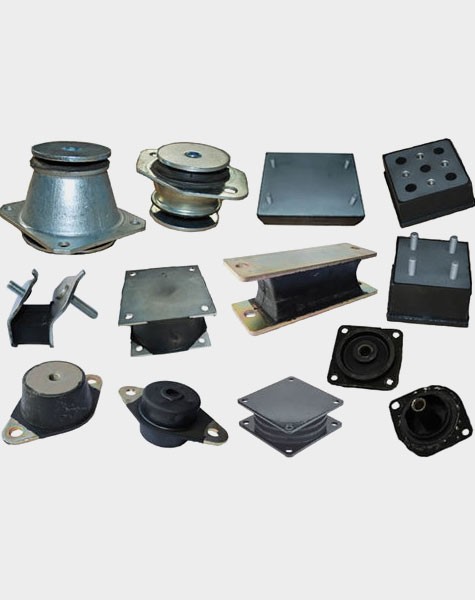
Anti vibration mounts play an important role in protecting equipment, improving the performance, and enhancing the reliability. These components are designed to reduce the transmission of unwanted vibrations and noise between machinery and supporting structure, making them necessary across a wide range of applications.
What are Anti Vibration Mounts
In essence, these vibration mounts are mechanical energy isolators that absorb and dissipate energy created by vibrating machinery. These mounts work to isolate the vibrations and shocks before they can be transferred to other parts of the machinery or to other structures. This not only helps to reduce noise, but it also helps to prevent wear and tear on other machine components.

The principle behind these mounts is simple: when a piece of equipment operates, whether a motor, pump, or HVAC unit , it creates forceful vibrations. Unchecked vibration can cause stress to structural frames, loosen bolts, speed the failure of components, and generate higher noise levels. The proper vibration mount isolates these forces, transferring undesirable kinetic energy to harmless heat by material deformation. The key to their effectiveness lies in material composition, geometry, and installation design. These mounts are widely spread across different industries, ranging from defence sector to renewable energy and power generation.
Steps to Select an Anti Vibration Mounts:
- Calculate the total weight of the machine and the number of mountings needed.
The larger the weight will be the larger the mountings will be required, to reduce the machine vibrations.
- Make sure you calculate the weight of each mounting. Consider that the weight might be not evenly distributed on the machinery.Lets understand this through an example, if the weight of a machinery is 340 Kg, the equipment will require a rubber mount with a weight of 85 Kg each of four mounts were purchased to distribute the weight equally.

- Consider measuring the running speed of the machinery.
Measure the normal running speed of the machinery while selecting anti vibration mounts, which is referred as the forcing frequency and also the lowest operating speed. - Determine the static deflection of the mounting.
Static deflection is the amount that a vibration damping mount compresses under the weight of the equipment. The more the static deflection refers to more work the mount has to do.
- Ensure the connection and service to equipment, such as exhausts, pipework and ducting are flexible for machinery to move freely.
There are multiple benefits of rubber vibration isolation mounts, and they all offer great value to money. They don’t only protect the machinery by reducing the impact of machine powers, but also benefit the life of equipment, structures, and vehicles.
Types of Anti Vibration Mounts
Using an accurate mount makes a huge difference on how long a machine lasts. It is responsible for controlling vibration and cuts down on excess noise, which can damage the equipment over time. Good mounting also improves day-to-day machine performance and reduces wear on key components.
1. Rubber Mounts
Rubber mounts are the most commonly used option in many industries. They are manufactured from materials such as natural rubber, neoprene, nitrile, and EPDM. These materials are especially effective at handling medium to high frequency vibrations. Because of this, rubber mounts are widely used in general industrial machinery and are also suitable for applications where sensitive electronic components need protection.
2. Spring Mounts
Spring mounts use steel springs to isolate low frequency vibration. These are normally used in large HVAC systems, generators, compressors, and heavy industrial machinery where heavier loads and larger ranges of vibration are involved.
3. Metal Rubber Mounts
Metal rubber mounts are employed in cases where equipment requires strength and vibration control and are commonly used as Anti Vibration Mounts. The metal component is responsible for supporting the load, while the rubber component is designed to help in the absorption of shocks and reduction of vibrations originating from different directions.
4. Hydraulic Mounts
Hydraulic mounts contain a fluid passage that assists in the damping of both vibration and shock. They are widely used in engine mounts of vehicles where smooth running is required at different frequencies.
5. Pad & Mat Mounts
Anti vibration pads or mats are flat vibration isolators that are used under the equipment to absorb the vibration. They are useful in light machinery, workstations, and floor mounted equipment.
6. Specialty Mounts (Bushings & Sandwich Mounts)
Bushings are flexible interfaces used between rotating or moving parts to reduce noise and vibration transmission, commonly in automotive systems. Sandwich mounts consist of rubber layers between metal plates and are suited for heavy load applications with high impact and vibration requirements.
Applications of Anti Vibration Mounts
The scope of this mount spans nearly every industry where machines move, spin, or shake. Let's discuss some of the major applications of anti vibration mount:
- Industrial Machinery
Vibration is produced during the functioning of the industrial motors, pumps, presses, and CNC machines. Mounts are used to reduce the stress on these machines and increase their accuracy and longevity.
- HVAC & Air Systems
Regular vibrations are produced in heating, ventilation, and air conditioning systems because of the motion of the fans and compressors. Proper mounts reduce noise and prevent structural transmission of vibration to buildings.
- Automotive & Transport
In the automotive sector, vibration mounts are employed to support engines, exhaust systems, and suspension bushings. They ensure comfort and reduce noise for the passengers.
- Power Generation
Generators and turbines create strong dynamic forces. In order to safeguard the foundation against any type of damage, strategic Anti Vibration Mounts work wonders. With this, noise pollution can be prevented, which is important in power plants and industrial installations. - Electronics & Precision Equipment
Even with a minute of vibration, precision instruments or electronic assemblies can be affected. High frequency damped mounts can shield sensitive parts in laboratories and production floors.
Conclusion
With a proper understanding of the factors mentioned above, engineers and maintenance personnel can make the correct decisions that help in the safe, quiet, and reliable operation of the machine. Whether it is large industrial machinery or small precision machines, selecting effective anti vibration mount from reliable brands such as Horiaki India can definitely make a difference.





