

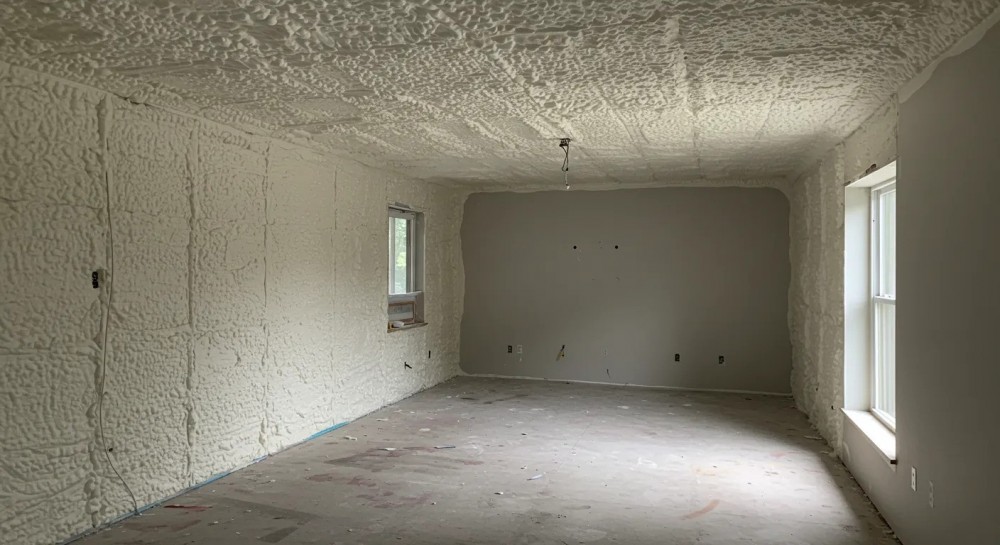
High cooling bills often happen because buildings lose conditioned air through weak insulation and air leaks. Commercial spaces with poor thermal barriers force HVAC systems to run longer and work harder.
Commercial Spray Foam Insulation reduces air leaks and blocks heat transfer. It creates a tight seal that lowers energy waste and improves indoor comfort. Businesses that install the right insulation system often see steady cost control and better temperature balance.
Industry professionals with field experience guide property owners through insulation design, material selection, and installation planning. Their knowledge ensures systems match building needs and climate conditions.

Why Cooling Costs Rise in Commercial Buildings
Cooling expenses increase when warm outdoor air enters through gaps in walls, roofs, and foundations. Older insulation materials lose performance over time.
Air Leakage and Heat Transfer
Gaps around ductwork, windows, and roof joints allow hot air to enter. HVAC units then run longer to maintain indoor temperatures.
Common issues include:
- Poorly sealed roof decks
- Thin insulation layers
- Moisture damage that reduces insulation performance
- Uninsulated metal structures
Commercial Spray Foam Insulation Services address these problems by creating a continuous air barrier.
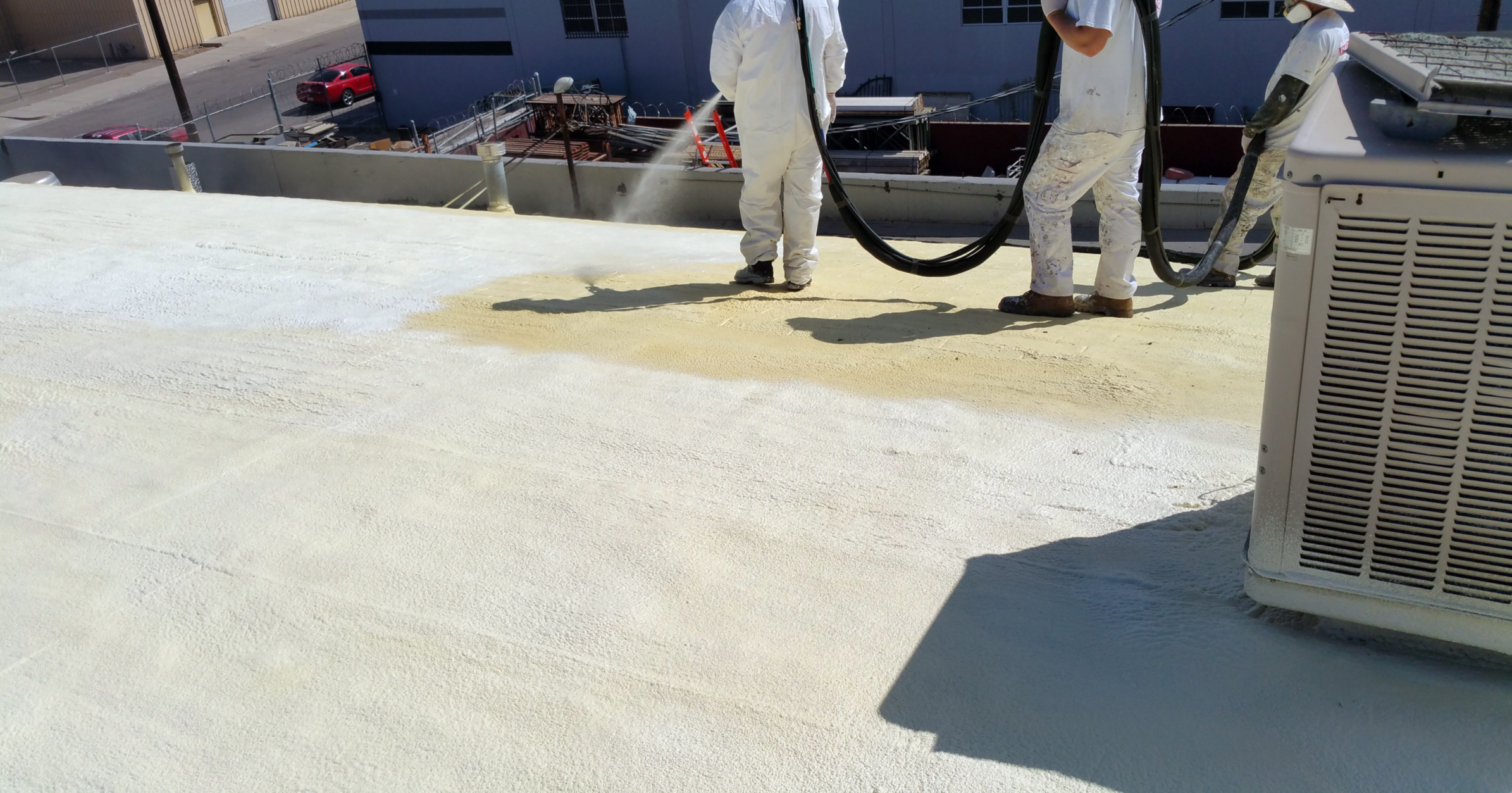

Energy Use Impact
Buildings with uncontrolled air leaks often consume 20 percent to 40 percent more cooling energy.
Energy audits show that air sealing combined with insulation upgrades lowers mechanical strain and operating expenses.
How Commercial Spray Foam Insulation Reduces Cooling Costs
Spray foam expands after application. It fills cracks and hard-to-reach areas.
Air Sealing Benefits
Spray foam blocks air movement across walls and roofs. This limits heat transfer between indoor and outdoor spaces.
Key advantages:
- Strong air barrier
- Moisture resistance
- Improved HVAC efficiency
- Reduced strain on cooling systems
Commercial Spray Foam Insulation Experts assess building layouts before installation. They identify leakage points and plan coverage areas.
Thermal Performance
Spray foam has a high R-value per inch compared to many traditional materials.
It maintains performance even in humid environments. This matters in regions with seasonal moisture changes.
Spray Foam Options for Commercial Buildings
Different projects require different spray foam systems.
Open Cell Spray Foam
Open cell foam expands fully and fills cavities.
It works well for interior wall insulation and sound control.
Benefits:
- Lightweight material
- Good air sealing
- Cost-effective for interior spaces
Closed Cell Spray Foam
Closed cell foam is denser and stronger.
It provides:
- Higher moisture resistance
- Structural reinforcement
- Better insulation per inch
Many projects combine closed cell foam in exterior walls and roofs for maximum protection.
Application Areas
Professionals apply spray foam to:
- Roof decks
- Metal buildings
- Warehouses
- Office ceilings
- Crawl spaces
Proper surface preparation improves adhesion and long-term performance.
Spray Foam Performance Compared to Traditional Insulation
|
Insulation Type |
Air Sealing |
Moisture Resistance |
R-Value per Inch |
Cooling Cost Impact |
|---|---|---|---|---|
|
Fiberglass Batts |
Low |
Low |
Moderate |
Limited |
|
Cellulose |
Moderate |
Low |
Moderate |
Moderate |
|
Spray Foam |
High |
High |
High |
Strong Reduction |
This comparison shows why many building owners upgrade to Commercial Spray Foam Insulation Company solutions when cooling expenses rise.
Market Trends Supporting Spray Foam Growth
U.S. commercial building energy consumption accounts for a large share of total electricity use.
Energy efficiency standards continue tightening.
Building owners invest in insulation upgrades to:
- Meet code requirements
- Reduce operational expenses
- Improve property value
Demand for professional Commercial Spray Foam Insulation Experts grows as businesses focus on long-term cost control.
Things to Consider Before Making a Decision
Building Condition
Professionals inspect roof structure, wall cavities, and existing insulation.
They check for:
- Moisture damage
- Air gaps
- Structural weaknesses
Climate Impact
In areas with warm summers, strong insulation lowers cooling demand.
In mixed climates, moisture control becomes equally important.
Budget and Long-Term Savings
Spray foam requires upfront investment.
However, reduced energy use often offsets installation costs over time.
Property owners compare projected energy savings with installation expense before approval.
Installation Quality
Proper mixing and application determine performance.
Trained technicians control foam thickness and expansion rate to avoid gaps or over-application.
Bonus Tips
- Schedule installation during mild weather for better curing
- Seal penetrations before foam application
- Pair spray foam with reflective roof coatings for added cooling efficiency
Regional Insight for Businesses in Seattle Area
The Pacific Northwest experiences high humidity and seasonal rain.
Moist air increases the risk of condensation inside walls and roofs.
Spray foam helps by:
- Blocking moisture penetration
- Reducing air leakage from wet outdoor air
- Stabilizing indoor temperature
Commercial facilities in this region benefit from systems designed for damp conditions.

Questions About Spray Foam and Cooling Costs
How much can spray foam reduce cooling bills?
Savings often range from 15 percent to 40 percent depending on building size and air leakage levels.
Results vary based on existing insulation and HVAC efficiency.
Does spray foam prevent moisture problems?
Closed cell spray foam resists moisture and limits condensation.
It does not replace proper ventilation or drainage systems.
Where should spray foam be installed first?
Roof decks and exterior walls usually provide the highest immediate impact.
Professionals prioritize areas with the largest air leaks.
How long does spray foam last?
High-quality installations last decades with minimal maintenance.
Performance depends on proper application and building upkeep.
Who installs Commercial Spray Foam Insulation in Seattle?
Experienced specialists evaluate building needs and apply systems correctly.
Cascadia Spray Foam Insulation of Seattle supports property owners with inspections and installation planning.
Contact them at:
Email: info@cascadiasprayfoam.com
Phone: (425) 386-3500
Conclusion
High cooling costs often result from air leaks and weak insulation.
Commercial Spray Foam Insulation lowers energy use by sealing gaps and improving thermal performance.
Building owners should review insulation conditions, climate factors, and system quality before investing.
Careful planning leads to lower cooling expenses and improved indoor comfort.
Get Professional Support
Property owners seeking guidance on insulation upgrades can consult experts for site evaluation and project planning.
Cascadia Spray Foam Insulation of Seattle provides technical assessment and installation support.
Email: info@cascadiasprayfoam.com
Phone: (425) 386-3500
Reviewer: Olivia Thompson has 10 years of experience in spray foam insulation. She reviewed the content and provided insights to align it with customer needs and industry standards.





