

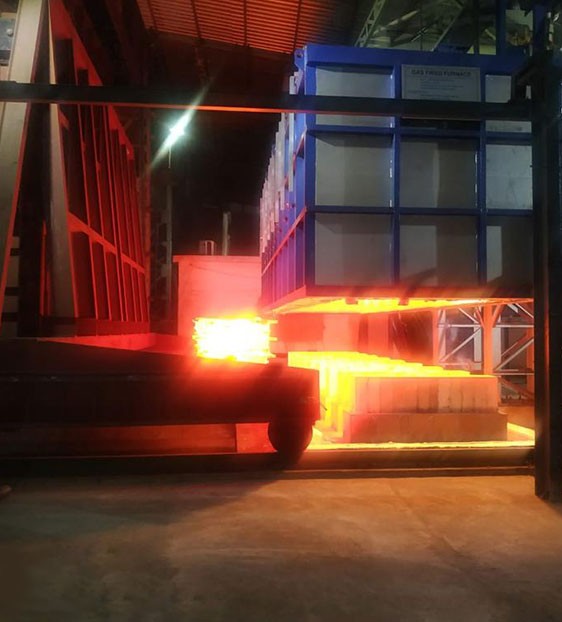
In metalworking, the strength of your final product depends on how well it is heat-treated. You might use top-quality steel, but if the heating process is not done properly, the part will not perform as expected. A Heat Treatment Furnace is not just another machine in the workshop; it is what gives the component the right hardness and toughness. Whether you are producing gears, fasteners, or heavy tools, the furnace plays an important role in the final result. If the furnace does not suit your job, you may face uneven hardness, bent parts, or even cracks that spoil a full batch. That is why choosing the right furnace for your shop is a practical and necessary step.
Why the Right Furnace Matters
A Heat Treatment Furnace is industrial equipment used to heat metal components to a specific temperature, hold them for a fixed time, and then cool them at a controlled rate. This process changes the internal structure of the metal.

Main purposes:
- Increase hardness
- Improve wear resistance
- Relieve internal stress
- Improve toughness

- Enhance machinability
Types of Heat Treatment Furnaces
When you’re setting up a heat treatment line, you aren't just buying a furnace; you’re choosing how your parts will survive the high temperatures. The right choice depends on your daily volume, the shape of your components, and how much floor space you have to work with.
Here is a look at the two most reliable furnaces in the industry.
- The Box Furnace
The Box Furnace is a front-loading unit that you’ll find in almost every tool room or fabrication shop because it’s so easy to use.
Best for: Small to medium parts, individual batches, and general hardening or tempering.
Why it’s a favorite: It’s simple. There are no complex loading systems, maintenance is simple, and it’s very cost-effective for shops that handle different types of parts throughout the day. That’s why many workshops prefer this type of heat treatment furnace for regular production work.
The Bottom Line: If you need a flexible furnace for different small tools and components, this is the best option.
- The Pit Furnace
When your parts are too heavy to sit on a flat hearth, you go vertical. A Pit Furnace is loaded from the top and often sits partially underground or stands tall on the shop floor.
Best for: Long shafts, heavy gears, and tall cylindrical parts.
Why it’s a favorite: Gravity is the secret here. By hanging or standing long parts vertically, you prevent them from warping, a common problem with horizontal furnaces. It also ensures that heat circulates evenly around the entire length of the part.
The Bottom Line: If you are producing axles, long shafts, or large gears, a Pit Furnace is the right choice to heat them evenly and keep them properly aligned.
- The Continuous Furnace
Think of a heat treatment furnace like a professional conveyor oven. Instead of loading one batch and waiting, your parts move through the heat on a steady, automated line.
Best for: High-volume items like automotive components, bolts, screws, and small hardware.
Why it works: It works because the process stays consistent. Every part moves at the same speed through the same heating zones, so the temperature remains uniform. This keeps the quality steady from the first component to the last batch of the day.
The Bottom Line: If you want to keep your production moving 24/7 with as little manual handling as possible, this is your best investment.
- The Vacuum Furnace
In a Vacuum Furnace, we pump all the air out before the heat goes on. By removing the oxygen, we stop the metal from reacting with the air, which means no scaling and no discoloration.
Best for: High-stakes items like aerospace parts, medical implants, and high-end tool steels.
Why it works: The heat treatment furnace delivers a "bright" finish. Your parts come out looking just as clean as they did when they went in. This saves a lot of time because you don’t have to scrub or grind the parts after they’ve been treated.
The Bottom Line: When the part is expensive, and the surface needs to be perfect, the Vacuum Furnace is the best choice to go with.
Key Factors to Consider Before Buying
Price is not the only factor to consider when choosing a heat treatment boiler.
-
Temperature Range
- What maximum temperature do you need?
- Is future expansion planned?
-
Chamber Size
- What is your largest component size?
- Do you process single pieces or bulk loads?
-
Heating Method
- Electric
- Gas-fired
- Oil-fired
-
Temperature Uniformity
- Does it maintain consistent heat distribution?
- Are there multiple heating zones?
-
Energy Efficiency
- Insulation quality
- Power consumption
- Heat loss control
-
Automation & Controls
- Digital temperature controller
- PLC system
- Data recording system
Conclusion
Selecting a perfect heat treatment furnace is important for ensuring long-term effectiveness and consistent quality, not just for purchasing equipment. From box and pit designs to continuous and vacuum systems, each furnace serves a different purpose. Focus on your production volume, material type, and temperature requirement before making a decision. When selected correctly, a reliable furnace, from a trusted partner such as Vibrant Thermal Engineering, becomes a strong foundation for better performance, lower rejection rates, and steady industrial growth.
FAQ’s
- How hot can these furnaces get?
Most of our models run between 600°C and 1200°C. That’s the perfect range for almost any standard metal job, from softening to hardening. - What’s the best way to look after one?
Just keep a close eye on your heating parts and sensors. If you check the insulation and controls every so often, you’ll avoid expensive repairs later. - I have a small shop, which one should I get?
A Box Furnace is usually your best bet. It’s a reliable "all-rounder" that handles different types of work without taking up too much space. - Do I really need a Vacuum furnace?
Only if you need your metal to come out shiny and perfectly clean. It costs more, but it saves you from having to scrub or polish the parts after they cool down.





