
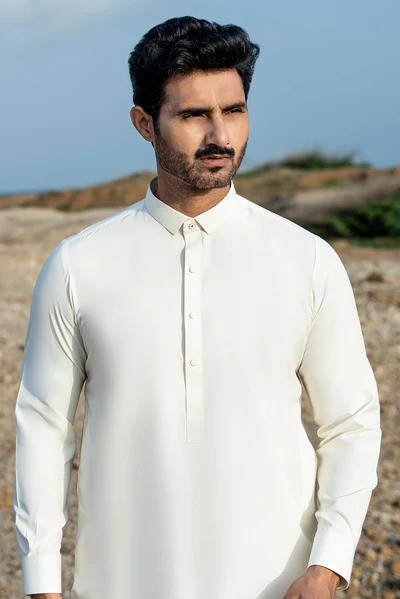
Shalwar kameez in Pkaistan is not just an outfit it’s a part of everyday life. It’s what fathers wear to work, what children wear to school events, what families choose for Eid prayers, and what brides and grooms style beautifully for wedding festivities. It represents comfort, modesty, and a deep connection to culture.
From busy city streets to peaceful village landscapes, shalwar kameez remains the most recognizable and loved attire across the country.
A National Dress with Timeless Appeal
Shalwar kameez holds the honor of being Pakistan’s national dress. Its design is simple: a long shirt (kameez) paired with loose trousers (shalwar). Yet within this simplicity lies endless variety.

It can be plain and minimal for daily wear or heavily embroidered for special occasions. It can be stitched in breathable cotton for summer or warm khaddar for winter. It can be tailored slim for a modern look or kept traditional with a relaxed fit.
No matter how it is styled, the essence remains the same elegance without effort.
Comfort for Every Season
One reason shalwar kameez has remained popular for generations is comfort. Pakistan experiences intense summers and mild winters, and this outfit adapts perfectly to both.
During summer, light cotton and lawn fabrics allow airflow, keeping the body cool. In winter, thicker materials like khaddar, linen, or wool blends provide warmth while maintaining style.
Its loose structure allows easy movement, making it ideal for daily routines, office work, travel, and family gatherings.

For Men Simplicity with Dignity
For Pakistani men, shalwar kameez reflects grace and confidence. A crisp white outfit often symbolizes simplicity and respect, especially worn for Friday prayers or formal events.
For weddings and festive occasions, men choose embroidered collars, stylish cuffs, or pair their outfit with waistcoats and traditional khussas. Small details in stitching and fabric choice can transform a simple look into something powerful and refined.
It’s an outfit that makes a statement without trying too hard.
For Women Color, Craft, and Creativity
For women, shalwar kameez in Pakistan becomes a canvas of creativity. Vibrant colors, intricate embroidery, mirror work, lace details, and beautifully styled dupattas add personality to every piece.
Each province in Pakistan adds its own flavor. From Sindhi ajrak patterns to Punjabi phulkari embroidery and Balochi handwork, traditional wear reflects regional pride and craftsmanship.
Women style their outfits differently depending on the occasion simple and light for daily wear, or richly embellished for weddings and celebrations.
A Centerpiece of Celebrations
No celebration in Pakistan feels complete without shalwar kameez. During Eid, markets fill with families shopping for new outfits. Tailors work late into the night to deliver stitched suits on time. The excitement of wearing fresh traditional clothes adds to the joy of the festival.
Weddings, too, highlight the beauty of this attire. From mehndi events to nikkah ceremonies, shalwar kameez appears in elegant forms, often enhanced with fine embroidery and luxurious fabrics.
It is deeply woven into life’s happiest moments.
Tradition Blending with Modern Trends
While deeply rooted in heritage, shalwar kameez continues to evolve. Designers experiment with new cuts, straight pants instead of traditional shalwars, shorter kameez lengths, and soft pastel shades.
Young generations style it with modern footwear, minimal accessories, and contemporary tailoring. This blend of old and new keeps the outfit fresh and relevant.
Traditional wear in Pakistan doesn’t resist change it embraces it gracefully.
A Symbol of Unity
Pakistan is home to diverse cultures, languages, and communities. Yet across all regions, shalwar kameez serves as a unifying thread. Regardless of background, people share this common style.
It connects rural and urban life, older generations and younger ones. It is equally at home in small towns and big cities like Karachi, Lahore, and Islamabad.
In a country rich with diversity, this outfit stands as a shared identity.
More Than Just Fabric
At its core, shalwar kameez is about belonging. It carries memories of family gatherings, religious festivals, and everyday simplicity. It reflects respect for tradition while allowing room for personal expression.
Even Pakistanis living abroad often wear shalwar kameez during cultural events, proudly representing their roots.
It is not just stitched cloth it is heritage, comfort, and pride.
Final Thoughts
Shalwar kameez in Pakistan is timeless. Trends may shift, fashion may globalize, but this traditional attire continues to hold its place with dignity.





