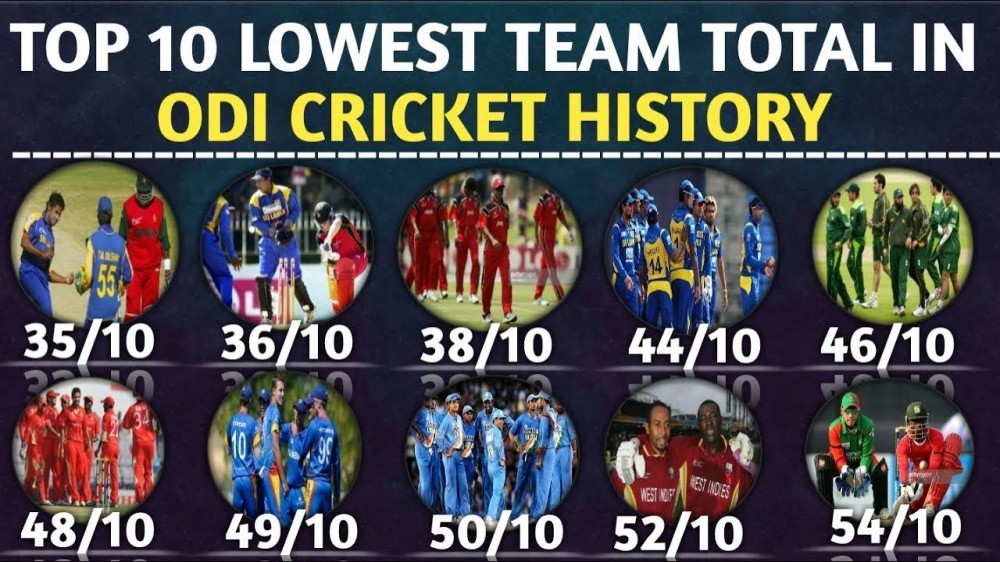
Cricket is a game of glorious centuries, nail-biting finishes, and towering totals. But sometimes, the sport writes history at the opposite end of the scoreboard. Few records capture the imagination quite like the lowest score in ODI cricket—a statistic that feels almost unreal in a format designed for longer batting stays and higher totals. Yet, on one unforgettable day, the cricketing world witnessed an innings so brief and dramatic that it reshaped conversations around batting collapses forever.
The Match That Set the Record
The lowest team total in One Day International (ODI) history belongs to Zimbabwe national cricket team, who were bowled out for 35 runs against Sri Lanka national cricket team in 2004. The match took place in Harare and remains one of the most astonishing scorecards the game has ever seen.

To put that number into perspective: modern ODI teams often score 35 runs within the first six or seven overs of an innings. Zimbabwe’s entire team failed to cross that mark before being dismissed, setting a record that still stands as the lowest ODI total in men’s cricket.
How Did It Happen?
Cricket collapses happen for many reasons—swinging conditions, fiery bowling spells, fragile batting confidence, and mounting pressure. On that day, all those elements collided at once.
Sri Lanka’s bowlers exploited helpful conditions with relentless accuracy and pace. The standout performance came from Chaminda Vaas, who produced one of the greatest opening spells in ODI history. He ripped through Zimbabwe’s top order with late swing and pinpoint control, leaving the hosts reeling almost immediately. Wickets fell in clusters, and panic spread through the batting lineup.
By the time Zimbabwe tried to stabilize, the damage was already done. Batsmen were forced into risky shots, and defensive techniques crumbled under sustained pressure. The innings ended in just 18 overs—an extraordinary statistic in a 50-over format.

Why This Record Still Stands
ODI cricket has evolved dramatically since 2004. Bigger bats, flatter pitches, improved fitness, and aggressive batting approaches have made collapses of this magnitude rarer. Even teams facing elite bowling attacks usually manage to scrape together 60, 70, or 80 runs through partnerships or lower-order resistance.
The 35-all-out remains unmatched because it required a perfect storm:
Exceptional opening bowling that dismantled the top order early
Lack of partnerships, meaning no batter could anchor the innings
Psychological pressure, with each wicket increasing panic
Favorable conditions for swing bowling
While there have been other embarrassingly low totals in ODI history, none have come close to eclipsing this particular record.
Other Notably Low ODI Totals
The lowest score in ODI cricket is the most extreme example, but it’s part of a broader pattern of dramatic collapses. Teams like Canada national cricket team and United States national cricket team have also experienced crushing defeats in ODIs during their developmental years on the international stage. Even established teams have occasionally imploded under pressure, reminding fans that no lineup is immune to a bad day.
These matches often spark debates: was it great bowling, poor batting, or a combination of both? In reality, record-low scores usually happen when brilliant bowling meets fragile confidence.
What This Record Teaches Us About ODI Cricket
The lowest score in ODI cricket is more than just a quirky statistic—it’s a reminder of the sport’s unpredictability. On paper, an ODI gives batsmen time to recover from early losses. But cricket is played in moments, and momentum can flip brutally fast.
For teams, this record underscores the importance of:
Solid opening partnerships to blunt early movement
Mental resilience when wickets fall quickly
Batting depth, so collapses don’t spiral out of control
For fans, it’s proof that even in a format known for big scores and long innings, drama can unfold in a heartbeat. One fiery spell can define a match—and sometimes, an entire chapter of cricket history.
Could This Record Ever Be Broken?
It’s unlikely, but not impossible. With the rise of associate nations and the increasing competitiveness of international cricket, mismatches still occur. However, improved coaching, video analysis, and professional structures mean teams are better prepared than ever. Even when collapses happen today, lower-order batters tend to show more resistance.
That said, cricket has a habit of surprising us when we least expect it. Records that seem untouchable often stand only until the next extraordinary day.
The Legacy of the Lowest ODI Score
The 35-run collapse remains one of the most talked-about moments in ODI history—not because it was pretty, but because it was unforgettable. It lives on in trivia quizzes, highlight reels, and discussions about the most shocking records in sport.
In a game celebrated for centuries and double-hundreds, the lowest score in ODI cricket stands as a humbling counterpoint: a reminder that cricket can be ruthless, momentum is everything, and even on the biggest stage, a team can unravel in spectacular fashion.