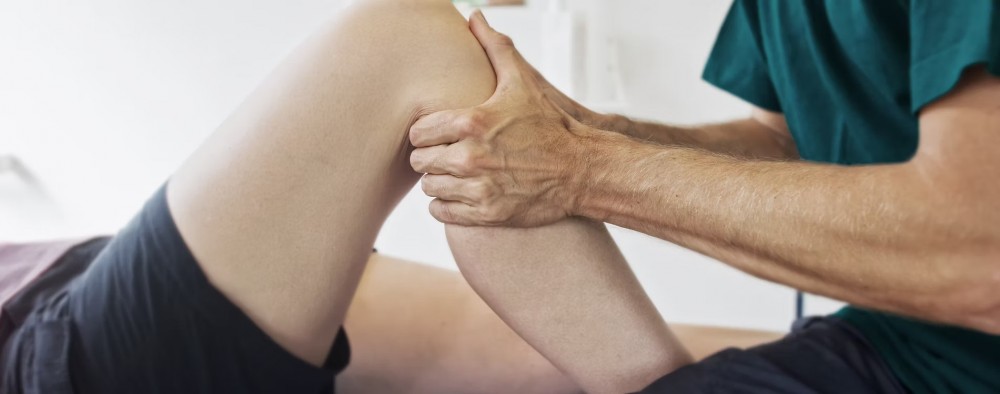
ACL injury is overwhelming. The knee may collapse and swell rapidly, rendering it unreliable for everyday movement. Among active individuals, it raises immediate questions about sport, labour and long-term recovery.

Stuart Mailer Physiotherapy & Sports Medicine LTD is a facility where patients are carefully assessed and guided through a systematic rehabilitation program tailored to their goals.
Whether it is surgery-free or post-surgery treatment of the injury, ACL tear physiotherapy is an essential component of long-term restoration of strength, balance, and confidence in the knee.

This describes the process for ACL Injury Physiotherapy, its course, and its benefits under specialist care.
What Happens When The ACL Is Torn
The anterior cruciate ligament stabilises the knee during:
- Twisting movements
- Sudden direction changes
- Jumping and landing
- Rapid deceleration
When torn, people often report:
- A popping sensation
- Rapid swelling
- Pain with weight bearing
- A feeling that the knee may buckle
Without structured rehabilitation, instability can persist and increase the risk of further joint damage.
Why Physiotherapy For ACL Tear Is So Important
Surgery is the only thing many people believe will solve the problem. That is not always the case. In certain cases, particularly in patients who do not play high-impact sports, physiotherapy for an ACL tear can achieve great results.
Rehabilitation focuses on:
- To restore the entire gamut of motion.
- Restoring the strength of the quadriceps and hamstrings.
- Retraining balance and joint control
- Correcting movement patterns
- Gradually returning to activity
Studies indicate that, in cases of ACL injury physiotherapy may lead to good functional outcomes, especially when initiated early and progressed appropriately.
What Makes Specialist ACL Rehabilitation Different
Not all knee rehabilitation programmes are equal. ACL recovery requires detailed progression and objective testing.
A specialist clinic approach includes:
-
Thorough Clinical Assessment
Every programme begins with a detailed evaluation of swelling, strength deficits, movement quality, and functional limitations.
-
Individualised Goal Setting
A recreational runner has different demands compared to a rugby player. Rehabilitation must reflect this.
-
Structured Strength Progression
Loading is gradually increased to safely rebuild muscle capacity.
-
Functional Testing Before Return To Sport
Return-to-sport decisions are based on measurable outcomes, such as limb symmetry testing, rather than on time alone.
This structured pathway reduces uncertainty and supports a safer return to activity.
Conservative Management Versus Surgery
One of the most common questions is whether surgery is required.
When Conservative Treatment May Be Suitable
- Partial tears
- Lower demand activities
- No repeated knee instability
- Willingness to commit to rehabilitation
When Surgery May Be Considered
- Complete rupture
- Frequent knee giving way
- Participation in pivoting sports
- Associated injuries such as meniscal tears
In both pathways, Physiotherapy For ACL Tears remains essential. Surgery alone does not restore strength or control. Rehabilitation determines the outcome.
What Does ACL Injury Physiotherapy Involve After Surgery
Following reconstruction, the early stages focus on:
- Swelling control
- Restoring knee extension
- Activating quadriceps muscles
- Normalising walking pattern
As healing progresses, rehabilitation expands to:
- Progressive strength training
- Single-leg control drills
- Jump and landing mechanics
- Preparation of sport-specific movement.
The recovery period can vary; however, many individuals resume their full-demand sports 9-12 months after objective testing.
How Long Does Recovery Take
Recovery depends on:
- Injury severity
- Surgical or non-surgical pathway
- Adherence to rehabilitation
- Pre-injury fitness levels
General guidance suggests:
- Walking normally within weeks
- Light jogging around three to four months post-surgery
- Full sport participation after nine to twelve months
Hurrying this procedure raises the risk of reinjuries. A gradual, slow approach is more beneficial for the knee in the long term.
Common Questions About Physiotherapy For ACL Tear
- Can The ACL Heal Without Surgery?
In most cases, the ligament does not regenerate completely. But the nearby muscles can adequately counterattack with well-organised rehabilitation.
- Is Physiotherapy Painful?
The initial pain is normal, but exercises are advanced gradually. The pain must be controlled and kept under observation.
- What Happens If Rehabilitation Is Ignored?
Persistent weakness and instability may increase the risk of cartilage or meniscal damage.
- Can You Return To Competitive Sport?
Yes, there are numerous successful returns by athletes. Always, clearance must depend on strength symmetry and functional testing rather than calendar dates.
Regaining Strength, Stability, and Confidence After ACL Injury
ACL tear may seem like a blow to the heart, yet recovery is organised and quantifiable with the help of the proper approach. ACL Injury Physiotherapy strengthens, restores movement control, and prepares one to resume normal life and sport safely.
Stuart Mailer Physiotherapy & Sports Medicine LTD provides individualised treatment based on long-term knee performance and risk-free recovery to physical activity to patients in need of specialist evaluation and formal rehabilitation.
The confidence and stability in the knee can be gradually restored with patience, determination and professional assistance.