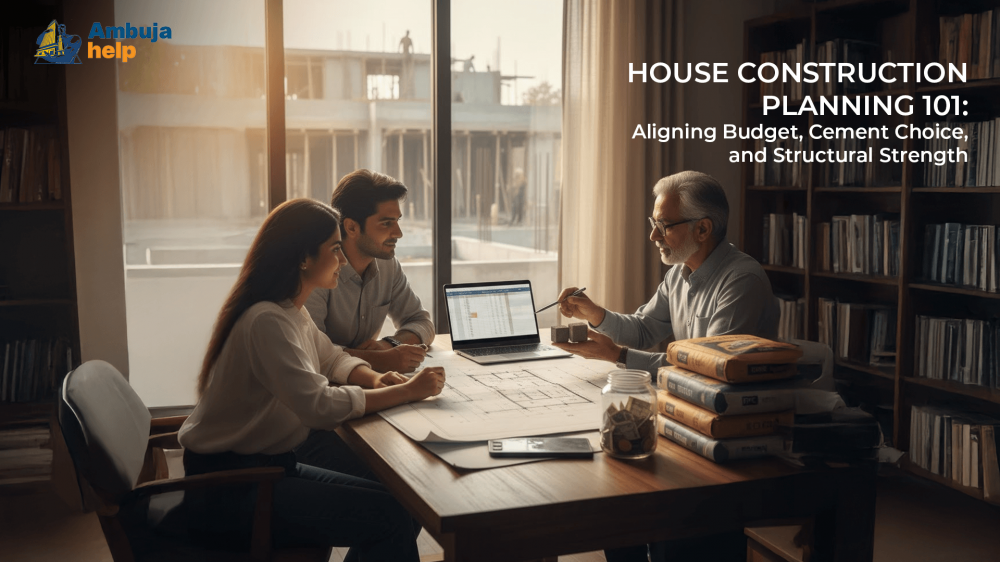
Building a home is one of the most significant financial investments. So, it becomes even more important to plan carefully while balancing rising raw material prices and increasing labour charges. However, it’s important to note while budgeting for your house construction, cost efficiency does not come with cutting corners; it is about aligning your budget, material choices, and priorities in a practical and informed way.
When these three elements work together, you can create a home that is strong, safe, and financially manageable.
Start with a Realistic and Detailed Budget
Every successful project begins with a clear budget roadmap. Many homeowners underestimate the total construction cost because they focus only on directing the max into materials like cement and steel. In reality, expenses are spread across several categories, including labour, approvals, finishing materials, and site supervision.

Here is how costs are typically distributed:
|
Component |
Approximate Share of Total Budget |
|
Structural Materials (cement, steel, bricks) |
40–50% 
|
|
Labour |
25–30% |
|
Finishing (tiles, paint, fittings) |
15–20% |
|
Approvals & Miscellaneous |
5–10% |
Understanding this breakdown helps you allocate funds wisely. It also prevents overspending on decor that might compromise the quality of raw materials. Always include a 10–15% contingency buffer to handle unexpected price fluctuations or minor design changes.
Smart Design Reduces Material Waste
Your layout directly influences how much material and labour your home will require. Simple, well-thought-out home building plans can significantly reduce unnecessary expenses.
For example, compact rectangular layouts typically use less steel and fewer beams compared to complex designs with multiple projections or curves. A straightforward roofline also reduces structural complexity and material consumption.
At this stage it’s important that you consult an experienced architect or civil engineer.. They help optimize room placement, structural alignment, and material quantities so that your design is both beautiful and economical.
Cement Choice: The Backbone of Structural Strength
While tiles, paint, and fixtures decide how your house will look, cement decides its strength. It binds every element together, from the foundation to the roof slab. Thus, choosing the right type of cement ensures durability, crack resistance, and reduced maintenance in the future. Premium-quality options like Ambuja Cement are known for consistency and reliable performance, which is especially important for residential construction.
Different cement types serve different purposes:
|
Cement Type |
Ideal Use |
Why It Matters |
|
OPC (Ordinary Portland Cement) |
Foundations, beams, slabs |
Provides high early strength and load-bearing capacity |
|
PPC (Pozzolana Portland Cement) |
Walls and plastering |
Improves durability and surface finish |
|
PCC (Portland Composite Cement) |
Sustainable construction |
Reduces environmental impact while maintaining strength |
For example, OPC is particularly useful when early strength is required, helping speed up project timelines. PPC, on the other hand, improves workability and long-term durability, making it the best fit for plastering and general construction.
This versatile, high-performance product that combines strength, durability, and sustainability makes it ideal for eco-friendly construction purposes.
Cost-Effective Construction Techniques That Maintain Quality
Budget-conscious construction does not mean compromising on the building’s integrity. Instead, it focuses on techniques that reduce waste and improve efficiency.
Load-Bearing Structures
For single or double-storey homes, load-bearing walls can reduce the total quality of steel required. In this system, the walls themselves carry the structural load, eliminating the need for numerous columns and beams. This approach lowers material use and speeds up construction while maintaining safety when designed correctly.
Prefabricated Components
Prefab elements such as doors, blocks, and roofing sheets reduce labour time and ensure consistent quality. Faster installation also means lower labour costs and helps with staying on pace with timelines.
Precast Concrete Elements
Precast slabs and beams arrive ready for installation, reducing on-site curing time and material wastage. When used with durable cement, they improve the overall efficiency of the construction project.
Never Compromise on the Structural Core
The Roof, Columns, and Foundation (RCF) form the structural backbone of your home. These components bear the maximum load and must be designed with care. Proper soil testing makes sure that the depth of the foundation is suitable for the soil type. Additionally, it’s also important to get the correct mix ratios and pay attention to curing to prevent cracks and weakness later.
You may upgrade interiors in the future, but repairing a weak foundation is extremely expensive. Investing wisely in construction materials today ensures long-term safety and stability.
Safety and Compliance Are Non-Negotiable
Even budget-friendly homes must comply with safety standards and local regulations.
|
Safety Aspect |
What to Verify |
Importance |
|
Soil Testing |
Proper load calculations |
Prevents settlement and cracks |
|
Cement & Steel Quality |
Approved grades |
Ensures structural integrity |
|
Local Approvals |
Zoning & permits |
Avoids legal issues |
|
Site Supervision |
Regular curing checks |
Maintains quality control |
Final Thoughts
Building a home within budget is entirely achievable when planning is done thoughtfully with the help of the right people. Aligning your construction goals with realistic budgeting, efficient design, and the right cement choice for a cost-effective outcome.
Premium materials such as Ambuja Cement provide consistent quality that supports the building’s strength and long-term reliability. When combined with smart planning and sustainable techniques, they help create homes that are not only affordable but also safe and lasting.