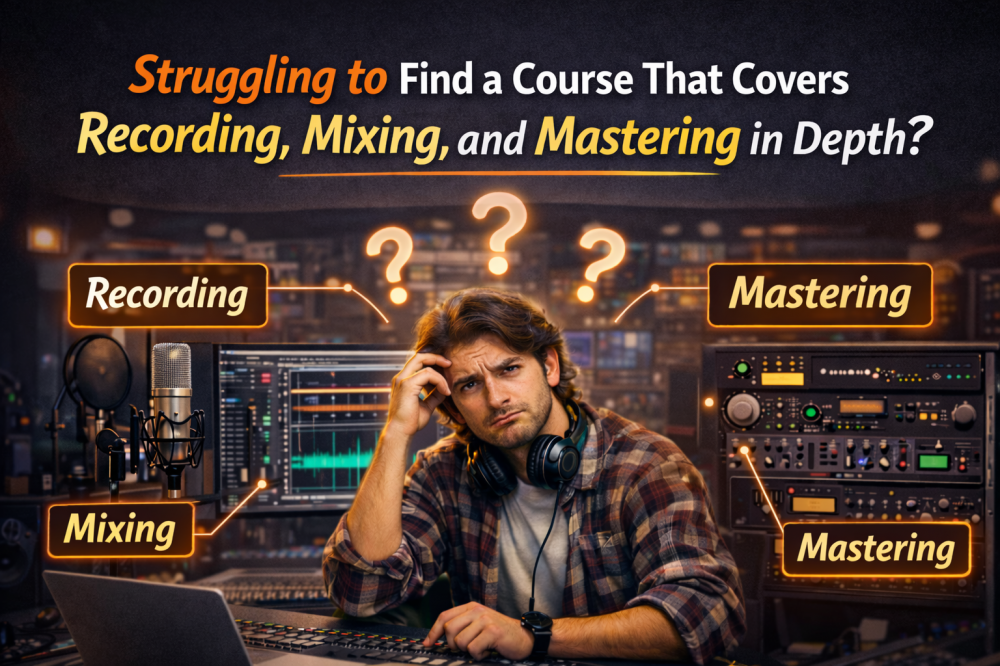
If you are passionate about music but feel confused about where to start, don’t worry, as you are not alone. There are many people out there who, like you, are looking endlessly for some of the best programs that can truly delve deep into the art of recording, mixing, and mastering. While going through some of the courses, such as the Sound Engineering Courses in Kerala, you may find some of them emphasizing more on theory, and some of them may offer minimal hands-on experience. The actual challenge is to find one that offers an optimal blend of theory and practice.
The right sound engineering course can make all the difference to your entire career as a music producer. Music production is not just about learning to use some of the best music production software. Music production is an art form that requires knowledge of acoustics, sound flow, microphone usage, sound design, editing, mixing, mastering, and even client management. A good course should be able to walk you through each and every step of the music production process.
Why Recording Skills Matter More Than You Think
The foundation of any good song is the recording. No matter how good your mixing skills are, if your recording is bad, it will always be reflected in the final product. Therefore, a good course will teach you:

- Microphone types and placement techniques
- Acoustics and treatment of rooms
- Signal flow and gain staging
- Recording vocals, live instruments, and electronic sources
- Session setup and workflow management
Without mastering these basics, you may struggle later in the production chain. Good recording techniques save hours of editing and mixing time and ensure a professional sound from the beginning.
The Art and Science of Mixing
This is where art meets technical skill. Mixing is the process where all the individual tracks come together to create a cohesive, balanced, and engaging piece of music. However, many short-term courses gloss over the intricacies of the process.
The complete list of topics to be taught includes:
- Equalization techniques
- Compression and control of dynamics
- Reverberation and delay techniques
- Stereo imaging and panning
- Automation and creative effects
- Mix referencing and critical listening
The process of mixing music requires a good ear as well as a good understanding of the technical aspects. It requires students to have many practice sessions at a professional studio.
Mastering: The Final Polish
Mastering is often thought of as making a track louder. However, mastering is all about optimizing a mix for various playback systems without compromising on the dynamic range of a track. A good curriculum should include the following topics:
- Mastering chains and signal processing order
- Limiting and loudness standards
- Refining EQ techniques
- Preparing tracks for streaming services
- Quality control and final export settings
A curriculum that does not focus on mastering techniques will leave the student incomplete as a graduate.
The Importance of Hands-On Training
In audio education, it is not enough that you have knowledge only in theory. There should be hands-on experience in a real-life studio with real-life equipment. Having hands-on experience in a real-life session, working with real-life artists, and having real-life recording challenges will give you confidence and flexibility.
The Audiophile’s School of Sound Engineering (TASE), for example, provides hands-on learning in a studio, along with theoretical learning.
Industry-Relevant Curriculum
The music industry is a dynamic field, and there are always new developments in terms of digital audio workstations, etc. Some of the current developments that a modern course in sound engineering should cover are:
- Knowledge of industry-standard DAWs
- Introduction to film and media sounds
- Live sound engineering basics
- Music business basics
- Portfolio development
If a program does not update its curriculum, students may end up learning outdated skills, which can restrict their future job prospects.
Mentorship and Faculty Expertise
However, another very important factor is the experience of the teaching staff. Learning from people who actively work in studios or live shows can provide very useful insights beyond theoretical knowledge. They can share useful tips and client scenarios, as well as workflow shortcuts, that come only with experience.
A good school, such as The Audiophile’s School of Sound Engineering (TASE), can bring industry experience to the classroom, allowing the student to understand production scenarios, not just hypothetical cases.
Career Opportunities After a Comprehensive Course
As you get proper training in recording, mixing, and mastering, you can have numerous job opportunities. These include:
- Studio recording engineer
- Mixing and mastering engineer
- Live sound technician
- Film and media sound designer
- Independent music producer
- Audio editor for podcasts and digital media
This kind of education allows you to have multiple career paths instead of being limited to one particular niche.
Questions to Ask Before Enrolling
Before signing up for any program, it is a good idea to ask these important questions:
- How many hours of hands-on practice are included in the program?
- Does the program cover all aspects of recording, mixing, and mastering in detail in separate classes?
- Do students work on real-world projects?
- What kind of equipment and software are available to students?
- Does the institute offer any kind of internship or placement assistance?
These are all important questions to ask, as they can give a clear idea of whether the program is offering in-depth learning or just scratching the surface.
Avoiding Common Mistakes
Many young engineers, especially, make the common error of selecting an educational course based on the course duration and cost. While it is true that cost is an essential factor, it is equally true that quality education is an investment in your future. A course with lesser duration may be just an exposure, but it is not an acquisition of skill.
While online tutorials can be an additional tool, they should never be an alternative to mentorship and studio usage.
Building Confidence Through Structured Learning
When you study a good sound engineering program, you become more than just a sound engineer. You become a critical listener, a creative thinker, and a professional. You become someone who knows how to deal with clients’ criticism, meet deadlines, and solve technical problems under pressure.
As you progress from recording basics to advanced mastering techniques, you begin to understand how each stage influences the final product. This holistic understanding sets professionals apart from hobbyists.
Final Thoughts
It is not an easy task to find a course that effectively teaches all three aspects of sound recording, mixing, and mastering. Nevertheless, with adequate research and proper prioritization, it is quite feasible to find an appropriate course for yourself. While embarking on this search process, which might begin with Sound Engineering Courses in Kerala and later lead to further research on advanced programs like Sound Engineering Courses in Bangalore, always try to find institutions that offer adequate training.
Your path to sound engineering should not merely equip you with the knowledge of equipment and software; it should transform you into an individual who can shape the future of sound.