

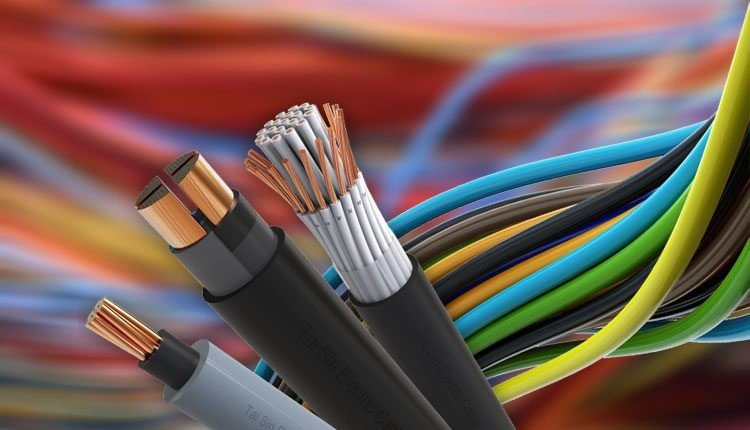
We are living in the golden age of automation. From automotive assembly lines to precision electronics manufacturing, industrial robots are moving faster, smoother, and more relentlessly than ever before. But as these robotic arms perform their complex, multi-axis dances, they put an incredible strain on their "nervous system"—the cables. A standard cable would snap or "corkscrew" within a few thousand cycles. Modern robotics requires a completely different breed of engineering. As factories also move toward greener operations by powering their lines with Sustainable Solar Power Solutions, the cables themselves must be more efficient and durable to minimize waste. Cable design innovations for industrial robotics are currently pushing the limits of material science and mechanical physics.
The Torture Test: Understanding Robotic Movement
To understand why robotic cables are special, you have to look at how they move. In a typical 6-axis industrial robot, the cables are subjected to three brutal forces simultaneously:
- High-Speed Bending: The cable is bent back and forth millions of times as the arm reaches and retracts.
- Extreme Torsion: This is the real killer. As the "wrist" of the robot rotates, the cable is twisted like a wet towel. Standard wires cannot handle this twisting; their internal components migrate and eventually tear the jacket from the inside out.
- Rapid Acceleration: Modern robots move with incredible G-forces, snapping the cables like a whip.
Innovation 1: Super-Fine Conductor Stranding
The heart of a robotic cable is the copper. If you use a single solid wire, it snaps instantly when bent. If you use standard coarse strands, they "work-harden" and become brittle.

Robotic cables use Class 6 conductors—the highest level of flexibility. This involves bundling thousands of hair-thin copper filaments, often as thin as 0.05mm. These strands are twisted in a very specific, tight "pitch" or "lay length." This geometry allows the copper filaments to glide over each other during a bend rather than stretching, preventing metal fatigue.
Innovation 2: Torsion-Optimized Internal Geometry
The way the internal wires are bundled is a secret science. In a standard cable, the wires are just twisted together. In a robotic "torsion-rated" cable, the internal components are designed to move.
- Slip Planes: Manufacturers use special PTFE (Teflon) tapes or non-woven fleece between the cores and the jacket. These act as "slip planes," allowing the inner wires to slide freely when the cable is twisted.
- Center Fillers: A high-strength aramid fiber (like Kevlar) core is often used in the center. The wires are wrapped around this core, which absorbs the pulling tension, preventing the copper from stretching.
Innovation 3: Polyurethane (PUR) and TPE Jacketing
The outer skin of a robotic cable must be invincible yet elastic.
Standard PVC is too stiff and fails in oily environments. Robotics cables almost exclusively use Polyurethane (PUR) or specialized Thermoplastic Elastomers (TPE).
- Abrasion Resistance: PUR is incredibly tough. It can be dragged across concrete or rubbed against a metal arm for years without wearing through.
- Chemical Immunity: In automotive plants, robots are often sprayed with cutting fluids, oils, and coolants. PUR jackets are chemically inert to these substances, preventing the cable from swelling or becoming "mushy."
- Halogen-Free: Many modern factories mandate LSZH (Low Smoke Zero Halogen) materials for safety, a standard upheld by any premium Cable Manufacturer & Supplier in the UAE.
Innovation 4: Hybridization (The One-Cable Solution)
One of the biggest trends in robotics is the move toward hybrid cables. In the past, a robot needed a thick power cable for the motors and a separate shielded cable for the sensors and data.

Today, manufacturers engineer a single "hybrid" jacket that contains high-voltage power cores, shielded data pairs (like Ethernet or Fiber Optics), and even pneumatic tubes for compressed air.
- Benefits: One cable means a smaller, lighter "dress pack" for the robot. This reduces the weight the motors have to carry, allowing the robot to move faster and consume less energy.
The Role of Testing: The 10-Million Cycle Guarantee
You cannot claim a cable is robotic-rated without proof. Innovation in this sector is driven by "Torture Labs." Cables are mounted on automated machines that bend them 180 degrees and twist them 360 degrees, 24 hours a day. Only designs that survive 5 million or 10 million cycles without a single broken strand or a drop in data speed are certified for the field.
Conclusion: The Backbone of the Smart Factory
The robot gets all the glory, but the cable does all the work. Without these innovations in stranding, slip-planes, and PUR chemistry, the automation revolution would grind to a halt. As we move toward Industry 4.0, the demand for even smarter cables—those that can "sense" their own wear and alert maintenance teams—is the next frontier. By investing in high-flex, torsion-rated cabling, manufacturers ensure that their robots keep dancing, cycle after cycle, without skipping a beat.
Your Robotics Cabling Questions Answered (FAQs)
- What is the difference between a "flexing" cable and a "torsion" cable?
A "flexing" cable is designed to bend back and forth in one plane (like in a cable track/drag chain). A "torsion" cable is designed to be twisted around its longitudinal axis (like on a rotating robotic joint). You cannot use a standard flex cable for torsion applications; it will "corkscrew" and fail very quickly. - Why is PUR better than PVC for robots?
PUR (Polyurethane) is much tougher and more elastic than PVC. It has much higher abrasion resistance (it doesn't wear down when rubbing against the robot) and is resistant to the industrial oils and coolants that would cause PVC to dissolve or crack. - What does "Class 6" conductor mean?
The International Electrotechnical Commission (IEC) classifies conductors by flexibility from Class 1 (solid wire) to Class 6 (extra-fine stranding). Class 6 is the highest standard and is mandatory for cables that undergo continuous movement in robotics. - Can I put data and power in the same robotic cable?
Yes, this is called a "Hybrid Cable." However, it requires very careful engineering. The data wires must be individually shielded with copper braiding to prevent the "electrical noise" from the power wires from corrupting the data signal. - How do I know when a robotic cable is about to fail?
High-end robotic cables now sometimes include a "sacrificial" monitoring wire. When this tiny wire breaks, it sends a signal to the controller that the cable has reached its mechanical limit and should be replaced during the next scheduled maintenance, before a catastrophic failure occurs.





