

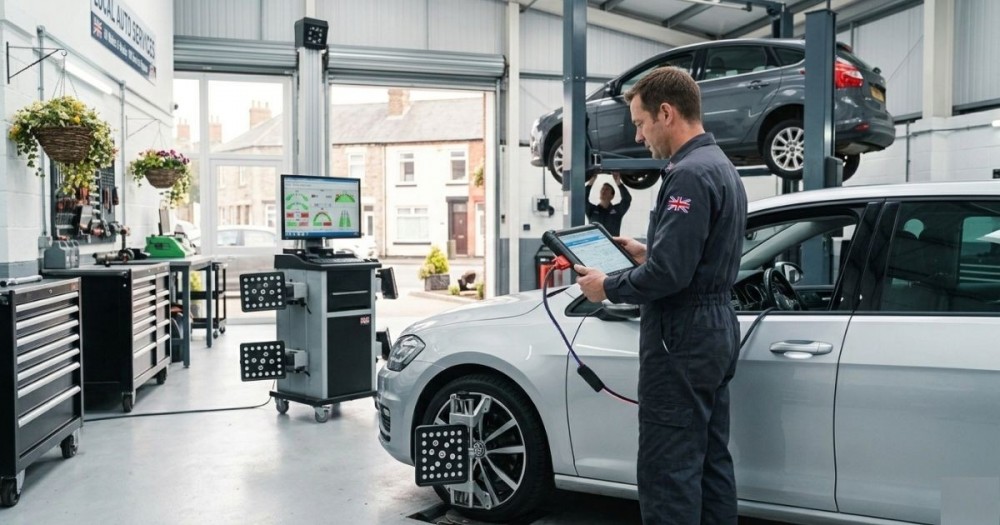
Modern car repair techniques have evolved beyond anything most drivers imagine. Walk into any reputable garage today, and you will find diagnostic tools that can communicate with your car's brain, laser-guided measuring systems, and technicians trained to handle vehicles packed with more sensors than a commercial aircraft.
These advancements mean one thing for UK drivers: when you search for Car Accident Repairs Near You, the work performed will be safer and more precise than ever before.
The days of relying solely on a mechanic's ear to diagnose a knocking sound are fading. Today's vehicles are complex machines where mechanical systems and computer networks work together.
Understanding how repair techniques have changed helps you make better choices about who works on your car and gives you confidence that every fix supports your safety on the road.
The Digital Revolution Under Your Bonnet

Smarter Diagnostics Mean Safer Repairs
Your car's onboard computers monitor everything from engine timing to brake pressure. When something goes wrong, a warning light appears on your dashboard.
But that light is just the starting point. Modern diagnostic equipment now reads dozens of fault codes simultaneously and interprets them against manufacturer specifications .
Technicians use professional-grade scanners that go far beyond basic code readers. These tools access the same systems dealership technicians use, checking the health of your anti-lock braking system, traction control, and stability management.
The result is repairs based on facts, not guesswork. When a fault is found in one system, the diagnostic tools can identify whether it is an isolated issue or a symptom of a deeper problem elsewhere.
This precision matters most for safety-critical components. Imagine your brake warning light illuminates. A proper diagnostic check will tell the technician whether the issue is worn pads, a failing sensor, or a problem with the hydraulic system itself. No unnecessary parts are replaced, and the real fault gets fixed properly.
Braking Systems Get the Precision Treatment
Beyond Simple Pad Changes
Brakes remain the single most important safety feature on any vehicle. Brake system repairs today involve far more than swapping worn pads and discs.
Professional workshops now use electronic brake fluid testers that measure moisture content with laboratory accuracy. Water contamination in brake fluid reduces its boiling point, which can lead to brake fade precisely when you need maximum stopping power.
Laser measurement tools check disc thickness and runout to tolerances measured in thousandths of a millimetre. This ensures new pads bed in correctly and provide consistent stopping power from the moment you drive away.
For vehicles equipped with electronic parking brakes, specialist scan tools are required to retract the caliper motors safely before pad replacement can begin .
Many drivers do not realise that modern braking systems integrate with your car's stability control. When a technician completes a brake repair, they must often perform calibration procedures to tell the car's computer that new components are fitted. This guarantees the system responds correctly when you need to stop in an emergency.
Wheels and Suspension: The Foundation of Control
3D Imaging for Perfect Geometry
Wheel alignment technology has undergone a transformation. The old systems using visible light beams and manual adjustments have been replaced by 3D imaging cameras that capture hundreds of measurements in seconds .
These systems compare your car's current geometry against the exact manufacturer specifications stored in their databases.
Why does this matter for safety? A car with incorrect wheel alignment pulls to one side, especially under braking. It wears tyres unevenly, reducing grip when you need it most.
The latest alignment equipment measures not just toe and camber, but also checks for bent suspension components and worn bushes that could compromise your vehicle's handling.
For drivers who have been involved in a collision, proper alignment checks are essential. Even minor impacts can bend suspension arms or knock steering geometry out of specification.
A professional suspension repair includes verifying that every component meets factory standards before you leave the workshop.
The ADAS Revolution
Cameras and Sensors Must Be Perfect
Advanced driver assistance systems, commonly called ADAS, now feature in over ninety percent of new vehicles . These systems include lane keeping assistance, automatic emergency braking, adaptive cruise control, and blind spot monitoring. They rely on cameras, radar sensors, and sometimes lidar to understand the world around your car.
Here is the critical point for repair: every time a windscreen is replaced, a bumper is repaired, or a wheel alignment is performed, these systems may need recalibration.
A camera that has moved by just a few millimetres during a windscreen replacement will not accurately judge lane markings. A radar sensor hidden behind a repaired bumper cover may point slightly downwards, failing to detect vehicles ahead.
ADAS calibration is now a standard part of many repairs. Specialists use targeting systems and diagnostic software to verify that every sensor sees the world exactly as the manufacturer intended . This is not optional work; it is essential for your safety and the safety of other road users.
Electric and Hybrid Vehicle Expertise
High-Voltage Safety Demands Specialised Skills
The growing number of electric vehicles on UK roads has created new safety requirements in repair workshops. EV repair techniques differ fundamentally from traditional car repairs because of the high-voltage systems involved .
Lithium-ion batteries operating at several hundred volts require specific handling procedures. Technicians must wear insulated gloves and use tools rated for high-voltage work.
Damaged batteries present unique risks, including the potential for thermal runaway, where a battery cell overheats and triggers a chain reaction through the entire pack .
Modern workshops invest heavily in training and equipment to handle these vehicles safely. They follow manufacturer procedures for disabling high-voltage systems before any repair work begins. This protects both the technician working on your car and you when you collect it.
Predictive Maintenance Stops Problems Before They Start
Artificial Intelligence Keeps You Moving
Perhaps the most exciting development in vehicle repair is the move toward predictive maintenance. Rather than waiting for something to break, modern systems analyse data from your car's sensors to predict when components will need attention .
Predictive vehicle diagnostics use artificial intelligence to spot patterns that human technicians might miss. Slight changes in vibration patterns might indicate a wheel bearing beginning to fail.
Small variations in brake pedal feel could suggest moisture contamination in the brake fluid. The system flags these issues early, allowing repairs to be scheduled at your convenience rather than waiting for a breakdown.
For fleets and private owners alike, this technology reduces unexpected failures and extends vehicle life. It transforms vehicle maintenance from a reactive chore into proactive safety management.
Choosing Where to Trust Your Vehicle
What to Look For in a Modern Workshop
Not every garage has kept pace with these changes. When you need repairs, look for a workshop that demonstrates commitment to modern techniques.
Ask about their diagnostic equipment and whether their technicians receive ongoing training. Enquire whether they perform ADAS calibrations in-house or subcontract them elsewhere.
A professional workshop will be happy to discuss their approach to vehicle safety checks and explain how they ensure every repair meets current standards. They will use manufacturer-approved procedures and quality replacement parts that match your car's original specifications.
For drivers who have been involved in an incident, finding the right repairer is especially important. When you search for Car Accident Repairs Near You, choose a facility equipped to handle all aspects of modern vehicle repair, from structural straightening to sensor calibration.
Final Thoughts
Modern car repair techniques have transformed what happens inside professional workshops. The combination of advanced diagnostics, precision measurement tools, and specialist training means your vehicle receives care that was unimaginable a decade ago.
Braking systems are tested scientifically, cameras and sensors are calibrated exactly, and electric vehicles are handled with appropriate safety protocols.
For UK drivers, these advances translate directly into safer roads. Every repair that follows manufacturer specifications, every correctly calibrated sensor, and every accurately measured wheel alignment contributes to your protection behind the wheel.
The next time your car needs attention, choose a repairer who embraces these modern methods and gives you the confidence that your vehicle is genuinely safe for the road ahead.





