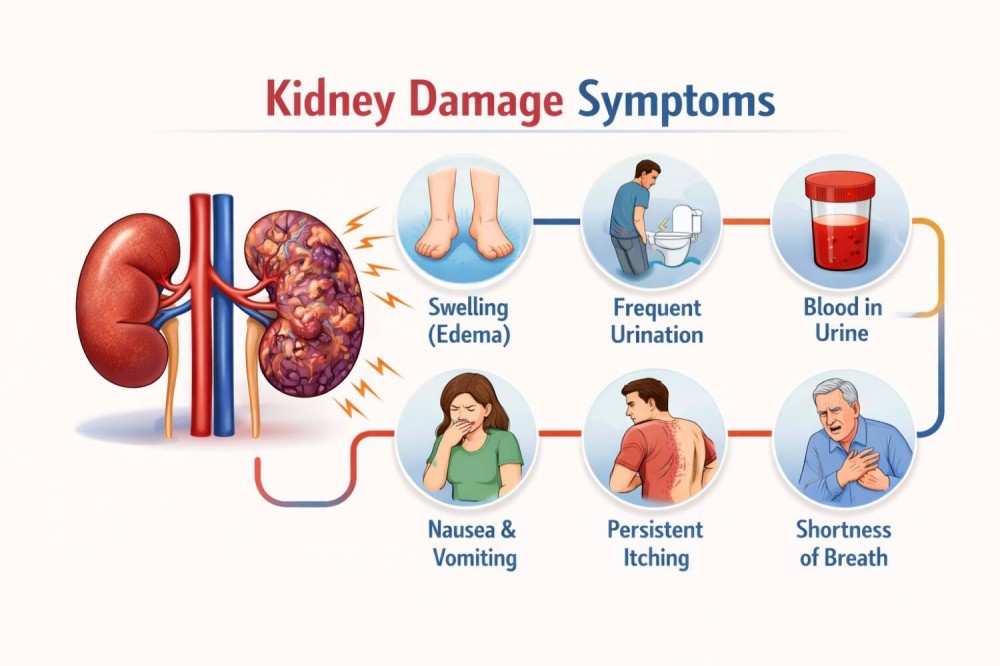
The kidneys are vital organs responsible for filtering waste products and excess fluids from the blood. They also help maintain the balance of important minerals, regulate blood pressure, and support overall health. When the kidneys become damaged, their ability to perform these essential functions decreases. Kidney damage may develop gradually, and the symptoms often appear slowly over time. Recognizing kidney damage symptoms early can help in seeking timely medical care and preventing serious complications.
What Is Kidney Damage?
Kidney damage occurs when the kidneys lose their ability to effectively filter waste and maintain fluid balance in the body. This condition can develop due to several factors, including diabetes, high blood pressure, infections, autoimmune diseases, or prolonged use of certain medications. If kidney damage progresses without treatment, it may eventually lead to chronic kidney disease or kidney failure.
Because the early stages may not show clear symptoms, regular health checkups are important for individuals at risk.

Changes in Urination
One of the most noticeable kidney damage symptoms is a change in urination patterns. Since the kidneys are responsible for producing urine, any damage to them can affect how urine is formed and passed.
Some common changes include:
- Increased frequency of urination, especially at night
- Decreased urine output
- Foamy or bubbly urine
- Dark or cloudy urine
- Blood in the urine
Foamy urine may indicate that protein is leaking into the urine, which can occur when the kidney’s filtering units are damaged.
Swelling in the Body
When the kidneys are not functioning properly, they may not remove excess fluids from the body. This can cause fluid buildup, leading to swelling known as edema.
Swelling often occurs in the feet, ankles, legs, hands, or face. This happens because damaged kidneys cannot maintain proper fluid balance. In more severe cases, fluid retention may also affect the lungs and cause breathing problems.

Fatigue and Weakness
Fatigue is another common symptom of kidney damage. Healthy kidneys produce a hormone called erythropoietin, which helps the body create red blood cells. When the kidneys are damaged, the production of this hormone decreases.
As a result, the body may develop anemia, which reduces oxygen supply to tissues. This can lead to tiredness, weakness, and a general lack of energy.
Shortness of Breath
Kidney damage may also lead to breathing difficulties. Fluid buildup in the lungs can make breathing harder. In addition, anemia caused by kidney problems can reduce oxygen levels in the blood, contributing to shortness of breath.
People experiencing this symptom may feel breathless even after mild physical activity.
Nausea and Loss of Appetite
As kidney function declines, waste products begin to accumulate in the bloodstream. This buildup of toxins can affect the digestive system and lead to symptoms such as nausea, vomiting, and loss of appetite.
Some individuals may also notice a metallic taste in their mouth or a reduced interest in food. Over time, this can lead to unintentional weight loss.
Muscle Cramps and Itching
Kidney damage can affect the balance of minerals and electrolytes in the body. When this balance is disrupted, muscle cramps may occur. These cramps are often painful and may happen frequently.
Another symptom is persistent itching. When waste products accumulate in the blood, they can affect the skin and cause dryness and irritation.
High Blood Pressure
High blood pressure is both a cause and a symptom of kidney damage. The kidneys help regulate blood pressure by controlling fluid levels and releasing certain hormones. When kidney function declines, blood pressure may rise.
At the same time, uncontrolled high blood pressure can damage the blood vessels in the kidneys, making the condition worse.
Difficulty Concentrating
Some individuals with kidney damage may experience problems with concentration or memory. This happens because toxins that are normally filtered by the kidneys accumulate in the bloodstream and affect brain function.
Fatigue and anemia may also contribute to difficulty focusing on daily tasks.
When to Seek Medical Advice
Many kidney damage symptoms develop gradually and may be overlooked in the early stages. People with risk factors such as diabetes, high blood pressure, obesity, or a family history of kidney disease should monitor their kidney health regularly.
If symptoms such as swelling, foamy urine, fatigue, or persistent nausea occur, it is important to consult a healthcare professional. Early detection can help slow the progression of kidney damage and improve treatment outcomes.
Conclusion
Kidney damage symptoms can vary from mild changes in urination to more serious issues such as swelling, fatigue, and breathing problems. Because the kidneys play a critical role in maintaining the body’s balance, any damage to them can affect overall health. Recognizing the warning signs and seeking medical care early can help protect kidney function and reduce the risk of long-term complications.