

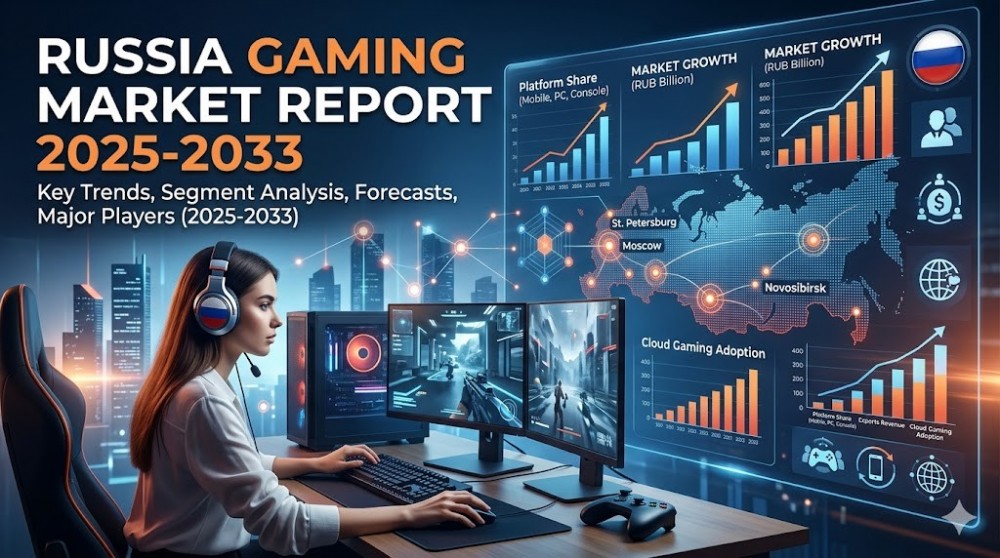
The Russia gaming market has become an important segment of the global gaming industry, driven by technological advancements, rising internet penetration, and the growing popularity of online and mobile games. Despite geopolitical challenges and market disruptions in recent years, the industry continues to evolve and adapt with new business models, local game development initiatives, and expanding digital infrastructure.
According to industry research, the Russia gaming market reached approximately USD 2.0 billion in 2024 and is expected to grow to USD 3.3 billion by 2033, registering a CAGR of around 5.18% during 2025–2033.
Russia Gaming Market Overview
Russia has long been considered one of the most active gaming regions in Europe. The country has millions of gamers across multiple platforms, including PC, mobile, and console gaming. Historically, PC gaming has been the most dominant segment due to widespread computer usage and strong digital distribution platforms.
The gaming culture in Russia is deeply rooted in its technological community and entertainment preferences. With millions of gamers and strong internet connectivity across major cities, the industry continues to attract investment and innovation.
In recent years, the gaming ecosystem in Russia has been shaped by:
- Growth of mobile gaming
- Expansion of cloud gaming platforms
- Rising eSports popularity
- Increased focus on local game development
These factors are helping the market recover and grow steadily after previous disruptions.
Key Drivers of the Russia Gaming Market

- Increasing Internet Penetration
One of the most significant drivers of the Russia gaming market is the rapid growth of internet connectivity. Improved broadband networks and faster mobile internet services allow gamers to access high-quality games across multiple platforms.
Higher connectivity levels also support online multiplayer gaming, streaming, and cloud-based gaming services, making gaming more accessible to players across urban and rural areas.
- Growth of Mobile Gaming
Mobile gaming is emerging as a dominant force in the Russian gaming ecosystem. Smartphones have made gaming more convenient and affordable for a larger audience.
Studies indicate that mobile gaming accounts for a significant share of total gaming spending in Russia, reflecting a broader global trend where mobile platforms dominate gaming revenues.
Popular mobile genres include:
- Casual games
- Strategy games
- Multiplayer battle games
- Puzzle and arcade games
- Rising Popularity of eSports
eSports has become a major contributor to the growth of the Russia gaming market. Competitive gaming tournaments attract millions of viewers and players, creating opportunities for sponsors, advertisers, and gaming companies.
Professional gaming teams, online streaming platforms, and global competitions have increased the visibility of eSports within the country. Younger audiences, in particular, are driving the growth of this segment.
Market Segmentation
The Russia gaming market can be analyzed across several segments, including platform, revenue model, and user demographics.
By Platform
- Mobile Gaming
- Fastest growing segment
- Accessible through smartphones and tablets
- Popular among casual gamers
- PC Gaming
- Historically dominant in Russia
- Strong presence of multiplayer and strategy games
- Console Gaming
- Smaller market share compared to PC and mobile
- Growing gradually with global console launches
Sample Request For Your Business
By Revenue Model
Gaming companies in Russia rely on multiple monetization strategies:
- Free-to-play with in-app purchases
- Paid game downloads
- Subscription services
- Ad-supported gaming
Free-to-play models are especially popular because they attract large user bases while generating revenue through in-game purchases.
Challenges in the Russia Gaming Market
Despite its growth potential, the Russia gaming market faces several challenges.
- Market Disruptions and Industry Changes
The industry experienced significant disruption in recent years due to geopolitical factors and the exit of several international gaming companies. These developments affected game availability and financial transactions within the market.
However, local developers and publishers have begun filling this gap with domestically developed games and platforms.
- Piracy and Unauthorized Distribution
Piracy has historically been a major challenge for the Russian gaming industry. Unauthorized game downloads and distribution channels reduce legitimate revenues for developers and publishers.
To address this issue, companies are focusing on digital distribution platforms, subscription models, and online multiplayer ecosystems that encourage legal purchases.
- Regulatory Environment
Government regulations and content restrictions may also impact the availability of certain games in the country. Developers must adapt their content to comply with local policies and cultural considerations.
Emerging Opportunities
Despite these challenges, the Russia gaming market presents several promising opportunities.
- Local Game Development
Russia has a strong community of software developers and game designers. The government has even considered supporting domestic game studios to create globally competitive titles.
Investments in local development could strengthen the country's gaming ecosystem and reduce reliance on international publishers.
- Growth of Digital Payments in Gaming
Advancements in gaming payment systems and fintech solutions are improving monetization opportunities for developers. Companies offering payment infrastructure for games have played a significant role in enabling seamless transactions within the gaming ecosystem.
- Expansion of Game Streaming and Content Creation
Streaming platforms such as Twitch-style services and gaming video platforms have created new revenue streams for gamers, influencers, and developers.
Content creators and gaming communities are contributing to the rapid growth of gaming culture in Russia.
Future Outlook of the Russia Gaming Market
The future of the Russia gaming market looks promising despite recent industry challenges. Several factors are expected to drive long-term growth:
- Increasing smartphone penetration
- Expanding cloud gaming infrastructure
- Growth of eSports and online gaming communities
- Development of domestic gaming studios
As technological innovation continues to reshape the gaming landscape, Russia is expected to maintain its position as a significant gaming market in Europe.
With projected revenue reaching USD 3.3 billion by 2033, the industry offers strong opportunities for developers, publishers, investors, and technology providers.
Conclusion
The Russia gaming market is undergoing a transformation driven by technological innovation, changing consumer behavior, and evolving industry dynamics. While the market has faced challenges due to global disruptions and regulatory changes, it continues to grow steadily.
Mobile gaming, cloud gaming, and eSports are expected to play a major role in shaping the future of the industry. At the same time, the emergence of domestic developers and new digital platforms could further strengthen Russia’s position in the global gaming ecosystem.
For businesses, investors, and industry stakeholders, the Russia gaming market offers significant growth potential in the coming years.





