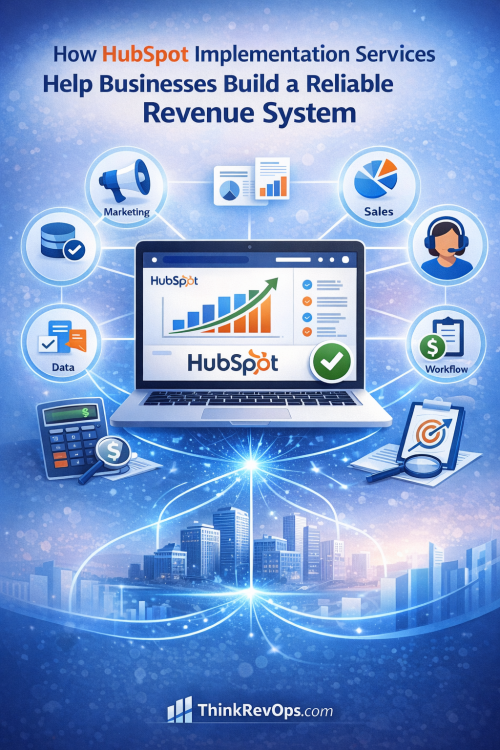
CRM platforms are meant to simplify revenue operations. Yet many companies discover that implementing a CRM system can create new challenges if the setup is rushed or poorly structured.
HubSpot is widely used because it combines marketing automation, sales pipelines, customer service tools, and analytics into one platform. However, the platform’s flexibility also means that incorrect configurations can create operational confusion.
This is why many growing companies turn to professional hubspot implementation support. A structured implementation ensures that marketing, sales, and customer success teams operate within a unified system that produces reliable data and efficient workflows.
Understanding why this matters requires looking beyond the software itself and focusing on how revenue systems are built.
Why CRM Implementations Often Fail
A common misconception is that implementing a CRM simply involves importing contacts and creating a few pipelines. In practice, CRM platforms function as the central nervous system of the entire revenue organization.
If the system architecture is flawed from the beginning, the problems spread across every department.
Some of the most common issues include:
Poor Data Structure
When fields, properties, and lifecycle stages are not designed properly, reporting becomes inconsistent. Teams struggle to interpret performance metrics accurately.

Fragmented Workflows
Automation workflows built without standardized processes often lead to conflicting actions, duplicate tasks, or missed follow-ups.
Lack of Lifecycle Alignment
Marketing, sales, and customer success teams may each define pipeline stages differently, creating confusion in reporting and forecasting.
Incomplete Data Migration
When companies move from another CRM to HubSpot, incomplete or poorly mapped data can cause long-term reporting problems.
These challenges highlight the importance of structured hubspot implementation services rather than quick setups.
What HubSpot Implementation Actually Involves
Effective CRM implementation goes far beyond installing software.
Professional hubspot implementation services typically involve designing the entire operational framework that supports revenue generation.
This process usually includes several stages.
Revenue Process Mapping
Before configuring HubSpot, consultants analyze how leads move through the organization—from marketing campaigns to closed deals and ongoing customer relationships.
This ensures that the CRM structure reflects the real sales process.
Data Architecture Design
A strong implementation defines custom properties, lifecycle stages, and object relationships that keep customer data organized and consistent.
Proper data architecture prevents reporting confusion later.
Workflow and Automation Setup
Automation features in HubSpot can handle lead nurturing, follow-ups, notifications, and task management.
However, workflows must be carefully designed to ensure they support accurate pipeline movement and timely communication.
Integration With Other Systems
Many businesses use additional platforms such as billing systems, analytics tools, or support software.
A professional hubspot implementation agency ensures these systems integrate smoothly so that data flows correctly across the entire technology stack.
Migration From Existing CRMs
When businesses move from platforms like Salesforce, Pipedrive, or Zoho, careful migration planning is essential.
Data must be mapped correctly to preserve historical records and maintain reporting continuity.
Why Businesses Choose a HubSpot Implementation Agency
Implementing HubSpot internally can seem straightforward at first. However, as the system becomes more complex, internal teams often encounter unexpected challenges.
Working with a specialized hubspot implementation agency provides several advantages.
Faster Setup
Experienced consultants understand HubSpot architecture and can implement systems efficiently without trial-and-error.
Operational Best Practices
Agencies bring experience from multiple implementations, allowing them to apply proven frameworks that reduce operational risk.
Scalable System Design
A well-designed CRM should support growth over several years. Implementation experts ensure that the system remains adaptable as the company expands.
Improved Data Quality
Clean, structured data is essential for accurate reporting. Implementation professionals establish governance policies that maintain data integrity.
The Operational Impact of a Proper HubSpot Implementation
When HubSpot is implemented correctly, the benefits extend across the entire organization.
Marketing teams gain clearer insights into campaign performance and lead conversion.
Sales teams work with structured pipelines that accurately reflect deal progress.
Customer success teams track onboarding milestones and renewal opportunities more effectively.
Leadership teams receive reliable dashboards and forecasting reports that support strategic planning.
This operational clarity allows organizations to make better decisions about hiring, marketing investments, and expansion strategies.
Common Situations That Require HubSpot Implementation Services
Companies often seek professional support when they encounter operational challenges related to CRM systems.
Some common scenarios include:
CRM Migration Projects
Moving from another CRM platform requires careful planning to ensure historical data remains usable.
Rapid Company Growth
As companies expand, CRM systems often need restructuring to handle increased complexity.
Marketing Automation Expansion
Advanced marketing strategies require properly configured workflows and lead tracking.
Sales Process Optimization
Structured pipelines and automated task management can significantly improve sales productivity.
Data Reporting Challenges
When leadership struggles to trust CRM reports, system architecture often needs revision.
In these situations, experienced hubspot implementation services can stabilize the revenue system.
Expert Insight: Why CRM Structure Matters More Than Tools
Many organizations focus heavily on selecting the right CRM platform. While software selection matters, operational structure matters even more.
Even the most powerful CRM platform can become ineffective if processes are unclear or data governance is weak.
Experienced consultants approach implementation differently. Instead of focusing solely on features, they analyze how revenue flows through the organization and design the system around those processes.
This approach ensures that HubSpot becomes a reliable operational platform rather than just another tool in the technology stack.
Frequently Asked Questions
What does hubspot implementation involve?
HubSpot implementation involves configuring CRM architecture, defining lifecycle stages, creating automation workflows, integrating other tools, and ensuring accurate data migration.
How long do hubspot implementation services take?
Implementation timelines vary depending on complexity. Basic setups may take a few weeks, while full migrations and advanced automation projects can take several months.
Do companies need a hubspot implementation agency?
Many businesses benefit from agency support because implementation requires both technical configuration and operational strategy.
Can HubSpot replace multiple tools?
Yes. HubSpot integrates marketing, sales, and customer service tools into a unified platform, reducing the need for separate systems.
Is data migration difficult when moving to HubSpot?
Data migration can be complex if the previous CRM has inconsistent or poorly structured records. Professional services ensure accurate mapping and transfer.
Building a CRM System That Supports Long-Term Growth
A CRM platform should do more than store contact information. It should provide the operational structure that supports marketing, sales, and customer success.
When implemented correctly, HubSpot becomes the central system that aligns teams, tracks revenue performance, and supports strategic decision-making.
Working with experienced hubspot implementation specialists ensures that the system is designed with long-term scalability in mind.
For companies seeking to improve operational clarity and revenue performance, a structured CRM implementation is often one of the most valuable investments they can make.