

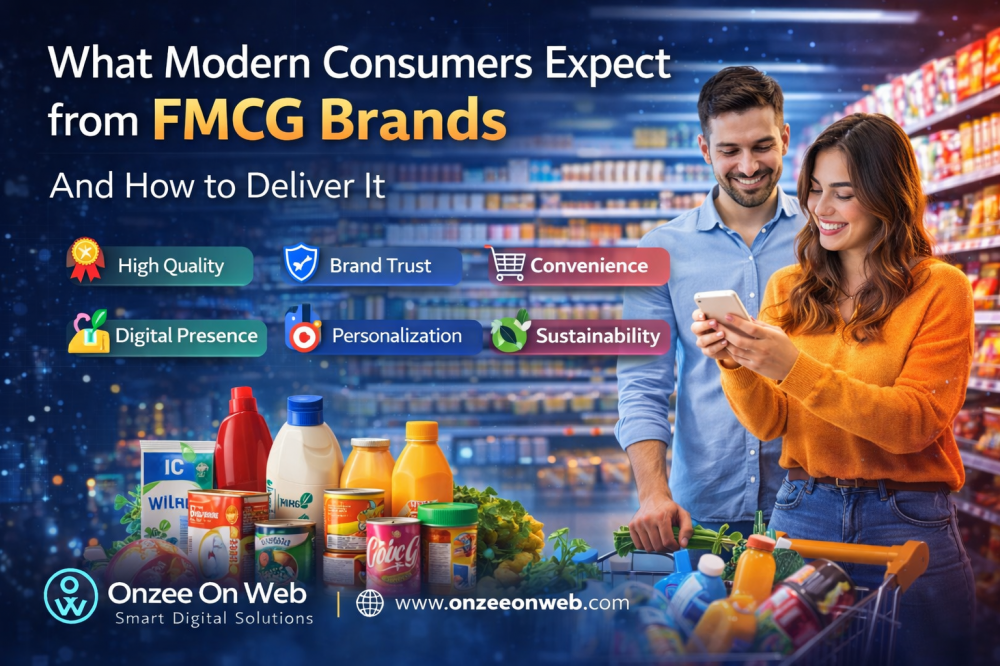
The Fast-Moving Consumer Goods (FMCG) industry is evolving rapidly. Modern consumers are more informed, digitally connected, and selective about the brands they choose. In today’s competitive marketplace, FMCG companies must go beyond simply offering products—they must deliver value, trust, and seamless experiences.
Brands that understand consumer expectations can build stronger relationships, increase loyalty, and drive long-term growth. At Onzee On Web, we help FMCG brands adopt modern digital strategies that align with changing customer behavior.
This article explores what modern consumers expect from FMCG brands and how companies can successfully deliver on those expectations.

Understanding the Modern FMCG Consumer
Today’s consumers have access to unlimited information. They research products online, compare brands, read reviews, and rely on social media recommendations before making purchasing decisions.
Modern buyers are not just looking for products—they want convenience, transparency, and personalized experiences. FMCG brands that adapt to these expectations gain a strong competitive advantage.
Key Expectations of Modern Consumers
1. High Product Quality and Value
Quality remains one of the most important factors influencing consumer decisions. Modern shoppers expect products that deliver consistent quality while providing good value for money.
FMCG brands should focus on:
- maintaining strict quality standards
- using safe and reliable ingredients
- ensuring product consistency
- delivering clear value to customers
Brands that consistently meet these expectations build trust and long-term loyalty.

2. Transparency and Brand Trust
Consumers today want to know more about the products they buy. They expect brands to be transparent about ingredients, sourcing, manufacturing processes, and pricing.
Building trust requires:
- clear product labeling
- honest marketing communication
- ethical sourcing practices
- responsible business operations
Transparency helps brands establish credibility and build lasting relationships with customers.
3. Convenience and Easy Accessibility
Modern consumers value convenience more than ever. They expect products to be easily available both online and offline.
FMCG brands should ensure:
- strong retail distribution networks
- availability on e-commerce platforms
- fast delivery options
- simple purchasing processes
Brands that provide convenience are more likely to attract repeat customers.
4. Strong Digital Presence
The digital world plays a major role in influencing consumer behavior. Many customers discover FMCG products through online platforms and social media.
Brands must invest in digital marketing strategies such as:
- social media marketing
- search engine marketing
- influencer collaborations
- online advertising campaigns
With the right digital approach, FMCG brands can significantly increase visibility and reach new audiences.
5. Personalization and Customer Engagement
Consumers now expect brands to understand their preferences and provide personalized experiences.
Brands can achieve this by:
- using data-driven marketing
- offering personalized promotions
- creating targeted advertising campaigns
- engaging customers through social media
Personalization helps brands build stronger connections with their audiences.
6. Sustainability and Ethical Practices
Environmental awareness has become a major factor in consumer decision-making. Many shoppers prefer brands that demonstrate responsibility toward the environment and society.
FMCG brands can meet this expectation by:
- using eco-friendly packaging
- reducing waste and emissions
- supporting ethical sourcing practices
- promoting sustainability initiatives
Sustainable practices improve brand reputation and attract conscious consumers.
How FMCG Brands Can Deliver on These Expectations
To meet modern consumer demands, FMCG companies must adopt a strategic approach that combines product innovation with digital marketing and customer engagement.
Focus on Digital Marketing
Strong online visibility is essential for brand growth. Effective strategies include search engine marketing, social media campaigns, and content marketing.
Invest in Customer Experience
Brands should prioritize smooth purchasing experiences across all channels, including websites, mobile apps, and retail stores.
Use Data for Better Decision Making
Consumer data and analytics help brands understand purchasing behavior, preferences, and trends.
Build a Strong Brand Identity
Successful FMCG brands communicate clear values and maintain consistent messaging across all platforms.
The Role of Digital Marketing in FMCG Success
Digital marketing has become one of the most powerful tools for FMCG brands. It allows companies to reach targeted audiences, build brand awareness, and influence purchasing decisions.
At Onzee On Web, we help FMCG brands grow through advanced marketing strategies including:
- search engine optimization (SEO)
- search engine marketing (SEM)
- social media marketing
- content marketing
- performance advertising
These strategies help brands connect with modern consumers and stay competitive in a rapidly evolving market.
Conclusion
The expectations of modern consumers are changing rapidly, and FMCG brands must evolve to keep up. Today’s customers want high-quality products, transparency, convenience, sustainability, and meaningful brand engagement.
Companies that understand these expectations and adapt their strategies accordingly will build stronger customer relationships and achieve long-term success.
By combining product excellence with powerful digital marketing strategies, FMCG brands can deliver the experiences that modern consumers demand.
If your brand wants to improve its digital presence and reach more customers, Onzee On Web can help you develop a results-driven marketing strategy tailored to your business goals.





