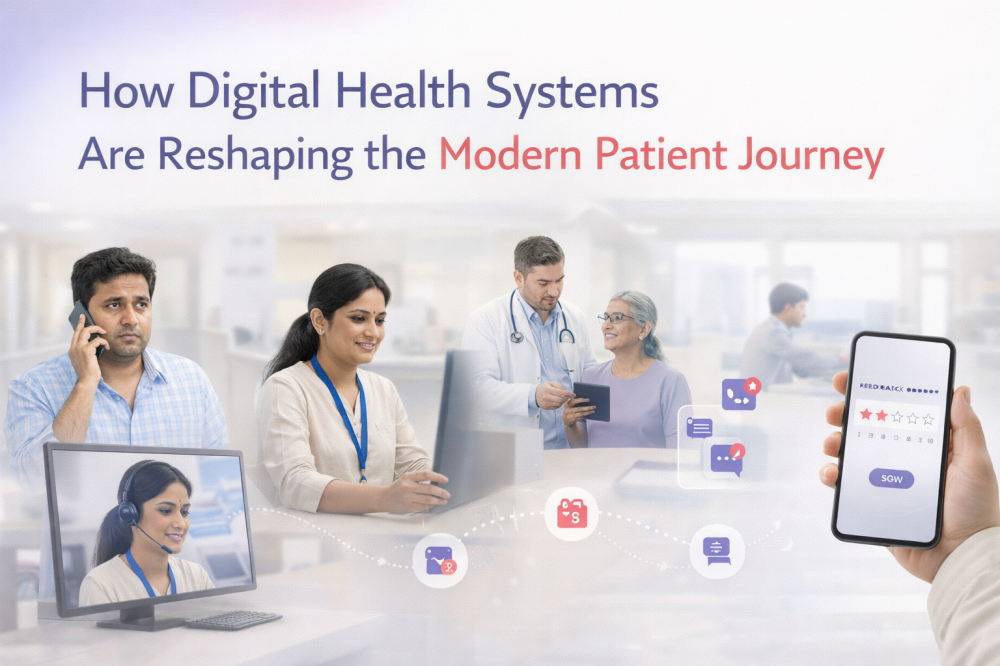
Healthcare facilities today face growing pressure to deliver efficient, coordinated care across every patient touchpoint. From the moment a patient makes an enquiry to the moment they receive a follow-up call after discharge, the quality of that experience depends increasingly on how well digital systems communicate with one another. GenAI healthcare solutions are emerging as a practical response to this challenge, helping hospitals and clinics unify workflows, reduce administrative friction, and improve care delivery at scale.
Understanding how these technologies fit into each stage of the patient journey can help healthcare administrators make more informed decisions about where to invest in digital infrastructure.
From First Enquiry to Appointment: Getting the Process Right
The patient journey begins long before anyone sets foot in a clinic. Prospective patients typically call, submit a web form, or message via a social channel. Without a structured system to capture and manage these interactions, enquiries can go unanswered or be misrouted, leading to lost appointments and frustrated patients.

A hospital CRM software platform addresses this gap by centralising all inbound communications, tracking lead status, and enabling staff to follow up consistently. When integrated with appointment scheduling tools, it ensures that the transition from first contact to confirmed booking is seamless. Staff spend less time searching for information and more time helping patients.
Scheduling and Reducing No-Shows
Once a patient decides to book, scheduling itself becomes a critical variable. Overbooking leads to long waits; underbooking wastes clinical capacity. A patient engagement platform can automate confirmation messages, send timely reminders via SMS or email, and allow patients to reschedule without needing to call. This reduces no-show rates and gives administrative teams better visibility into daily capacity.
When scheduling data is connected to the broader hospital CRM, care coordinators can also track patterns — such as which patient segments tend to cancel — and proactively intervene with targeted reminders or outreach.
Arrival, Check-In, and Managing Waiting Room Flow
Even well-planned schedules can create bottlenecks at the front desk. When multiple patients arrive at similar times, manual check-in processes create queues that affect satisfaction and clinical flow. A smart queue management system for hospitals can automate token assignment, display real-time wait times on digital screens, and notify patients via mobile when their turn is approaching.
This has a measurable impact on patient experience. Consider a mid-sized outpatient clinic that integrated digital queue management with its scheduling platform: patients were notified 10 minutes before their consultation, allowing them to remain comfortable in waiting areas rather than crowding the front desk. Staff were able to focus on clinical preparation rather than crowd management.
The connection between arrival management and what happens next in the consultation room is equally important — and depends on the speed and accuracy of information flow.
Consultation, Treatment, and Prescription Workflow
During the consultation, clinicians need fast access to patient history, current medications, and any previous notes. GenAI healthcare solutions can support this by surfacing relevant records, flagging potential drug interactions, or summarising prior visit notes — reducing cognitive load for the physician without replacing clinical judgment.
After the consultation, prescriptions need to be communicated accurately to both the patient and the dispensing team. A prescription management system supports this by digitising the prescription process, reducing transcription errors, and ensuring the right medication information is available at the pharmacy counter or during home delivery. This is particularly valuable in high-volume environments where handwritten prescriptions create avoidable delays.
Counseling, Discharge, and Patient Education
Prescribing medication is only part of the equation. Patients who understand their treatment plan are more likely to adhere to it. A patient counseling management system enables structured counseling sessions, tracks which educational materials have been shared with a patient, and records counselor notes within the patient's digital record. This continuity ensures that follow-up staff have full context when a patient returns or calls with a question.
Clear counseling at discharge also reduces avoidable readmissions, which is a key quality metric for most hospital systems. When counseling data feeds back into the hospital CRM, care teams can schedule proactive check-ins at clinically appropriate intervals.
Follow-Up and Closing the Feedback Loop
The patient journey does not end at discharge. Post-visit follow-up — whether a call, automated message, or survey — is essential for both care continuity and quality improvement. A patient feedback management system collects structured responses, routes complaints or concerns to the right department, and generates actionable insights for hospital leadership.
When feedback data is analysed over time, patterns emerge: recurring wait-time complaints, departments with high satisfaction scores, or counseling gaps that lead to re-enquiries. These insights allow administrators to make evidence-based improvements rather than reactive ones.
The integration of GenAI healthcare solutions across this full journey — from enquiry to feedback — transforms disconnected touchpoints into a coherent, data-informed care experience that benefits patients and healthcare teams alike.