
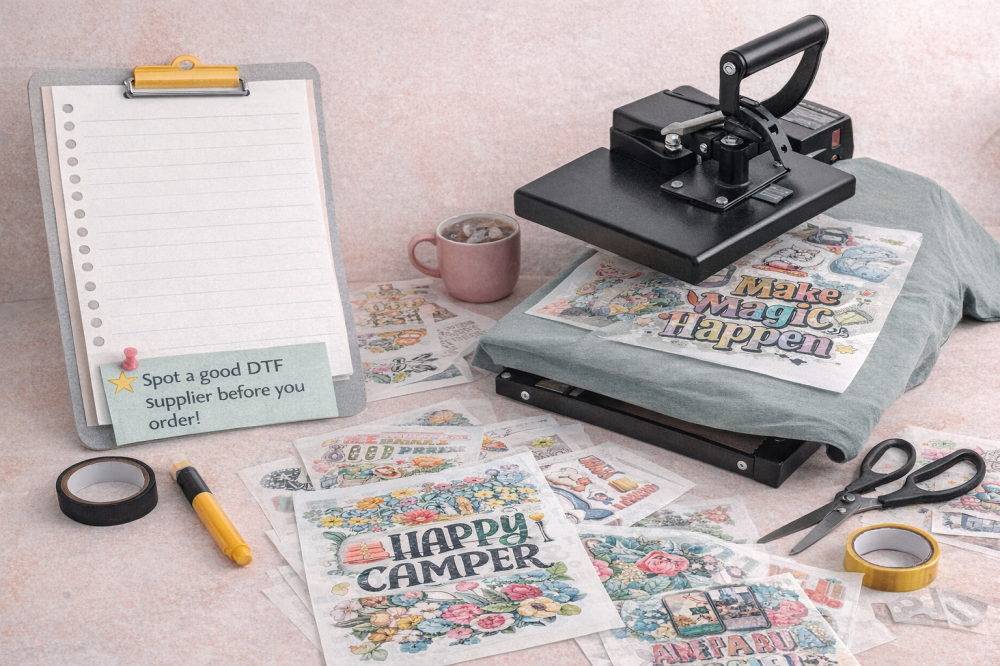
If you've ever received DTF transfers that looked washed out, peeled after one wash, or printed blurry text on a dark hoodie — you already know the real cost of choosing the wrong supplier.
After years of working with boutique owners, Etsy sellers, and small apparel businesses, one pattern is clear: most ordering mistakes happen before the file is even uploaded.
Here's exactly what to evaluate before placing your next order.

What Are Custom DTF Transfers?
DTF (Direct-to-Film) transfers are designs printed onto special film, coated with hot-melt adhesive powder, and heat-pressed onto fabric. They work on cotton, polyester, blends, and both light and dark garments — making them one of the most flexible decoration methods for small-batch apparel businesses.
The biggest advantage? You don't need your own printer. You upload, order, and press.
7 Things to Check Before Ordering
1. White Ink Coverage and Print Clarity
White ink is the foundation of every DTF print — especially on dark shirts. Weak white ink means dull colors and washed-out designs after a few washes.
Before ordering, request a sample or look for pressed shirt photos (not just mockups) that show:
- Bright, opaque whites on black fabric
- Sharp thin lines and small text
- Smooth gradients without visible banding
If a supplier only shows digital previews, proceed cautiously.
2. Turnaround Time — The Real Number
"Fast shipping" means nothing if production takes five business days. Always check:
- Production time (when they actually print your order)
- Order cut-off times (morning vs. evening submissions can shift your ship date by a full day)
- Whether they pause production during promotions or high-volume periods
For boutique owners running weekly drops, even a one-day delay can cost you a launch window.
3. Gang Sheet Options and Builder Quality
Gang sheets let you combine multiple designs onto one sheet — significantly lowering your per-transfer cost.
Look for suppliers offering common sizes (22×24, 22×60 inches), an intuitive online builder, and clear spacing/bleed guidelines. A clunky or unclear builder wastes time and increases the risk of accidental cropping.
4. File Requirements — Know Before You Upload
A trustworthy supplier publishes clear file specifications upfront. Most quality printers require:
- PNG format with a transparent background
- 300 DPI minimum resolution
- Defined color profile guidance (RGB vs. CMYK)
If a supplier prints "as uploaded" without flagging issues, one small file error can ruin an entire order — with no recourse.
5. Pressing Instructions (This Affects Durability More Than You Think)
Even premium transfers fail without proper application. Before ordering, confirm the supplier provides:
- Temperature range (typically 280–320°F)
- Press time and pressure settings
- Peel type — hot, warm, or cold
- Repress guidance for wash durability
Suppliers who make instructions hard to find are often the same ones who won't back up transfer failures.
6. Real Customer Reviews — With Photos
Star ratings tell you little. Look for reviews that mention:
- Wash durability after multiple cycles
- Color accuracy and white ink quality
- Pressed photos from actual customers
Reviews from other small business sellers carry the most weight — they're testing transfers under real selling conditions.
7. Support and Reprint Policies
File upload issues, sizing questions, and rare production errors happen. A supplier worth trusting should offer responsive support, a clear reprint policy, and accessible FAQs. If their contact page is buried or their policies are vague on custom items, that's a red flag.
The Bottom Line
Your DTF supplier directly impacts your product quality, delivery reliability, and customer experience. Choosing based on price alone is the most expensive mistake small apparel businesses make.
Evaluate quality, turnaround consistency, gang sheet flexibility, and support before you commit — because the right supplier doesn't just print your designs, they protect your brand reputation with every order.





