

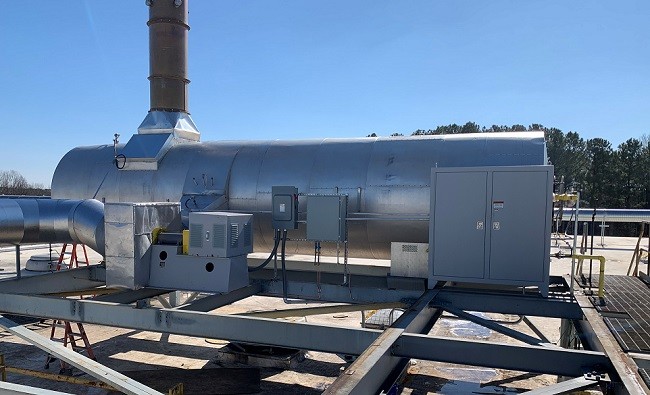
Walk through any modern facility, and you’ll notice something subtle yet constant—heat. It radiates from processes, escapes through vents, and quietly disappears into the atmosphere. Most operations accept this as normal, but here’s the twist: that “lost” heat is actually a valuable resource.
This is where heat recovery systems step in—not as flashy upgrades, but as quiet problem-solvers. They capture excess thermal energy and redirect it for useful applications like preheating air, water, or materials. It’s less about adding complexity and more about making smarter use of what already exists.
In 2026, efficiency isn’t just a metric—it’s a mindset. And heat? It’s no longer waste. It’s opportunity.
Waste Heat Is Basically Untapped Budget

Hook: Imagine throwing money out the window every hour—because that’s what untreated heat loss looks like.
Waste heat recovery systems take what’s typically ignored and turn it into measurable gains. Industrial processes—from furnaces to drying systems—generate large volumes of heat that often go unused.
By capturing and reusing this energy, facilities can:
-
Reduce fuel consumption

-
Lower operational costs
-
Improve overall system efficiency
Think of it as a loop instead of a line. Energy enters, does its job, and instead of disappearing, it cycles back to support another process.
This isn’t about reinventing infrastructure. It’s about refining it.
When Clean Equipment Means Smart Energy

Hook: Dirty equipment doesn’t just look bad—it quietly drains performance.
Thermal cleaning equipment plays a bigger role than most people expect. Over time, industrial components accumulate residues like paint, grease, or polymers. These layers act as insulation—trapping heat where it shouldn’t be and disrupting efficient transfer.
Thermal cleaning solutions use controlled heat to remove these residues without damaging the underlying material. The result? Equipment that performs closer to its original design, with better heat exchange and reduced energy waste.
Clean systems don’t just run better—they think better, in a way. They respond more predictably, consume less energy, and last longer.
🔥 Industrial Ovens: Not Just for Heating Things
Hook: Your oven might be doing more than baking—it could be wasting or saving energy.
An industrial oven is a core component in many manufacturing processes, from curing coatings to drying materials. But here’s the catch: these ovens often operate at high temperatures for extended periods, making them prime candidates for energy optimization.
When integrated with heat recovery systems, ovens can:
-
Reuse exhaust heat to preheat incoming air
-
Maintain consistent temperature profiles
-
Reduce fuel dependency
It’s not about changing how the oven works—it’s about enhancing how it interacts with the rest of the system.
Paint Booths and the Art of Airflow

Hook: A paint booth isn’t just about color—it’s about control, precision, and airflow choreography.
A paint booth relies heavily on controlled air movement to ensure quality finishes. But all that air handling comes at an energy cost—especially when heated air is constantly exhausted.
By incorporating waste heat recovery systems, facilities can reclaim energy from exhaust streams and reuse it within the booth or elsewhere. This not only reduces energy consumption but also stabilizes environmental conditions inside the booth.
The result? Better finishes, lower costs, and a more balanced system.
Thermal Oxidizers: Cleaning Air Without Wasting Energy

Hook: Cleaning emissions doesn’t have to mean burning through energy.
A thermal oxidizer is designed to break down volatile organic compounds (VOCs) and other pollutants using high temperatures. It’s essential for environmental compliance—but it can also be energy-intensive.
Modern systems integrate heat recovery systems to capture the heat generated during oxidation and reuse it within the process. This transforms the oxidizer from a standalone unit into a connected energy contributor.
Cleaner air, smarter energy use—it’s a win on both fronts.
🔄 Thermal Cleaning Solutions That Think Ahead
Hook: Cleaning isn’t just maintenance—it’s strategy.
Thermal cleaning solutions are evolving. They’re no longer reactive tools used only when something goes wrong. Instead, they’re part of proactive system design.
By integrating these solutions with broader energy strategies, facilities can:
-
Maintain optimal heat transfer
-
Reduce downtime
-
Extend equipment lifespan
It’s about anticipating inefficiencies before they become problems—and using heat intelligently across the board.
🧠 The Big Picture: Systems That Talk to Each Other
Hook: The real magic happens when everything works together—not in isolation.
Individually, each component—industrial oven, paint booth, thermal oxidizer—has its role. But when connected through heat recovery systems, they form a network.
Heat from one process feeds another. Exhaust becomes input. Waste becomes resource.
This interconnected approach transforms facilities into adaptive environments where energy flows with purpose.
💬 Let’s Talk: Your Questions, Answered
Hook: If you’ve ever wondered whether all this is worth it—you’re not alone.
Q1: Are heat recovery systems complicated to install?
Not necessarily. Many systems are designed to integrate with existing infrastructure. The complexity depends on the setup, but modern designs prioritize adaptability.
Q2: Do waste heat recovery systems really make a noticeable difference?
Yes. Even modest recovery can lead to significant energy savings over time, especially in high-temperature operations.
Q3: How often should thermal cleaning equipment be used?
It depends on usage and material buildup. Regular maintenance schedules help maintain efficiency and prevent performance drops.
Q4: Can an industrial oven operate efficiently without heat recovery?
It can—but it may not be operating optimally. Heat recovery enhances efficiency and reduces energy consumption.
Q5: Is a thermal oxidizer always energy-intensive?
Traditionally, yes. But with integrated heat recovery systems, energy use can be significantly reduced.
Q6: Are thermal cleaning solutions environmentally friendly?
Many are designed to minimize chemical use and reduce waste, making them a cleaner alternative to traditional methods.
Final Thought: Heat Isn’t the Problem—It’s the Clue

Hook: Sometimes the thing you’re trying to get rid of is exactly what you need.
In industrial environments, heat is often treated as a byproduct—something to manage, control, or eliminate. But the smarter approach is to understand it.
With the right combination of waste heat recovery systems, thermal cleaning equipment, and integrated processes, heat becomes a tool—not a challenge.
The next time you walk through a facility, don’t just feel the warmth. Think about where it’s going—and where it could go instead.





