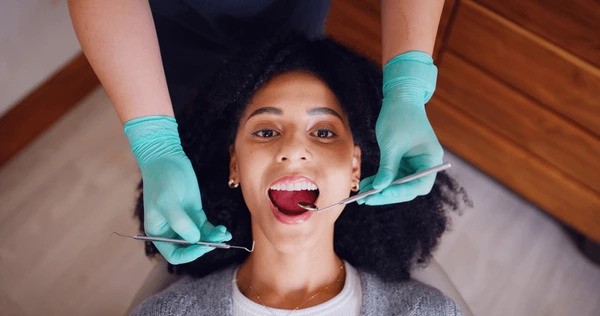
For many, a trip to the dentist is viewed simply as a "cleaning." While walking out with polished, smooth teeth is a fantastic feeling, the most critical part of your visit isn't the polishing—it’s the Think of your dentistperiodic oral exam.
as a detective for your overall health. Your mouth is often a mirror reflecting what is happening in the rest of your body. In fact, according to the Academy of General Dentistry, more than 90% of all systemic diseases—including diabetes, heart disease, and kidney disease—produce oral signs and symptoms.
If you are looking for an oral exam in Prairie Village, KS, understanding the "why" behind the clinical steps can transform dental anxiety into empowered wellness. Here is a deep dive into what your dentist in Prairie Village, KS, is actually looking for when they ask you to "open wide."
1. The Visual Inspection: More Than Just Cavities
While checking for "sugar bugs" is a priority, a visual inspection covers the entire landscape of your mouth. Your dentist uses a small mirror and a high-intensity light to examine:
- Tooth Integrity: They are looking for chips, hairline fractures, and "leaking" margins around old fillings. Even a tiny crack can act as a highway for bacteria to reach the sensitive pulp of the tooth.
- Decay (Caries): Modern dentistry has shown that nearly 92% of adults aged 20 to 64 have had dental caries in their permanent teeth. Dentists look for demineralized spots (white lesions) which indicate the very beginning of a cavity that might still be reversible with fluoride.
- Past Restorations: Fillings and crowns don't last forever. Your dentist checks if they are worn down or if new decay is starting underneath them.
2. Periodontal Evaluation: Protecting the Foundation
You can have the whitest teeth in the world, but if the "foundation" (your gums and bone) is weak, those teeth are at risk. This is a major focus during a periodic oral exam.
Statistics from the CDC indicate that nearly 47.2% of adults aged 30 and older have some form of periodontal disease. This increases to over 70% for adults 65 and older. During your exam, the dentist or hygienist will perform "periodontal probing," measuring the space between your tooth and gum tissue.
- 1–3 mm: Generally considered healthy.
- 4 mm or more: This indicates a "pocket" where bacteria can hide, often signifying gingivitis or more advanced periodontitis.
Early detection is vital because while gingivitis is reversible, advanced bone loss from periodontitis is permanent.
3. Oral Cancer Screening: A Life-Saving Minute
One of the most important—yet quickest—parts of the exam is the oral cancer screening. Oral cancer is a serious concern, with the American Cancer Society estimating that about 58,000 people in the U.S. will be diagnosed with oral cavity or oropharyngeal cancer this year.

Your dentist will feel your neck and jawline for lumps (lymph nodes) and examine your tongue, the roof of your mouth, and the "floor" under your tongue. They are looking for:
- Red or white patches (Leukoplakia).
- Sores that haven't healed in two weeks.
- Asymmetry or unusual textures.
When caught early, the 5-year survival rate for oral cancer is roughly 85%. However, because it often goes unnoticed by the patient, many cases are found late, dropping that survival rate significantly. This makes your regular checkup a literal life-saver.
4. Diagnostic X-Rays: Seeing the Invisible
There is only so much the human eye can see. To get a full picture, your dentist in Prairie Village, KS, uses digital X-rays. These provide a high-resolution look at:
- Interproximal Cavities: Decay that starts between the teeth where a toothbrush can’t reach.
- Bone Health: Detecting bone loss that isn't visible above the gum line.
- Abscesses or Cysts: Infections at the root tip that may not be causing pain yet.
- Impacted Teeth: Such as wisdom teeth that may be crowding others.
Did You Know? Digital X-rays reduce radiation exposure by up to 80% compared to traditional film X-rays, making them a safe and essential diagnostic tool.
5. Occlusion and TMJ Assessment
Your "bite" (how your teeth meet) and your jaw joint (the Temporomandibular Joint or TMJ) are also under scrutiny. The dentist looks for signs of bruxism (teeth grinding).
It is estimated that 10% to 15% of adults suffer from chronic jaw pain or grinding. Signs include:
- Flattened or "glassy" chewing surfaces on the molars.
- Popping or clicking sounds when you open your mouth.
- Scalloped edges on the tongue (from pushing it against the teeth).
If these issues are caught early, a simple night guard can prevent thousands of dollars in future restorative work caused by worn-down enamel.
Why the "Periodic" Part Matters
Many patients ask, "If my teeth don't hurt, why do I need an exam?" The answer lies in the nature of dental disease. Most oral issues—from cavities to gum disease—do not hurt until they have reached an advanced, more expensive stage.
|
Condition |
Early Stage (No Pain) |
Advanced Stage (Painful) |
|
Cavity |
Small filling ($150–$300) |
Root Canal & Crown ($2,000+) |
|
Gum Disease |
Professional Cleaning |
Gum Surgery or Tooth Loss |
|
Oral Cancer |
Easily treated lesion |
Invasive surgery/Chemotherapy |
By maintaining a schedule for an oral exam in Prairie Village, KS, you are choosing prevention over reaction.
Your Role as a Patient
While your dentist is the expert, you are the primary caretaker of your smile. During your exam, don't be afraid to share:
- Changes in Medical History: Are you taking new medications? Many drugs cause "dry mouth" (xerostomia), which exponentially increases your risk for cavities.
- Sensitivity: Does ice cream make you wince? Even minor sensitivity can signal a receding gum line or a loose filling.
- Lifestyle Habits: Be honest about tobacco use or dietary changes. Your dentist isn't there to judge; they are there to help you mitigate the risks associated with those habits.
Summary: Your Smile is an Investment
An oral exam is more than a formality; it is a comprehensive health screening. From checking the health of your jawbone to scanning for life-threatening diseases, those 30 to 60 minutes in the chair are some of the most productive minutes for your long-term wellness.
If it has been more than six months since your last checkup, it’s time to prioritize your health. Whether you need a simple cleaning or a more detailed periodic oral exam, your local dental team is ready to ensure your smile remains both beautiful and functional for years to come.