
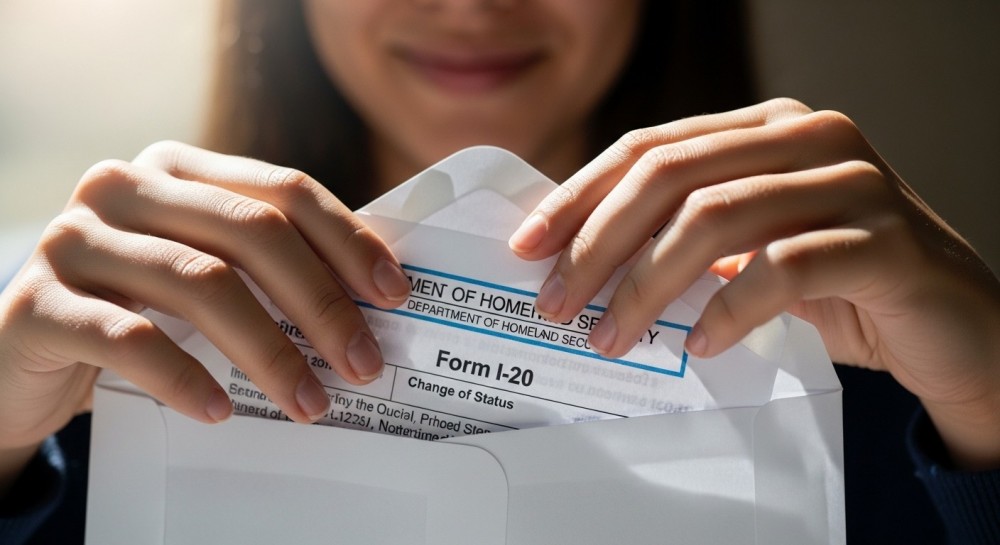
Dallas is not just a hub for telecommunications and energy; it is a center for academic innovation. For many individuals already residing in the United States under various non-immigrant categories—such as B-1/B-2 visitors or H-1B professionals—the desire to pivot toward full-time academic pursuits often becomes a strategic career move. Whether you are looking to enhance your professional skills or embark on a completely new degree program, navigating the legal requirements for an adjustment of status is the most critical step. Successfully managed, the process to Change status to F1 in Dallas allows eligible applicants to remain in the country while transitioning into a full-time student role. As we move through 2026, the United States Citizenship and Immigration Services (USCIS) has introduced more digitized filing options, making the application process for students in the North Texas region more accessible, yet requiring meticulous attention to detail and timing.
The Strategic Advantage of Studying in Dallas
Home to prestigious institutions and specialized language academies like Lingua Prime, the Dallas-Fort Worth (DFW) metroplex offers a unique environment where students can network with industry leaders while completing their studies. Choosing to change your status while in Dallas avoids the need to travel back to your home country for a consular interview, providing a more stable transition for those already integrated into the local community.
Phase 1: Eligibility and the Initial Consultation
Before filing any paperwork, you must determine if your current non-immigrant status allows for a change to F-1.

- Maintaining Your Current Status
The most fundamental rule of a "Change of Status" (COS) is that you must be in a valid, legal status at the time of filing Form I-539. If your current visa or I-94 has already expired, you are generally ineligible for a change of status within the U.S. and may need to pursue consular processing instead.
- The Bridge Gap Requirement
A common challenge in the COS process is the "Bridge Gap." USCIS requires that you maintain a valid status until at least 30 days before your F-1 program start date. In 2026, many applicants in Dallas use "Bridge Applications" to extend their current visitor status while their F-1 application is pending, ensuring no lapse in legal residency.
Phase 2: Securing the I-20 from a Dallas Institution
Your application cannot move forward without a Form I-20 issued by a SEVP-certified school in the Dallas area.
- Admission and Enrollment: You must first be accepted by a school like Lingua Prime. They will evaluate your academic background and English proficiency.
- Financial Verification for Dallas Living: Dallas has seen a rise in living costs. When applying for your I-20, you must prove you have sufficient funds to cover tuition and the specific cost of living in North Texas, including housing, transportation, and health insurance.
- The "COS" Notation: Ensure your DSO (Designated School Official) marks the I-20 for "Change of Status" rather than "Initial Attendance" from abroad.
Phase 3: Filing Form I-539 and the SEVIS Fee
In 2026, the majority of COS applications are filed online through the USCIS portal, which has significantly reduced clerical errors.
- Completing Form I-539
This is the official "Application to Extend/Change Nonimmigrant Status." You will need to provide:

- A copy of your signed I-20.
- Your I-94 arrival/departure record.
- Proof of your current legal status (e.g., pay stubs for H-1B or travel itineraries for B-2).
- A detailed personal statement explaining why you want to change to F-1 status.
- The SEVIS I-901 Fee
Even though you are not applying for a visa at an embassy, you must still pay the SEVIS fee. This fee tracks your record in the federal database and is mandatory for all F-1 students.
Phase 4: Proving "Non-Immigrant Intent" from Within the US
A major reason for COS denials is the failure to prove that you intend to leave the U.S. after your studies. Because you are already in the country, USCIS may scrutinize your "long-term intent" more closely.
- Ties to Home Country: You should provide evidence of assets, family, or job prospects in your home country.
- Academic Goal Clarity: Why do you need this specific degree or language training? If you are a professional changing to a student, explain how this education will enhance your career back home. At institutes like Lingua Prime, DSOs often help students refine their academic goals to match their career trajectories.
Phase 5: The Waiting Period and "Premium Processing"
As of 2026, USCIS offers Premium Processing for Form I-539. This is a game-changer for applicants in Dallas who cannot afford to wait 6-12 months for a decision. For an additional fee, USCIS will provide a decision (or a Request for Evidence) within 30 days.
During the Pending Period:
- No Studying: In most cases (especially for B-1/B-2 holders), you cannot start your classes until the F-1 change is officially approved.
- No Working: You do not have off-campus or on-campus work authorization while the application is pending.
- No Travel: Leaving the U.S. while a COS application is pending will result in the automatic abandonment of your application.
Conclusion: Your Academic Future in North Texas
Successfully managing a change of status is a complex but rewarding hurdle. By choosing to Change status to F1 in Dallas, you position yourself in one of the most vibrant economic regions in the world. With the right documentation, a clear academic plan, and the support of reputable institutions like Lingua Prime, you can transition from a visitor or temporary worker to a full-time student dedicated to global excellence.
The year 2026 represents a time of great opportunity in the Dallas academic sector. As long as you remain diligent with your filing deadlines and maintain your legal status throughout the process, the doors to a world-class American education will be open to you.
Frequently Asked Questions (FAQs) – Dallas COS Edition
Can I start my classes at Lingua Prime while my F-1 change is pending?
If you are currently on a B-1 or B-2 visa, you cannot begin your course of study until the F-1 status is approved. However, if you are on certain other visas like H-4 or L-2, you may be allowed to study while the change is pending, but you should consult with your DSO first.
How long does the COS process take in Dallas in 2026?
Without Premium Processing, it can take 6 to 10 months. With Premium Processing, you can get a response in approximately 30 days.
What happens if my current visa expires while the I-539 is pending?
As long as you filed the I-539 while your status was still valid, you are generally allowed to remain in the U.S. while the application is being processed. This is known as a "period of authorized stay."
If my COS is approved, do I get a new visa stamp in my passport?
No. You will receive an I-797 Approval Notice, which serves as your legal status. If you leave the U.S., you will need to visit a U.S. Consulate abroad to get a physical F-1 visa stamp to re-enter.
Can I apply for a Social Security Number (SSN) after my status changes?
Only if you obtain on-campus employment. Once your F-1 is approved and you have a job offer from your school, you can apply for an SSN.





