The dream of studying in the United States remains a top priority for ambitious students worldwide. Known for its world-class academic institutions, diverse cultural landscape, and unparalleled career opportunities, the US continues to be the premier destination for international education. However, the process of moving from an application to an actual classroom requires a strategic understanding of the immigration system. For most international applicants, the journey begins with obtaining a Student Visa USA, which serves as the legal gateway to pursuing academic excellence in American soil. As we look toward the 2026 academic cycle, several updates and procedural nuances have emerged that every prospective student must be aware of to ensure a successful application.
Understanding the Significance of the Student Visa USA
A student visa is more than just a sticker in a passport; it is a document that signifies a student’s compliance with federal regulations and their commitment to a specific educational path. The U.S. government offers various types of student visas, but the most common for full-time academic students is the F-1 visa. This visa is designed for those attending accredited colleges, universities, or English language programs. Securing this visa requires a delicate balance of academic readiness, financial stability, and proof of intent to return home after graduation.
The Evolution of the US Student Visa Process (2025-2026)
In recent years, the US Department of State has implemented several digital enhancements to streamline the visa interview process. The year 2026 marks a period where AI-driven scheduling and enhanced document verification systems are becoming the norm. These changes are aimed at reducing wait times, which were a significant hurdle in the post-pandemic years. Students applying today benefit from a more transparent system, but the scrutiny of financial documents and "non-immigrant intent" remains as rigorous as ever.

Phase 1: Preparation and School Selection
Before a student can even think about the visa interview, they must secure admission to a SEVP-certified (Student and Exchange Visitor Program) institution.
- Choosing the Right Institution
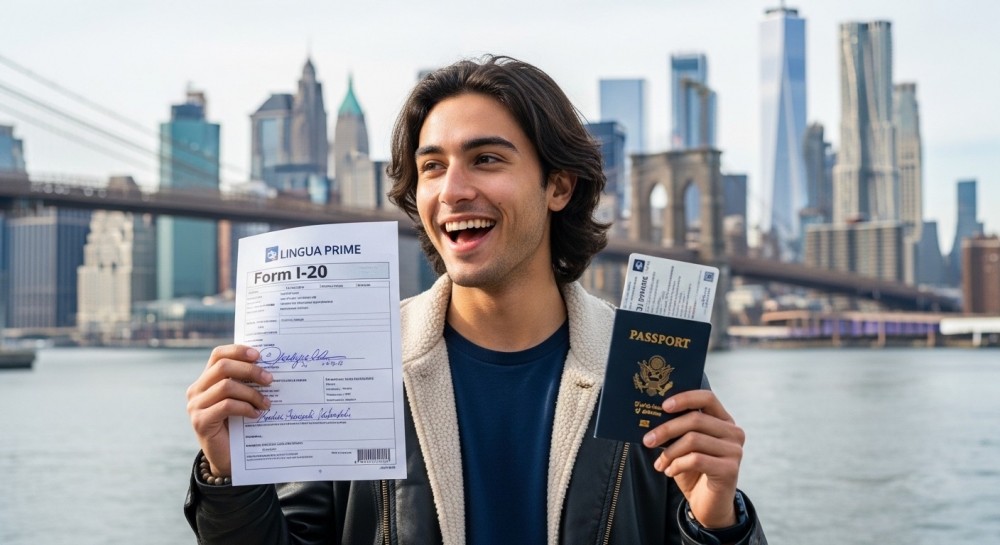
Not all schools in the USA are authorized to host international students. It is crucial to verify that your chosen institution can issue an I-20 form. Whether it is a prestigious Ivy League university or a specialized language school like Lingua Prime, the institution must be recognized by the US government.
- The Form I-20: Your Most Important Document
Once admitted, the school will send you a Form I-20. This document outlines your program of study, the estimated cost of living, and the duration of your course. It also contains your SEVIS ID, which is essential for paying the SEVIS I-901 fee.
Phase 2: Mastering the Financial Requirements
One of the primary reasons for visa denials is the lack of sufficient financial proof. The US government wants to ensure that international students will not become a "public charge" and that they have enough liquid assets to cover tuition and living expenses for at least the first year of their program.
- Calculating the Total Cost
Students often underestimate the "cost of attendance." This includes:

- Tuition Fees: The actual cost of classes.
- Living Expenses: Rent, food, and utilities.
- Health Insurance: Mandatory for most international students.
- Miscellaneous: Books, travel, and personal expenses.
- Acceptable Sources of Funding
Consular officers prefer to see funds in the form of savings accounts, fixed deposits, or liquid investments. If a student has a sponsor (like a parent or relative), the sponsor must provide an affidavit of support and proof of their income (tax returns, salary slips, etc.).
Phase 3: The DS-160 and SEVIS Fee
After receiving the I-20, the formal application process begins on the US Department of State website.
- Completing the DS-160 Form
The DS-160 is the online Non-immigrant Visa Application. Every detail in this form must match the information on your passport and I-20. Mistakes in this form can lead to administrative processing delays or even denials.
- Paying the SEVIS I-901 Fee
This fee supports the SEVIS system, which tracks international students while they are in the US. Payment must be made before the visa interview, and the receipt must be brought to the consulate.
Phase 4: Preparing for the Visa Interview
The visa interview is the most critical 5 minutes of the entire process. It is here that a consular officer determines whether you are a "bona fide" student.
- Proving Non-Immigrant Intent
Under US law, all student visa applicants are viewed as "intending immigrants" until they prove otherwise. You must demonstrate strong ties to your home country, such as:
- Family members staying behind.
- Job offers or career prospects in your home country.
- Assets or property owned by you or your family.
- Explaining Your Choice of Study
Why this school? Why this specific course? Why now? You must be able to articulate how this degree fits into your long-term career goals. Avoid generic answers; show the officer that you have done your research.
Phase 5: Common Challenges and How to Overcome Them
- Administrative Processing (Section 221(g))
Sometimes, an officer may put an application "on hold" for further background checks. This is common for students in STEM fields or those from certain geographic regions. The best way to avoid this is by providing a clear, concise Research Plan and a detailed CV.
- Visa Denials under Section 214(b)
This is the most common reason for denial, indicating a failure to prove strong ties to the home country. If denied, a student can reapply, but they must show a "significant change in circumstances."
Phase 6: Life in the USA as an F-1 Student
Once the visa is approved, the journey truly begins. However, maintaining the status is just as important as getting the visa.
- Full-Time Enrollment: You must remain a full-time student to keep your visa valid.
- Employment Rules: F-1 students can generally work 20 hours per week on-campus. Off-campus work (CPT/OPT) requires specific authorization.
- Travel Rules: Whenever you travel outside the US, your I-20 must be signed by your school's International Student Advisor.
Conclusion: Your Gateway to Global Success
Securing a Student Visa USA is a rigorous process that demands patience, precision, and preparation. By following the guidelines outlined above and ensuring that your documentation is flawless, you significantly increase your chances of success. The year 2026 offers immense potential for international students, with American universities expanding their outreach and embracing global talent.
For the most up-to-date resources and specific guidance on preparing for your journey, visiting educational hubs like Lingua Prime can provide the necessary support to turn your American dream into a reality.
Frequently Asked Questions (FAQs)
How early can I apply for my student visa?
You can apply up to 365 days before your program start date, but you cannot enter the US more than 30 days before the start date.
Can I change my school after arriving in the USA?
Yes, but it involves a complex "SEVIS Transfer" process. It is highly recommended to start at the school that issued your initial visa.
Is there an age limit for a US student visa?
No, there is no official age limit. However, older students must be able to explain how the degree fits into their existing professional career.
What happens if my visa is denied?
You can reapply as many times as you like. However, it is essential to analyze the reason for denial and address it specifically in your next interview.
Do I need an English proficiency test (IELTS/TOEFL) for the visa?
While the consulate doesn't strictly require it, your school does. Most I-20s will state whether you have met the English proficiency requirements.