The pursuit of higher education in the United States is more than an academic choice; it is a life-defining investment in one’s future. For decades, the American education system has stood as a beacon of innovation, attracting the brightest minds from every corner of the globe. From the high-tech hubs of Silicon Valley to the financial centers of New York, the US offers a unique ecosystem where theoretical knowledge meets practical application. However, before a student can immerse themselves in this vibrant environment, they must successfully navigate the complex regulatory framework of the Department of State. Obtaining a Student Visa USA is the most crucial milestone in this journey, requiring a combination of academic merit, financial transparency, and a clear demonstration of long-term career intent. As immigration policies continue to evolve, staying ahead of the documentation and interview requirements is the only way to ensure a seamless transition to American campus life.
The Strategic Importance of the F-1 Visa
For the vast majority of international applicants, the F-1 visa is the primary vehicle for academic entry. This non-immigrant visa is specifically designed for individuals who wish to study at an accredited US college, university, seminary, conservatory, or academic high school. Unlike other visa categories, the F-1 allows for certain types of practical training (CPT and OPT), which are invaluable for gaining work experience in the American market. In 2026 and 2027, the focus of consular officers has shifted toward "Intent and Impact"—they want to know not just that you are a student, but how your presence in the US will benefit your professional growth and your home country’s economy.
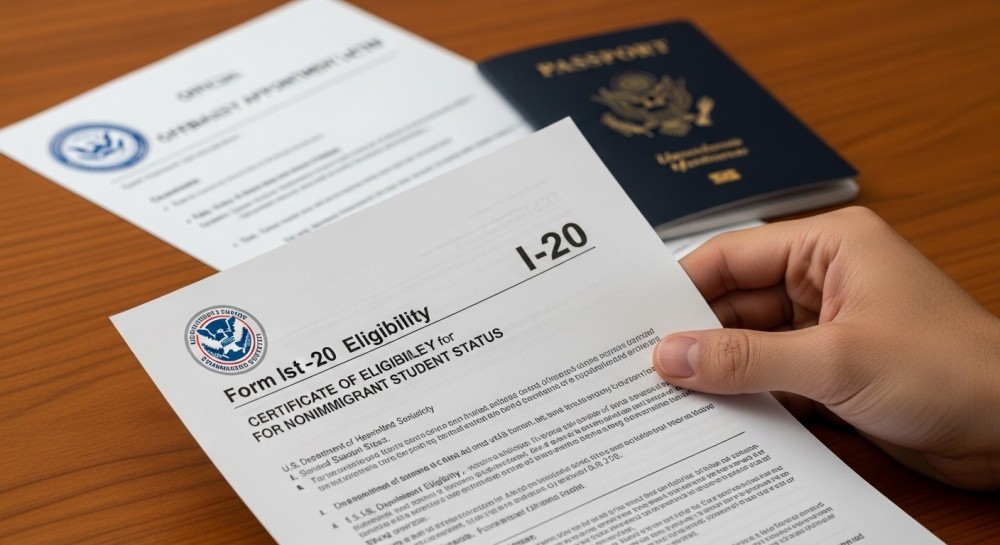
Phase 1: Institutional Credibility and the SEVIS I-20
The foundation of a successful visa application is laid long before you visit the embassy. It begins with the selection of a SEVP-certified institution.

- Verifying School Accreditation
A common mistake is applying to institutions that are not authorized to host international students. Always ensure that your school, whether a large state university or a specialized academy like Lingua Prime, is fully accredited and capable of managing your SEVIS record.
- Analyzing Your I-20 Details
The Form I-20 is a legal contract between you, the school, and the US government. Pay close attention to the "Program End Date" and the "Estimated Costs." If the costs listed are significantly higher than your documented funds, your visa risk increases. Ensure that the school has correctly noted your English proficiency level, as this will likely be tested during your interview.
Phase 2: Building a Robust Financial Portfolio
The "Ability to Pay" remains the most scrutinized part of the application. In 2027, digital verification of funds has made it easier for officers to spot inconsistent financial data.
- Asset Liquidity: Officers prefer to see "liquid assets"—money that can be withdrawn immediately. Huge amounts in fixed assets (like land or buildings) are good for showing "ties," but they do not prove you can pay next month’s tuition.
- The "Sponsorship" Narrative: If your uncle or a distant relative is sponsoring you, be prepared to explain why. Close family (parents/siblings) is always viewed more favorably as sponsors.
- Sustained Income Proof: Showing a large sum of money deposited just weeks before the interview is a red flag (often called "fund stuffing"). Consuls look for a history of steady income from the sponsor’s business or employment.
Phase 3: The DS-160 and the Digital Identity
Your DS-160 form creates your first impression. In an era of interconnected data, any discrepancy between your social media presence, your application, and your interview answers can lead to a denial.
Key Areas to Review:
- Previous Travel History: Be honest about any visa denials from any country, not just the US.
- Point of Contact: Ensure you have the correct contact details of your International Student Advisor at the school.
- Social Media Handles: Consular officers may review your public profiles to verify your background and intentions.
Phase 4: Mastering the Consular Interview
The interview is a high-pressure environment where you have roughly 120 to 180 seconds to make your case.
- The "Tie to Home Country" Argument
Under Section 214(b) of the Immigration and Nationality Act, every applicant is presumed to be an intending immigrant. To overcome this, you must show "Strong Ties." This can be:
- A guaranteed job offer upon return.
- Ownership of a family business that requires your new skills.
- Specialized career paths that only exist in your home country.
- Academic Specifics
If you are going to Lingua Prime for English training, explain why local schools aren't sufficient. If you are pursuing a PhD, be ready to discuss your research in layperson’s terms. The officer wants to see that you are an "Active Learner," not just someone looking for a way into the US.
Phase 5: Post-Approval Logistics and Compliance
Approval is just the beginning. Maintaining your status is a 24/7 responsibility.
- The 30-Day Entry Rule: You cannot enter the US more than 30 days before your I-20 start date.
- The 12-Unit Rule: Most undergraduate programs require you to be enrolled in at least 12 credit hours to remain "in status."
- Reporting Requirements: Any change in major, address, or financial sponsorship must be reported to your DSO within 10 days.
Conclusion: Navigating Success in 2027
Securing a Student Visa USA is a testament to a student’s dedication and planning. While the barriers to entry may seem high, they are designed to ensure that only the most committed individuals benefit from the American academic experience. By approaching the process with transparency, a solid financial plan, and a clear vision for the future, you can join the ranks of international scholars who have used their US education as a springboard to global success.
Whether you are starting with language preparation at an institute like Lingua Prime or heading straight into a Master’s program, your journey is a bridge between your current potential and a world of opportunity. Prepare diligently, speak confidently, and your American dream will be well within reach.
Frequently Asked Questions (FAQs) - New Perspective
Can I change my visa status from B-1/B-2 (Tourist) to F-1 (Student) while inside the USA?
Yes, it is possible through a "Change of Status" application with USCIS, but it is a very long process (often taking 6-12 months). Most students find it faster to return home and apply for an F-1 visa at a consulate.
What happens if I lose my I-20 while I am in the USA?
You must immediately contact your school's DSO to request a replacement. Your SEVIS ID will remain the same, but you need a physical (or digital) copy for travel and identification.
Does having a relative in the USA help or hurt my student visa chances?
It depends. Having a relative can show a support system, but it can also raise concerns about your intent to stay in the US permanently. It is always best to be honest about relatives but emphasize your plans to return home.
Is there a difference between the "Visa Expiry Date" and my "Stay Duration"?
Yes. Your visa allows you to enter the US until the expiry date. Once inside, your duration of stay is marked as "D/S" (Duration of Status), meaning you can stay as long as you are a full-time student and your I-20 is valid.
Can I travel to Canada or Mexico on a US Student Visa?
Generally, yes, under a rule called "Automatic Visa Revalidation," provided your trip is less than 30 days and you have a valid I-20 with a recent travel signature.