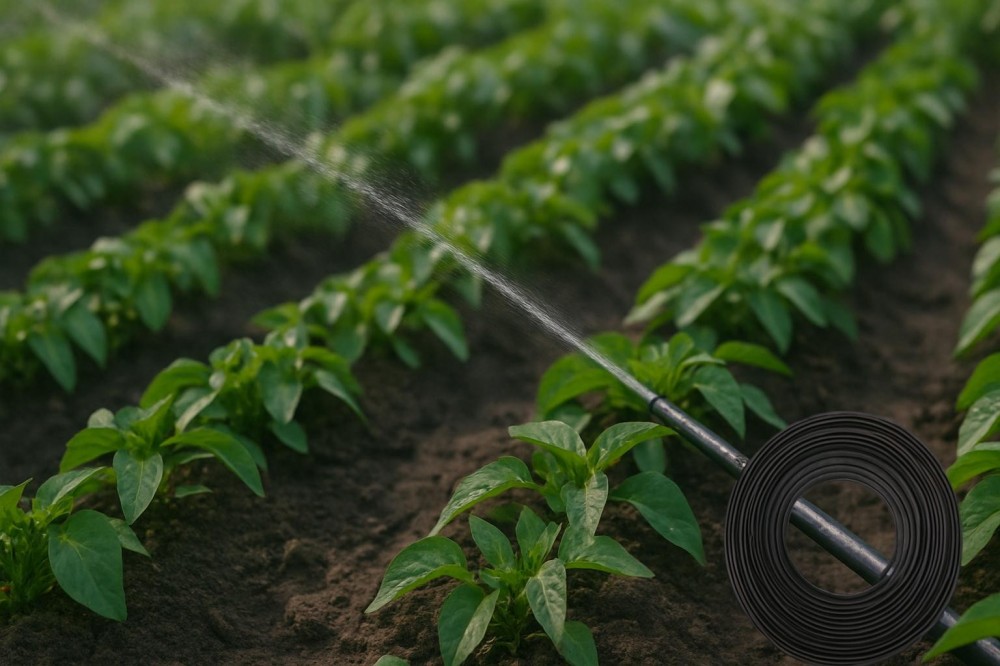
The selection of irrigation fittings can greatly impact the effectiveness of your water distribution system. PVC (polyvinyl chloride) and poly tubing (polyethylene) are frequently the two materials at the centre of the discussion, whether you are planning a scheme for a garden vegetable patch or scaling irrigation for multi-acre agricultural. Each has unique advantages, disadvantages, and best-practice scenarios. Which fittings work best with each, how they function in various field circumstances, and which is ultimately a better fit for your system are all covered in this article.
What Are PVC and Poly Tubing in Irrigation?
PVC pipes are rigid plastic pipes often used for permanent underground irrigation systems. They're typically white or grey and combined with solvent cement, creating durable, watertight seals. These pipes work well in mainline systems where consistent pressure is critical.
Poly tubing, however, is flexible and black in color. Due to its ease of handling, it's used in drip irrigation and smaller lateral lines. Poly pipes don’t require glue—fittings are pushed in or clamped, making them suitable for modular and changing setups.

How Do the Two Materials Compare in Durability?
PVC pipes are renowned for their durability. Buried underground, they are more resistant to mechanical harm and UV rays. They are more fragile, though, and could break when exposed to sharp changes in temperature or surface pressure.
Because of its flexibility, poly tubing is great for temporary installations or uneven terrain. It can tolerate expansion and contraction brought on by temperature changes without splitting, though it can deteriorate more quickly under bright sunlight.
- PVC lasts 25–40 years in buried installations
- Poly tubing lasts 7–15 years, depending on exposure and maintenance
For fittings that need a secure hold yet flexible installation, using a Male Adapter for Rain Pipe ensures that poly and PVC components transition smoothly in mixed-material systems.

Which Is Easier to Install and Modify?
Installation is one of the key differentiators. PVC requires cutting, priming, and gluing. Once it sets, modifications are difficult and time-consuming. This makes it ideal for permanent systems where the layout won’t change often.
Poly tubing, on the other hand, is plug-and-play. You can cut it with a utility knife, punch holes for emitters, or insert barbed fittings in minutes. This flexibility makes poly tubing a favorite for home gardeners and farmers rotating crops seasonally.
One survey of 400 irrigation setups by the Irrigation Association found that farms using poly tubing saved 40% more time during seasonal reinstallation compared to those using rigid PVC systems.
“Your irrigation system should evolve with your land—rigidity is the enemy of growth.”
How Do Fittings Differ Between PVC and Poly Systems?
Fittings connect pipes, valves, emitters, and other system components. Choosing the right type of fitting determines flow integrity and long-term reliability.
Common PVC Fittings:
- Tees, elbows, couplers (joined using solvent cement)
- Threaded adapters for pumps and filter units
- Ball valves integrated into main lines
PVC fittings provide a leak-free seal under high pressure but are semi-permanent. Any change usually requires cutting and replacing sections.
Common Poly Tubing Fittings:
- Barbed tees, elbows, and straight connectors
- Compression fittings that tighten over the pipe
- Take-off adapters to link drip emitters or micro-sprayers
Poly fittings offer ease of customization. You can dismantle and reassemble systems without major effort, making them ideal for evolving garden layouts or mixed cropping plans.
Pressure Handling and Water Flow Consistency
Due to its rigid structure, PVC handles pressure better. It's suitable for systems above 2.5 bar, such as those connected to electric pumps or overhead tanks. PVC is also resistant to sudden pressure spikes.
Poly tubing supports up to 2 bar in most standard designs. Above this level, pipes may expand or fittings might slip if not clamped properly.
|
Feature |
PVC Pipe System |
Poly Tubing System |
|
Max Operating Pressure |
Up to 10 bar |
Typically up to 2.5 bar |
|
Best Used For |
Mainlines, deep burials |
Drip lines, lateral branches |
|
Maintenance Frequency |
Low once installed |
Moderate, especially for UV |
|
Ease of Modification |
Low |
High |
Climate Adaptability and UV Exposure
PVC outperforms in underground systems due to its resistance to corrosion and pests. However, prolonged sun exposure can weaken PVC over time unless it is painted or buried.
Poly tubing is UV stabilised during manufacturing. While it holds up well in open-field environments, exposure over many seasons without covering can still degrade it. Using mulching or pipe covers extends its life significantly.
In regions like Telangana or Madhya Pradesh, where peak temperatures often exceed 45°C, farms using shaded poly systems showed 18% longer tubing lifespan compared to exposed setups.
Use Cases: When to Choose PVC or Poly Tubing?
Here’s a simplified guide based on your project type:
- Fixed Orchard Irrigation – PVC mainlines with poly lateral drip lines
- Backyard Gardens – Poly tubing for easy seasonal layout changes
- Greenhouse Systems – Poly with low-flow emitters and easy pressure regulation
- Large Farms with Pumps – PVC for high-pressure zones, poly for crop-specific extensions
Systems that rely on buried mains with surface drip extensions benefit from a hybrid design: PVC for structure and poly for reach.
Cost Differences in Material and Maintenance
Initial material cost favors poly tubing. It is cheaper per meter and doesn’t require glue or primer. However, more frequent maintenance and shorter lifespan may offset that advantage in the long run.
PVC has a higher upfront cost due to fittings, cement, and labor but proves more cost-effective for permanent setups.
|
Item |
PVC (per 100m) |
Poly Tubing (per 100m) |
|
Pipe Material |
₹800–₹1200 |
₹400–₹700 |
|
Fittings and Accessories |
₹200–₹300 |
₹100–₹150 |
|
Labor and Installation |
Higher |
Lower |
|
Total Lifespan |
25+ years |
10–15 years |
These are average costs and vary with location, supplier, and diameter size.
FAQs: Choosing Between PVC and Poly Tubing
- Can I mix PVC and poly tubing in one system?
Yes, using adapters such as threaded or barbed connectors allows integration. Always check pressure compatibility. - Is poly tubing good for high-pressure pumps?
Only if pressure regulators are installed. Otherwise, go with PVC for the mainline. - What’s better for water conservation?
Both work well, but poly tubing paired with drip emitters offers more targeted watering. - How do I prevent leaks in poly fittings?
Use clamps or compression fittings. Ensure the pipe is cut straight and inserted fully into the fitting. - Are there government subsidies for either system?
Yes, under PMKSY and various state schemes, subsidies apply to both materials if used in micro-irrigation.
Planning a Future-Proof Irrigation System
An effective irrigation system should adapt to your land use, crop rotations, and seasonal difficulties. Many seasoned gardeners use a hybrid type, with flexible poly tubing extending into planting zones and rigid PVC serving as the backbone. This strategy strikes a balance between stability and flexibility.
Both systems now incorporate flow metres, controlled valves, and moisture sensors for accuracy and automation. IoT-enabled irrigation planners frequently suggest PVC for backbone dependability and poly for modular zones.
Explore platforms like AgriFarming for crop-specific irrigation plans or government-approved irrigation design templates.
Flexible Thinking Wins in Irrigation Design
Both flexible tubes and rigid pipes are used in contemporary irrigation. one one best suits your needs, your land, and your future goals is more important than one is better overall. Take into account your budget, geography, crop cycle, and the frequency of setup changes. Even if your pipes are not always flexible, flexibility in watering frequently produces superior outcomes.