

How Dry Ice Blasting Prevents Downtime in Manufacturing Plants
Downtime is expensive in the fast-paced manufacturing sector of today. Businesses lose money, miss deadlines, and run the danger of tarnishing their brand every minute a production line is idle. For this reason, a lot of establishments are using dry ice blasting as a potent way to reduce disruptions.
However, what precisely can dry ice blasting do to avoid downtime? Let's examine this clever cleaning technique and how it maintains the efficiency of production facilities.
What Is Dry Ice Blasting?
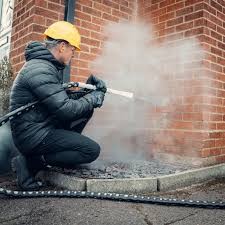
A novel method of cleaning that makes use of solid carbon dioxide (CO₂) pellets is called dry ice blasting. These pellets are driven quickly to clean equipment, machinery, and surfaces.
What's different about it? No water, chemicals, or secondary waste are left behind as the dry ice sublimates, changing straight from a solid to a gas upon collision.
This technique is perfect for cleaning important production equipment without causing damage or delays because it is non-abrasive and leaves no residue behind.
The Real Cost of Downtime in Manufacturing
Before we dive deeper, it’s important to understand the stakes.
According to industry studies, unplanned downtime can cost manufacturers up to $260,000 per hour. Factors contributing to downtime include:
- Equipment failure due to dirt buildup

- Scheduled maintenance interruptions
- Emergency shutdowns for deep cleaning
- Extended drying times after wet cleaning
Clearly, avoiding or minimizing downtime is crucial for operational efficiency and profit margins.
How Dry Ice Blasting Reduces Downtime
Dry ice blasting helps prevent downtime through several key advantages:
1. No Need to Disassemble Equipment
Conventional cleaning techniques frequently call for disassembling intricate equipment in order to clean individual components. This is a time-consuming and labor-intensive technique.
Dry ice blasting (sometimes called "in situ cleaning") may clean without disassembling, getting into cavities, confined places, and delicate parts. Maintenance time is reduced by hours or even days as a result.
2. Instantaneous Drying
No moisture remains after impact because dry ice sublimates. Dry ice blasting enables instant reactivation, in contrast to pressure washing, which necessitates drying time before resuming equipment.
Frequently, machines can return to service in a matter of minutes rather than hours.
3. Gentle on Equipment
Because dry ice blasting is non-abrasive, pollutants are eliminated without causing surface damage.
The risk of wear and tear, which frequently results in unanticipated mechanical failures—one of the main reasons for production downtime—is decreased by this mild approach.
4. Minimal Cleanup Required
There is little cleanup required because dry ice produces no additional trash. Only the debris that has been knocked loose from surfaces has to be removed.
This simplified procedure lowers personnel expenses and accelerates maintenance cycles even more.
5. Safe for Sensitive Equipment
Complex machinery and delicate electronic systems are frequently used in manufacturing facilities. Electrical panels, robotic arms, and conveyor belts may all be safely cleaned with dry ice blasting, which lowers the possibility of unintentional harm.
Industries Benefiting Most from Dry Ice Blasting
Many types of manufacturing facilities have adopted dry ice blasting to keep their operations smooth:
- Automotive plants (engine parts, molds, conveyor systems)
- Food and beverage processing (packaging lines, ovens)
- Pharmaceuticals (sterile environments, production equipment)
- Aerospace (precision components, molds)
- Plastic and rubber molding (injection molds, extrusion machines)
In each case, less downtime means higher productivity and profitability.
Real-World Example
Grease accumulation on molding machines caused frequent downtime for a large auto parts manufacturing. Conventional cleaning techniques necessitated shutting down, disassembling, cleaning, and reassembling for a whole day.
Cleaning time decreased to six hours once dry ice blasting was used, and no disassembly was necessary.
The outcome? The factory greatly enhanced output while saving more than 500 hours a year.
Environmental and Safety Benefits
Beyond productivity, dry ice blasting also supports safer and greener manufacturing:
- No toxic chemicals involved
- No wastewater generated
- Improved worker safety with reduced exposure to hazardous materials
- Lower carbon footprint compared to chemical or sand cleaning methods
These benefits align with modern manufacturing’s push for sustainability and worker health.
Conclusion
Although manufacturing plant downtime can be disastrous, it can also be avoided.
Businesses that choose dry ice blasting gain from quicker cleaning, instant equipment restart, less mechanical damage, and less time spent cleaning up afterward.
Dry ice blasting is a productivity tool that helps producers remain competitive in a cutthroat global market, not only a cleaning technique.
Dry ice blasting should be your first choice for maintenance if you want to maintain your plant's optimal operation with the least amount of disturbance.





