
Introduction
Managed Pressure Drilling (MPD) is an advanced technique used in oil and gas drilling operations to dynamically control wellbore pressure, optimizing performance while reducing risks such as kick, loss circulation, and formation damage. MPD services are critical for offshore and onshore drilling, especially in high-pressure, high-temperature (HPHT) wells, deepwater reservoirs, and unconventional formations.
The MPD services market is experiencing strong growth due to rising demand for safe and cost-efficient drilling methods, advancements in automation, and increased exploration of complex geological formations. Innovations in real-time pressure monitoring, automated choke systems, and AI-powered predictive analytics are revolutionizing drilling operations.
The Evolution
Traditional drilling relied on static mud weight adjustments to maintain wellbore stability. However, these methods often led to pressure fluctuations, drilling inefficiencies, and well control issues. MPD emerged as a dynamic pressure management solution, allowing operators to precisely regulate bottom-hole pressure and mitigate drilling hazards.

Early MPD systems focused on surface-controlled pressure adjustments using manual choke valves. Over time, advancements in automated MPD equipment, closed-loop circulation systems, and adaptive AI-driven algorithms have enhanced efficiency and reliability.
Today, the industry benefits from hybrid MPD techniques, including underbalanced drilling (UBD) and dual-gradient drilling (DGD), which further optimize well control in challenging reservoirs. AI-powered digital twin simulations and machine learning models improve wellbore stability forecasting, reducing non-productive time (NPT) and operational costs.
Market Trends
Several trends are shaping the MPD services market. Increasing deepwater and HPHT drilling projects are driving demand for advanced pressure control solutions. Automation and AI-powered predictive analytics are optimizing real-time pressure regulation and improving safety.
The adoption of automated MPD choke systems is reducing manual intervention and enhancing drilling precision. Integrated MPD approaches, such as managed pressure cementing (MPC), are improving zonal isolation and well integrity.
Governments and regulatory bodies are enforcing stricter well control standards, accelerating MPD adoption. Digitalized MPD workflows using IoT-enabled sensors and data analytics are improving operational efficiency.

Challenges
Despite advancements, the market faces challenges. High initial investment and operational costs limit MPD adoption in small-scale drilling operations. Limited technical expertise hinders widespread implementation.
Regulatory compliance and environmental concerns affect MPD deployment strategies, requiring standardized frameworks. Equipment reliability in extreme drilling conditions necessitates continuous innovation in hardware and software solutions.
Compatibility issues with traditional drilling systems create integration hurdles, demanding customized MPD configurations for different well environments. Supply chain disruptions in MPD equipment manufacturing impact service availability and scalability.
Market Scope
The MPD services market spans offshore and onshore drilling, HPHT wells, deepwater exploration, unconventional reservoirs, and geothermal drilling. Applications include pressure-controlled drilling, wellbore stability optimization, kick detection, and managed pressure cementing.
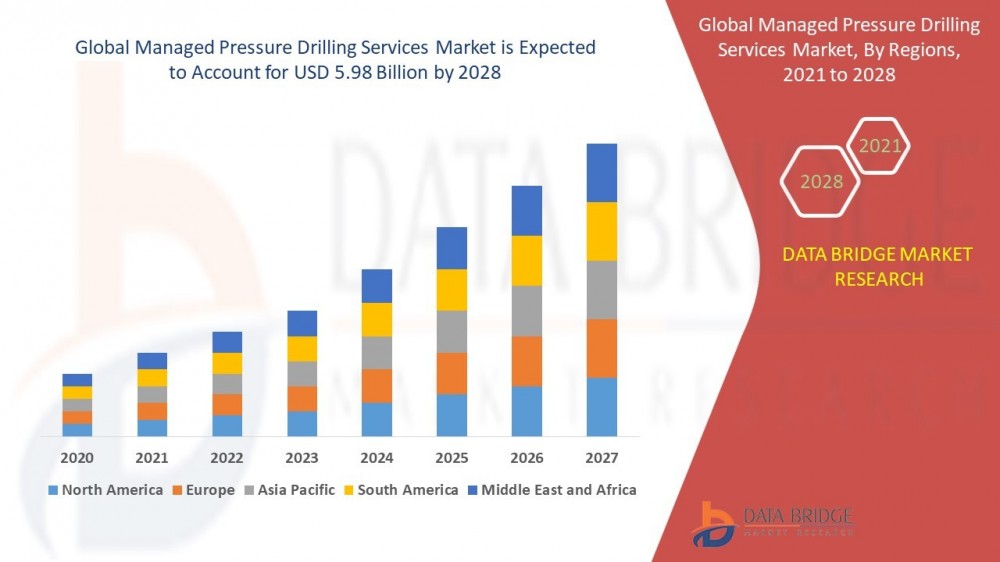
North America leads the market, driven by shale gas exploration, deepwater drilling investments, and advanced MPD automation. Europe follows closely, benefiting from strict well control regulations and offshore drilling growth. Asia-Pacific is witnessing rapid expansion, fueled by rising energy demand, offshore exploration, and advancements in MPD technologies.
Market Size
Financial projections indicate steady market expansion, supported by increased deepwater exploration, advancements in AI-driven MPD automation, and rising investments in unconventional reservoirs. Strategic partnerships between MPD service providers, drilling contractors, and oilfield technology firms strengthen market penetration.
Government-backed initiatives promoting safe and efficient drilling techniques further accelerate MPD adoption. Expansion of digital twin simulations and predictive MPD analytics contributes to long-term industry sustainability.
Factors Driving Growth
Several factors contribute to market growth. Increasing demand for safe and cost-efficient drilling solutions fuels MPD adoption. Advancements in automation, real-time pressure monitoring, and AI-driven analytics improve drilling optimization.
Government regulations supporting well control safety and environmental protection accelerate industry expansion. Innovations in hybrid MPD techniques and adaptive pressure management enhance drilling performance. The shift toward digitalized MPD workflows strengthens market sustainability.
Source :https://www.databridgemarketresearch.com/reports/global-managed-pressure-drilling-services-market
Other Trending Reports
https://www.databridgemarketresearch.com/reports/global-disposable-surgical-drapes-and-gowns-market
https://www.databridgemarketresearch.com/reports/global-sme-force-automation-market
https://www.databridgemarketresearch.com/reports/global-interactive-wound-dressing-market
https://www.databridgemarketresearch.com/reports/global-automotive-gudgeon-pin-market
https://www.databridgemarketresearch.com/reports/global-ambulatory-electronic-health-records-market
https://www.databridgemarketresearch.com/reports/global-chip-scale-package-csp-led-market
https://www.databridgemarketresearch.com/reports/global-stearyl-alcohol-market
https://www.databridgemarketresearch.com/reports/global-cappuccino-ingredients-market
https://www.databridgemarketresearch.com/reports/global-technical-fluids-market





