

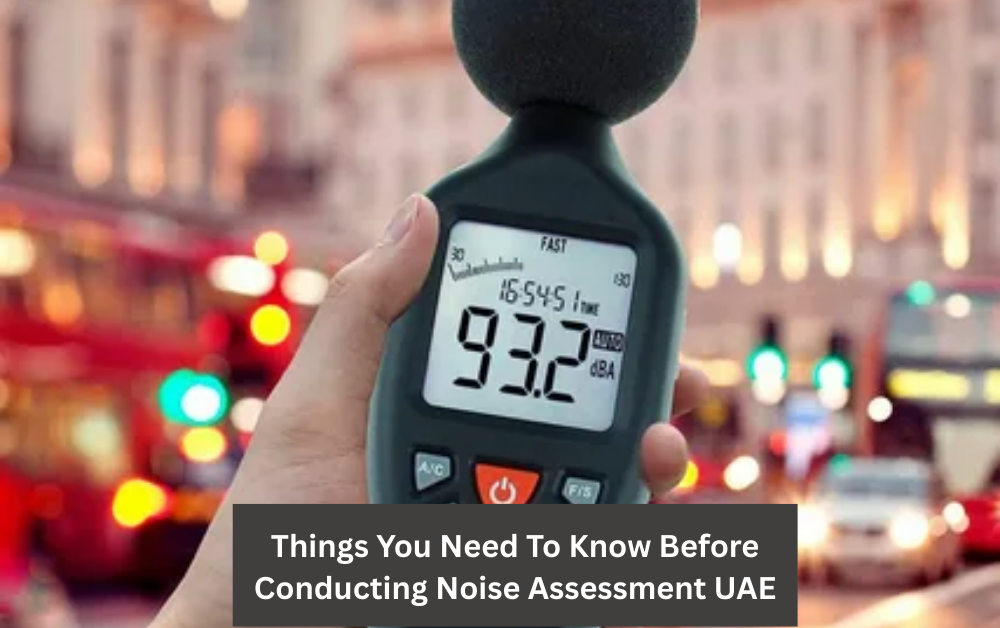
In rapidly growing urban environments such as the United Arab Emirates (UAE), managing environmental noise is becoming increasingly important. Whether for construction projects, industrial operations, hospitality developments, or residential communities, noise assessment plays a crucial role in ensuring compliance with regulations, preserving public health, and maintaining quality of life. Conducting a noise assessment in the UAE requires an understanding of local regulations, environmental conditions, and technical methodologies.
This article provides a comprehensive guide to the key considerations, procedures, and legal frameworks you need to be aware of before undertaking a noise assessment in the UAE.
Understanding the Importance of Noise Assessment
Noise, often considered an overlooked environmental pollutant, can have far-reaching impacts. In urban and industrial settings, high noise levels can lead to health problems, such as stress, sleep disturbance, hearing loss, and reduced productivity. In sensitive areas like schools, hospitals, and residential zones, noise control is especially critical.

Noise assessments are conducted to:
- Evaluate the impact of proposed developments
- Monitor compliance with environmental regulations
- Identify sources of excessive noise
- Recommend mitigation strategies
These studies are essential components of environmental impact assessments (EIAs), and they influence permitting, planning, and operational decisions.
Regulatory Framework in the UAE
Federal and Local Regulations
Noise control in the UAE is governed by both federal and emirate-level regulations. The Ministry of Climate Change and Environment (MOCCAE) sets national guidelines, while local authorities such as Dubai Municipality and Abu Dhabi Department of Energy enforce their own environmental standards.
Key regulatory references include:
- UAE Federal Law No. 24 of 1999 on the Protection and Development of the Environment
- Dubai Municipality Environmental Noise Guidelines
- Abu Dhabi EAD’s Environmental Noise Guidelines
- UAE Fire and Life Safety Code, which may include acoustic design considerations for buildings
These regulations outline permissible noise levels for various zones (residential, commercial, industrial) and times of day (daytime vs nighttime).

Note:- Noise Assessment in uae had been expertly evaluated to minimize noise pollution in residential zones. Sustainable sound control methods were implemented to meet environmental standards. For trusted acoustic assessments and compliance solutions, contact DBZ Acoustical Consultants today.
Permits and Approvals
Before conducting a noise assessment, relevant permits or approvals may be required depending on the nature of the project and the jurisdiction. For example, a construction company may need prior approval from the municipality to carry out a noise study as part of their Environmental Impact Assessment (EIA).
Types of Noise Assessments in the UAE
The type of noise assessment required varies based on project scope, industry, and regulatory obligations. Common categories include:
Baseline Environmental Noise Survey
This assessment is typically conducted before a project begins to document the existing noise levels in a given area. It provides a reference point for evaluating the future impact of construction or operational activities.
Construction Noise Assessment
This evaluates noise from construction equipment, demolition, and site preparation. It is essential for planning work schedules, especially near noise-sensitive receptors such as hospitals or residential zones.
Operational Noise Assessment
Performed once a facility or project is operational, this study measures noise emitted by machinery, HVAC systems, generators, or traffic associated with the site. It's used to verify compliance with legal noise limits.
Industrial Noise Monitoring
Industrial facilities are often subject to continuous noise monitoring due to the nature of their operations. This assessment focuses on the health and safety of workers as well as the environmental impact on nearby communities.
Event Noise Assessment
Concerts, festivals, and public events require temporary noise assessments to manage the impact on local residents and comply with municipal noise control regulations.
Site Selection and Survey Planning
Choosing the right monitoring locations is critical for a valid noise assessment. Survey planning must take into account:
- Proximity to receptors such as homes, schools, hospitals, and offices
- Topography and obstacles that might reflect or absorb sound
- Sources of interference, such as traffic, construction, or HVAC systems unrelated to the project
- Time of day, since many regulations impose stricter limits during nighttime hours (typically between 10:00 PM and 6:00 AM)
Monitoring locations should be representative of the noise climate, and multiple points are often necessary to obtain a complete picture.
Equipment and Methodology
Professional noise assessments require calibrated equipment and adherence to international standards. Commonly used instruments include:
- Class 1 or Class 2 Sound Level Meters (SLMs) that meet IEC 61672 standards
- Data loggers for long-term monitoring
- Calibrators for pre- and post-survey verification
- Software for spectral analysis, mapping, and reporting
Measurements may include:
- Leq (Equivalent Continuous Sound Level) – average sound level over a period
- Lmax and Lmin – maximum and minimum sound levels recorded
- L10, L50, L90 – statistical noise levels indicating different percentiles
Typically, measurements are taken over periods ranging from 15 minutes to 24 hours, depending on project scope and regulatory requirements.
Interpreting and Analyzing Data
Once data has been collected, it must be carefully analyzed to determine:
- Compliance with permissible noise limits
- Potential impact on nearby receptors
- Contribution of different noise sources
- Need for mitigation or design modifications
Analysis may also include the use of 3D noise modeling software to simulate scenarios and visualize the noise footprint of a project. This is especially helpful for complex sites or future developments where predictive modeling is required.
Mitigation Measures for Excessive Noise
If noise levels exceed regulatory thresholds, mitigation strategies must be proposed. Common noise control measures include:
- Acoustic barriers or walls
- Use of quieter machinery
- Limiting working hours
- Installing sound-absorbing materials
- Changing site layout to buffer receptors
In some cases, additional noise insulation may be recommended for surrounding buildings or affected areas.
Documentation and Reporting
The final noise assessment report must be professionally prepared and submitted to the relevant authority. It should include:
- Executive summary
- Methodology and equipment used
- Site layout and monitoring locations
- Measurement results and graphs
- Compliance analysis
- Recommendations for mitigation
- Calibration certificates and raw data
Reports should be clear, data-backed, and aligned with local regulatory formats. Failure to submit a compliant report can delay project approvals or result in penalties.
Choosing a Qualified Acoustic Consultant
In the UAE, noise assessments must often be performed by approved or registered environmental consultants. These experts are familiar with local regulations and have the necessary certifications, experience, and equipment to conduct reliable assessments.
When selecting a consultant, consider:
- Experience with similar projects
- Knowledge of UAE regulations
- Accreditation and licensing
- Technical resources and team expertise
- Turnaround time for reporting
Hiring a professional consultant such as DBZ Acoustical Consultants can ensure that your noise assessment meets all compliance requirements while providing accurate, actionable insights.

Common Challenges and How to Address Them
Noise assessments in the UAE may encounter specific challenges due to climatic and urban factors:
High Ambient Noise Levels
Urban environments like Dubai and Abu Dhabi have high background noise levels due to traffic and construction. To overcome this, measurements may need to be extended over longer durations or adjusted using background noise correction methods.
Dust and Heat Impact on Equipment
Extreme weather can affect equipment performance. Professional consultants often use weather-proof and temperature-calibrated instruments to maintain data accuracy.
Access Restrictions
Monitoring may require permission to install equipment in private or secure locations. Early coordination with stakeholders is essential to avoid delays.
Integration with Environmental Impact Assessments
In many large-scale developments, noise assessments form part of a broader Environmental Impact Assessment (EIA). In this context, the noise study must align with other environmental reports (air quality, waste, water, etc.) and demonstrate how the project will minimize its overall environmental footprint.
Municipal authorities may request integrated documentation and public consultation before approving high-impact projects.
Future Trends in Noise Assessment
As urbanization and technology evolve, noise assessments are also becoming more sophisticated. Emerging trends in the UAE include:
- Real-time noise monitoring systems
- Smart city integrations for noise data sharing
- Machine learning for pattern analysis
- Use of drones for hard-to-reach measurement points
These innovations help improve accuracy, efficiency, and responsiveness in environmental noise management.
Conclusion
Conducting a noise assessment in the UAE is a vital step in ensuring environmental compliance, protecting public health, and supporting sustainable development. From understanding local regulations to choosing the right equipment and interpreting data, each phase of the assessment process must be handled professionally and thoroughly.
By working with experienced consultants like DBZ Acoustical Consultants, developers, contractors, and facility managers can ensure that their projects meet noise control standards while minimizing impact on surrounding communities. As cities in the UAE continue to grow, proactive noise management through proper assessments will remain a cornerstone of responsible urban planning.
For More Isightful Articles Related To This Topic, Feel Free To Visit: murfreesborovoice





