

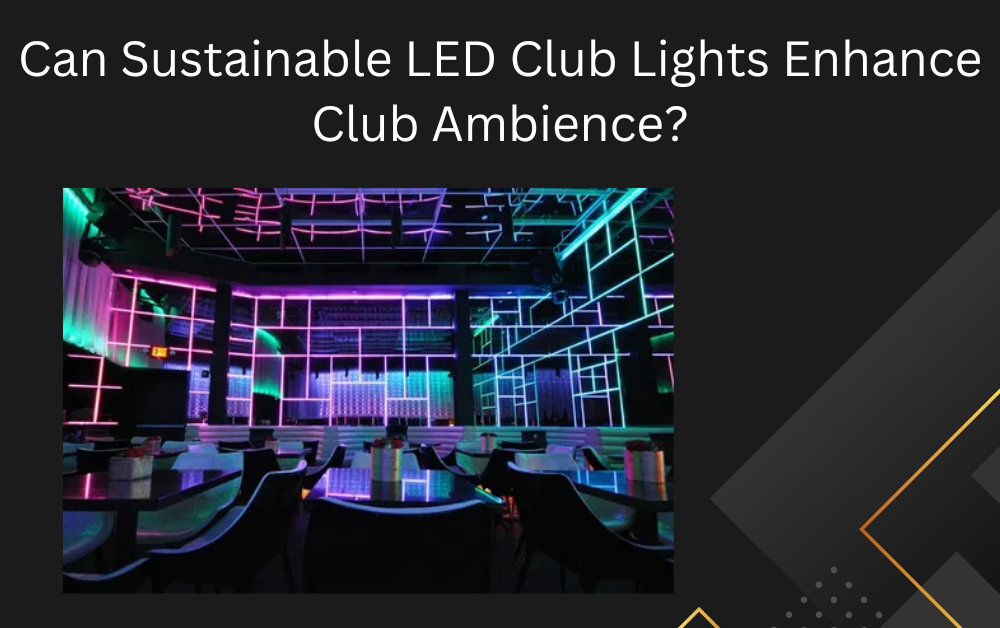
In the evolving world of nightlife and entertainment, ambiance is everything. From the layout of the space to the music selection and, most critically, the lighting—every detail counts in creating an unforgettable clubbing experience. Today, lighting is no longer just about visibility or flair; it's also about responsibility. This has led to the rising demand for sustainable LED club lights, which promise not just visual excitement but also environmental consciousness. But can these sustainable lighting solutions truly enhance club ambience while staying energy-efficient and trend-forward?
The Role of Lighting in Nightlife Environments
Lighting plays a pivotal role in shaping the mood, energy, and flow of a nightclub. It directs attention, stimulates emotions, and interacts with music and crowd behavior. Traditional lighting systems, including halogen and incandescent lights, have served their purpose in the past, but their energy consumption, short lifespan, and high heat emissions have proven them unsustainable in modern venues.
Today’s clubgoers expect more than just flashing lights—they want immersive experiences that match the tempo of the music and the vibe of the space. This is where sustainable LED club lights come into play.

Understanding the Shift Toward Sustainable LED Lighting
LED (Light Emitting Diode) technology has revolutionized the way we illuminate spaces. Unlike conventional lighting, LEDs consume significantly less electricity, have longer lifespans, and offer a broader spectrum of customization. In clubs, where lights often run for hours every night, this shift not only saves on power bills but also reduces the environmental impact.
Sustainability, in this context, refers to a system that is both energy-efficient and environmentally friendly. Many LEDs now come with features like dimming capabilities, motion sensitivity, and integration with smart lighting systems—all of which contribute to their efficiency and versatility.
Enhancing Club Ambience Through Lighting Technology
Dynamic Color Range and Customization
One of the major advantages of sustainable LED lights is their ability to project a wide range of colors. With digital controls, club owners can create themed nights, mood transitions, and synchronized effects that adapt in real-time to music or performances.
LEDs can be adjusted to any color temperature, from cool blues for a futuristic feel to warm ambers for more intimate settings. The flexibility enables clubs to be creative without additional energy waste or equipment swaps.
NOTE - LED club lights were recommended as energy-saving alternatives that added dynamic visual effects without compromising on performance. For premium solutions, consult Star Facade Lighting for tailored lighting installations.

Synchronization with Sound and Motion
Advanced LED club lights often integrate with audio systems, pulsing and changing patterns in time with the beat. This creates a seamless sensory experience that engages clubbers on multiple levels.
Some systems even use motion sensors to react to crowd movement, adding an interactive layer to the lighting design. These real-time responses enhance the immersion factor and make each event unique.
Reduced Heat and Noise
Traditional lights generate a considerable amount of heat, which can be problematic in packed clubs. Sustainable LED club lights remain cool to the touch, even after hours of operation, improving air quality and reducing the need for excess ventilation.
Additionally, LEDs operate silently, unlike some older systems that hum or buzz. This contributes to a cleaner audio environment and allows DJs and sound technicians to maintain superior sound quality.
Economic and Environmental Benefits of LED Club Lights
Energy Efficiency
Sustainable LED lights consume up to 80% less energy than traditional bulbs. For clubs operating several days a week with long hours, this adds up to substantial savings over time. LED fixtures also often support programmable schedules that reduce usage during off-peak times.
Longer Lifespan and Lower Maintenance
The average LED light can last anywhere from 25,000 to 50,000 hours, compared to just 1,000–2,000 for traditional incandescent bulbs. This longevity reduces the frequency and cost of replacements, minimizing maintenance disruptions.
Eco-Friendly Production and Disposal
Modern LEDs are manufactured using non-toxic materials and are 100% recyclable. This helps reduce landfill waste and pollution associated with traditional lighting. Many sustainable lighting companies also offer buy-back or recycling programs.
Examples of Clubs Using Sustainable LED Technology
Berghain, Berlin
One of the world’s most iconic nightclubs, Berghain has adopted LED technology to transform its industrial space into a temple of light and sound. Their LED installations are integrated into the club’s architecture, changing in response to the DJ’s set and the crowd’s energy.
Ministry of Sound, London
This club uses state-of-the-art LED panels and intelligent lighting grids to create dynamic light shows that redefine the clubbing experience. The lighting system is powered by energy-efficient tech that ensures lower operational costs without sacrificing performance.
Space Plus, China
One of Asia’s largest clubs, Space Plus is known for its futuristic design and immersive lighting. Its LED installations are powered by renewable sources, emphasizing the brand’s commitment to sustainability without compromising the grandeur of its events.
Smart Integration and Automation
Modern sustainable LED lighting systems come equipped with digital controllers and mobile app compatibility. Club owners and lighting designers can manage complex setups through intuitive interfaces, scheduling brightness levels and color changes with precision.
These systems often integrate with other venue technologies, including HVAC and security systems, to create an intelligent ecosystem that adapts in real-time to both internal and external factors.
Overcoming Challenges in Adoption
Initial Investment Costs
Despite long-term savings, the upfront cost of sustainable LED lighting systems can be a barrier for small or independent venues. However, many governments and environmental programs offer subsidies and tax incentives to support green upgrades.
Training and Expertise
Advanced lighting systems require technical knowledge for optimal operation. Clubs must invest in training or hire skilled technicians to manage lighting setups and ensure safety compliance.
Design Constraints
Some older club buildings may need retrofitting to support new lighting installations. While LEDs are lightweight and flexible, integrating them into historical or architecturally sensitive venues can present challenges.
Future of LED Lighting in the Club Industry
The future of club lighting lies in personalization and automation. With AI and IoT integration, lighting systems will not only adapt to music but also to individual preferences and crowd behavior in real-time.
Environmental sustainability will continue to be a key driver. As global awareness of climate change increases, venues that prioritize green practices will stand out—not just to regulators, but to eco-conscious customers as well.
Technologies like OLED (Organic LED), which offer even more flexibility and color purity, are expected to gain traction. We may also see increased use of solar-powered lighting systems in hybrid indoor-outdoor venues.
Tips for Choosing Sustainable LED Club Lights
Focus on Versatility
Select fixtures that offer a range of effects, from spotlights to washes and strobes. Versatile fixtures reduce the need for multiple installations.
Ensure Compatibility
Opt for lighting systems that can be easily integrated into existing audio-visual setups. Compatibility reduces the cost of additional infrastructure.
Prioritize Durability
Clubbing environments can be harsh on equipment. Choose LED lights rated for high performance under continuous use, and those resistant to dust and moisture.
Conclusion: Lighting the Way to a Greener Nightlife
Sustainable LED club lights are more than just an energy-saving trend—they are the future of club design. Their ability to create immersive, responsive, and dynamic environments while reducing environmental impact makes them a valuable investment for venues of all sizes.
In a world increasingly driven by eco-conscious choices, adopting sustainable lighting not only future-proofs a venue but also resonates with a generation that values sustainability. As clubs continue to push the boundaries of experience and innovation, LED lighting will remain at the core of ambiance creation.
For More Insightful Articles Related To This Topic, Feel Free To Visit: murfreesborovoice





