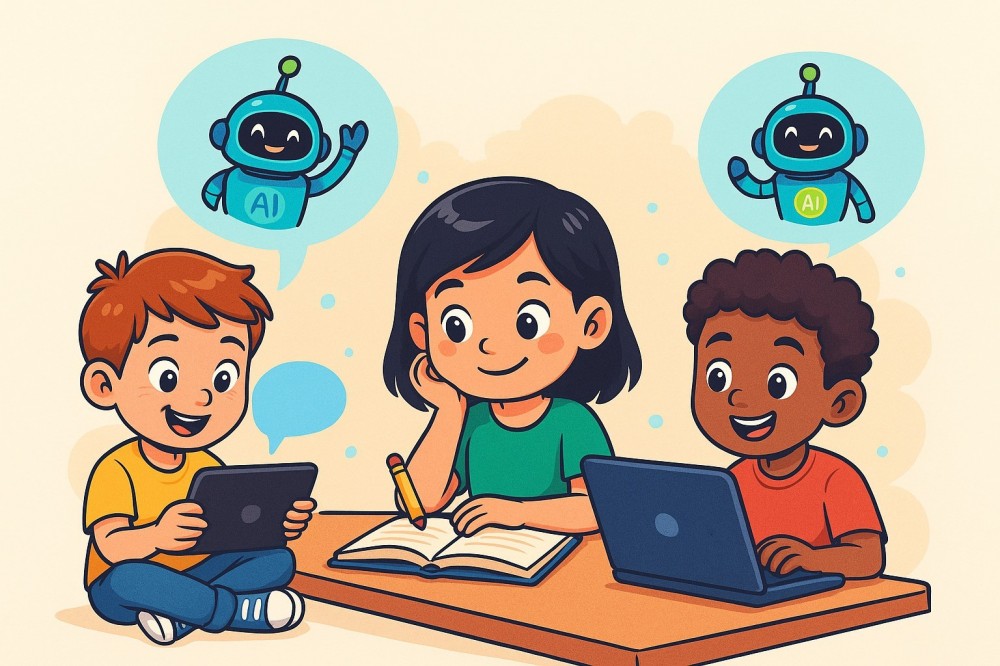
How AI is unlocking curiosity, creativity, and confidence in young learners

Introduction: Why AI is Changing the Way Kids Learn
Today’s digital-native kids are growing up in a world where technology is everywhere. But how do we harness that technology to fuel curiosity instead of distraction? Traditional classrooms and digital games often seem like opposing forces—but what if we could blend the best of both?
Artificial Intelligence (AI) is becoming that bridge. No longer just for tech labs and research centers, AI is now a powerful, engaging, and age-appropriate learning tool that sparks creativity and builds real-world skills. Child-friendly platforms like LittleLit AI are leading the charge—making AI safe, fun, and educational for kids aged 6 to 14.
In this guide, we’ll explore how AI is transforming childhood learning, why it’s important to teach AI literacy early, and how parents and educators can introduce it confidently and responsibly.
1. Why Kids Should Learn About AI
AI isn’t just science fiction—it’s already shaping your child’s world.
From personalized playlists on Spotify to smart assistants like Alexa, AI is woven into everyday life. Teaching children how AI works gives them a clearer view of the world around them—and empowers them to be not just users of technology, but creators and critical thinkers.
🔹 Demystifies technology
🔹 Encourages mindful digital habits
🔹 Prepares kids for a tech-driven future
2. How AI Builds Lifelong Skills
Introducing kids to AI isn’t about turning them into programmers overnight. It’s about nurturing the essential skills they’ll use in school, work, and life.
🔹 Creativity: Using AI to write stories or design games
🔹 Problem-solving: Tackling challenges through logic and experimentation
🔹 Critical thinking: Understanding how data and algorithms influence outcomes
🔹 Confidence: Seeing their own ideas come to life through interactive tools
Child-friendly AI tools—like those offered by LittleLit AI—make this type of skill-building engaging and accessible.
3. Making AI Safe, Fun, and Educational
Let’s face it: not all AI platforms are built with kids in mind. Unsupervised access to tools like ChatGPT or image generators can pose risks ranging from inappropriate content to data privacy issues.
That’s where LittleLit AI stands out. It offers:
🔹 Kid-safe AI models
🔹 Age-appropriate interactions
🔹 Built-in privacy and content safeguards
🔹 Educational goals aligned with real curriculum
With platforms like LittleLit, AI becomes a tool kids can safely explore—with parents and educators guiding the journey.
4. Practical Ways to Introduce AI to Kids
You don’t need to be a tech expert to teach kids about AI. Here’s how to get started:
✅ Begin with Simple Conversations
Ask questions like:
-
“How does YouTube know what videos you like?”
-
“What makes Siri answer your questions?”
These questions help kids begin thinking about algorithms and machine learning in everyday terms.
✅ Use Tools Built for Kids
Child-focused platforms like LittleLit AI provide AI-powered experiences tailored to young minds—like writing assistants, logic puzzles, and storytelling bots.
✅ Explore AI Learning Games
Games that integrate AI can make learning feel like play. From quiz games to virtual science projects, these tools help kids learn without pressure.
✅ Incorporate AI into Creative Projects
-
Build a chatbot that helps with homework
-
Co-write a story using AI
-
Create a mini game that solves a real-world problem
These projects show kids that AI is not just functional—it’s also fun.
5. Understanding AI Literacy
AI literacy means more than knowing how an algorithm works. It includes:
🔹 Ethical awareness – understanding bias and fairness
🔹 Digital safety – knowing when and what to share online
🔹 Critical thinking – recognizing AI’s role in daily life
By developing these skills early, kids grow into responsible and informed digital citizens.
6. AI in the Classroom: A New Era of Engagement
Teachers are starting to embrace AI as a tool that enhances traditional instruction. Here’s how:
✏️ Personalizing Learning
AI adapts to different learning styles, helping kids grasp concepts at their own pace. LittleLit supports this by offering multiple learning paths.
🧠 Supporting Real-Time Assessment
Smart quizzes that adjust based on student performance help educators identify gaps and tailor instruction.
📊 Unlocking Learning Analytics
AI helps track performance trends and spot at-risk students before they fall behind.
🤖 Encouraging Creativity
Story generators and visual tools make lessons more dynamic—and boost student engagement.
7. Choosing Safe, Kid-Friendly AI Platforms
If you’re introducing AI to children, safety is non-negotiable. Look for tools that prioritize:
✅ Privacy and data protection
✅ Age-appropriate content
✅ Clear educational outcomes
✅ Easy-to-use design for kids
LittleLit checks every box, making it a reliable partner in responsible AI education.
8. Long-Term Benefits of Learning AI
When AI becomes part of a child’s learning journey, the benefits go far beyond academics:
🔹 A 7-year-old creating a story with AI-powered illustrations
🔹 A 10-year-old using a chatbot to practice math
🔹 A 12-year-old designing a community project using AI tools
These are more than tech skills—they’re life experiences that spark innovation, confidence, and purpose.
Where to Start: Try LittleLit AI
LittleLit is leading the way in helping families and educators introduce AI in joyful, safe, and intentional ways.
Final Thoughts & Takeaways
AI isn’t just part of the future—it’s already shaping the present. As adults, we have a unique opportunity to guide children toward healthy, safe, and empowering interactions with technology.
By choosing the right tools and having the right conversations, we can ensure that AI becomes a force for creativity, curiosity, and confidence.
Let’s make learning something kids look forward to—with AI platforms like LittleLit AI lighting the path.