A rug is more than just a decorative piece — it’s an investment that adds warmth, style, and comfort to any space.
But no matter how beautiful or well-crafted a rug is, its durability largely depends on the quality of its backing. This is where latex comes into play.
Applying latex as a backing adhesive is one of the best ways to ensure your rug stays strong, durable, and resistant to wear over time.

In this guide, we’ll walk you through everything you need to know about rug latex application — from why it’s important to the best techniques for applying it.
What is Latex and Why Use It for Rug Backing?
Latex is a natural rubber-based adhesive commonly used in rug backing to securely hold fibers in place.
Unlike other adhesives, latex provides a flexible yet strong grip that prevents yarns from loosening or shedding. Here’s why latex is preferred:
- Superior Fiber Retention: Latex binds the rug fibers firmly, reducing shedding and prolonging the rug’s life.
- Water-Resistant: Latex backing offers some protection against moisture, preventing damage.
- Non-Slip Properties: When combined with rubber or other materials, latex can improve grip on floors, reducing slipping hazards.
- Flexible Durability: It allows rugs to bend without cracking, unlike some rigid backing materials.
Compared to other backing options like jute or synthetic adhesives (such as PVA), latex strikes a balance between durability and flexibility — making it ideal for a wide range of rugs, especially tufted ones.
Different Methods to Apply Latex to Rugs
Applying latex backing isn’t one-size-fits-all. Different techniques suit different rug types, production scales, and equipment availability. Here are the three main methods:

1. Lick-Roll Method
A traditional approach where liquid latex is rolled onto the rug’s back using a specialized roller. This method provides an even layer but requires skill to avoid clumps.
2. Knife-Over Blanket Spreading
This method spreads latex using a knife blade over a fabric “blanket” that presses evenly against the rug back, ideal for consistent coverage in larger production.
3. Spraying Technique
Latex is sprayed on as a fine mist, useful for delicate rugs or DIY projects without heavy equipment. It provides a light, even coat but may require multiple applications.
Each method has its own advantages depending on rug thickness, fiber type, and available tools.
Step-by-Step Guide to Latex Application
Ready to apply latex backing to your rug? Follow these simple steps for the best results:
Step 1: Prepare Your Workspace and Rug
Lay your rug on a clean, flat surface with the back facing up. Make sure the rug is free from dust or debris.
Step 2: Choose Your Latex and Tools
Use a high-quality tufting glue latex adhesive for rug backing suitable for your rug type. Depending on your chosen method, gather rollers, brushes, or spray bottles.
Step 3: Apply the Latex
- For rolling or spreading, apply a thin, even coat to cover the entire back. Avoid thick layers that can cause lumps.
- If spraying, hold the nozzle about 6-8 inches away and spray in smooth, sweeping motions.
Step 4: Let It Dry
Allow the latex to dry completely, usually for 12 to 24 hours, depending on humidity and thickness. Avoid moving the rug until fully cured.
Step 5: Optional Second Coat
For added strength, apply a second thin layer after the first has dried.
How Latex Enhances Rug Durability?
Latex backing significantly improves a rug’s lifespan by:
- Preventing Fiber Shedding: The strong adhesive keeps yarns intact even under foot traffic.
- Adding Structural Stability: It supports the rug’s base, preventing deformation or curling edges.
- Improving Slip Resistance: Latex backing helps rugs stay put on smooth floors, enhancing safety.
- Protecting Against Moisture: Though not waterproof, latex adds some resistance against spills and dampness.
These benefits make latex-backed rugs a practical choice for both everyday use and high-traffic areas.
Maintenance Tips for Latex-Backed Rugs
To keep your latex-backed rug in top condition:
- Vacuum regularly using a low-suction setting without a beater brush to avoid fiber damage.
- Avoid excessive moisture; clean spills promptly with a damp cloth.
- For stubborn stains, use mild detergent solutions and avoid harsh chemicals that can degrade latex.
- If edges start peeling, reapply a small amount of latex adhesive to touch up.
Proper maintenance will extend your rug’s durability and keep it looking fresh.
Naksh Carpets: Quality Materials and Tools for Rug Makers
If you need high-quality materials and tools for your rug-making projects, Naksh Carpets is a trusted name to consider.
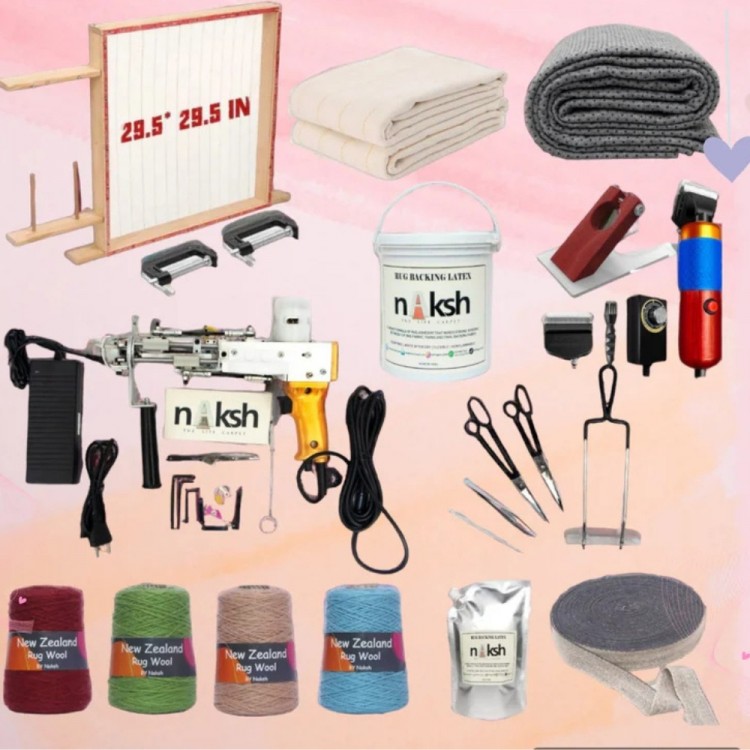
Based in Mirzapur — the world-renowned hub for handmade rugs — Naksh Carpets offers a wide range of products including tufting machines in India, hand tufting machine price in India, and reliable tufting machine manufacturers and suppliers.
You can find a tufting DIY kit, tufting frame, or various types of tufting fabrics like polyester tufting fabric, gray tufting fabric, and premium gray tufting fabric.
Naksh Carpets also provides essential rug backing fabric, rug backing glue, and tufting rug yarns such as acrylic yarn and New Zealand wool yarn to ensure your rugs are crafted with the finest materials. As professional handmade rug manufacturers with generations of experience, Naksh Carpets embodies quality and craftsmanship at its best.
FAQs
Q: Can latex backing cause allergies?
A: Some individuals may be sensitive to natural latex. If you have latex allergies, consider synthetic alternatives or test a small sample first.
Q: Is latex suitable for all rug types?
A: Latex works best for tufted and handmade rugs but may not be ideal for delicate antique rugs or certain flatweaves.
Q: How long does latex backing last?
A: With proper application and care, latex backing can last many years, maintaining rug integrity under normal use.
Conclusion
Applying latex backing is a trusted and effective way to make your rugs strong, durable, and long-lasting.
DIY rug makers and professionals alike can benefit from mastering latex application to elevate the quality and lifespan of their creations.
Follow the steps and tips in this guide to ensure your rugs stand the test of time — combining beauty with functionality.